The Asymmetric Exchange
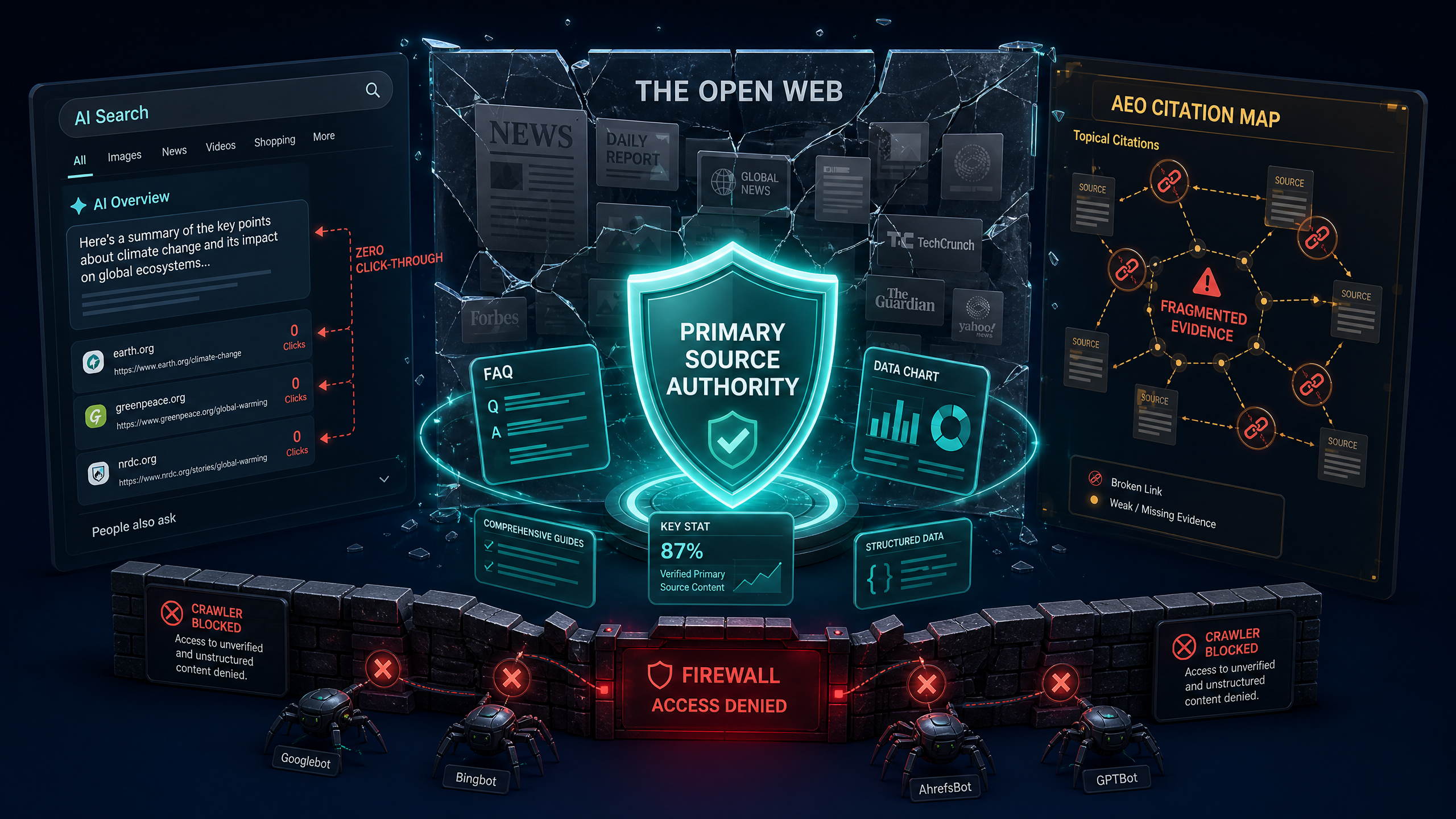
TollBit analysed identified AI bots from 40 scraping vendors across 3,906 publishers and found median AI scrapes per European site were four times higher than in North America. European sites received only one human AI referral for every 179 AI bot visits, and AI applications accounted for just 0.05% of external referrals in Europe versus 0.16% in North America.
The scrape-to-referral ratio deteriorated from 150:1 in Q1 2026 to 227:1 in Q2, while robots.txt restrictions were reportedly ignored nearly three times more frequently on European sites.
However, Cloudflare's own dataset does not reproduce TollBit's geographic finding, with Cloudflare seeing higher absolute bot-request volumes in North America. The regional conclusion needs caution, but the overall asymmetry is consistent across both datasets.
Why This Matters Beyond Publishers
Publishers currently absorb the cost of creating much of the third-party information that GEO strategies depend upon: journalism, product reviews, expert commentary, comparisons and industry research. If AI engines reduce the economic incentive to create that material, they gradually damage the evidence ecosystem they themselves depend upon.
That is not merely a publisher problem. It becomes an AI Search quality problem.
The Contradiction at the Heart of GEO
Brands increasingly want independent sources to validate them because answer engines distrust pure self-promotion. But what happens if the economics of producing those independent sources collapse?
The current value exchange: publisher pays journalist, creates evidence, AI consumes evidence. AI platform synthesises evidence, keeps user. Publisher receives one visit for every 179 bot accesses. That does not look like a sustainable equilibrium.
The Likely End State
The probable result is more licensing, paywalls, crawler restrictions, API access, machine-specific commercial agreements and direct source partnerships. That could make GEO increasingly dependent on which information ecosystems each model has licensed access to.
| Current State | Likely Future State |
|---|---|
| Open-web scraping | Licensed source partnerships |
| Universal crawl access | Model-specific source agreements |
| robots.txt as honour system | Commercial API access gates |
| Free evidence consumption | Paid evidence licensing |
| One GEO strategy for all models | Engine-specific source strategies |
What This Means for Your GEO Strategy
AI Search needs independent evidence to create trustworthy recommendations, but its zero-click economics may undermine the publishers producing that evidence. This could transform GEO from an open-web optimisation discipline into an increasingly fragmented licensed-source ecosystem.
For brands, the strategic implication is clear: invest in becoming a primary source rather than depending on third-party coverage. Own your evidence, publish original research, and build direct relationships with the AI platforms that will increasingly gate access to their recommendation engines.