A Funding Round Is Not a Model-Selection Framework
Mistral announced €3 billion in new capital on 8 September 2026, positioning the round as support for scaling what it calls sovereign, open-weight AI from frontier research into enterprise deployment.[1] Reuters independently reported the financing and its valuation context.[2]
The news deserves attention. It signals that investors see commercial demand for alternatives to a small set of vertically integrated AI suppliers. But a funding event is not evidence that one model family will produce better marketing, lower risk or a faster return for every organization.
Integrated.Social view: The enterprise opportunity is not to choose “open” because it is fashionable. It is to turn model choice into an explicit operating decision: what work the system performs, what data it can use, where it runs, how it is evaluated, who is accountable and how the organization can change course.
What Mistral Announced
Mistral describes the financing as a way to accelerate research, build sovereign AI infrastructure and expand access to open-weight models and enterprise products.[1] Reuters reports that the round places the company among Europe’s most highly valued AI startups.[2]
The company’s language is important but should be read as a primary-source statement of strategy. It does not demonstrate that an open-weight deployment is the right answer for every workload, that self-hosting is automatically safer, or that sovereign positioning eliminates ordinary security, privacy, evaluation and commercial-governance work.
| Announcement signal | Strategic implication worth investigating | Conclusion not supported by the news alone |
|---|---|---|
| €3 billion in new capital | Open-weight and European AI infrastructure can attract large-scale investment. | That financing proves a product will outperform competitors for your use case. |
| Sovereign AI framing | Jurisdiction, deployment and control are rising procurement questions. | That sovereignty is achieved solely by selecting a European vendor. |
| Open-weight positioning | More deployment and customization options may be available to qualified teams. | That weights access removes the need for security, red-teaming or governance. |
| Enterprise expansion | Buyers may have more credible supplier options. | That a supplier is ready for every regulated or consequential workflow. |
The Strategic Shift: Model Choice Becomes a Control-Plane Question
For many teams, the first AI procurement conversation was about model quality: which assistant writes, summarizes or codes most convincingly? That remains relevant. As model capabilities converge, however, the more durable questions sit around the model:
1. Where does the workload run?
Some data and latency requirements may favor a managed service. Others may justify regional hosting, a virtual private deployment or self-managed infrastructure. The decision has engineering, contractual, security and cost implications. “Sovereign” should mean something inspectable in the contract, architecture and data flow—not just a marketing label.
2. What can the system access and do?
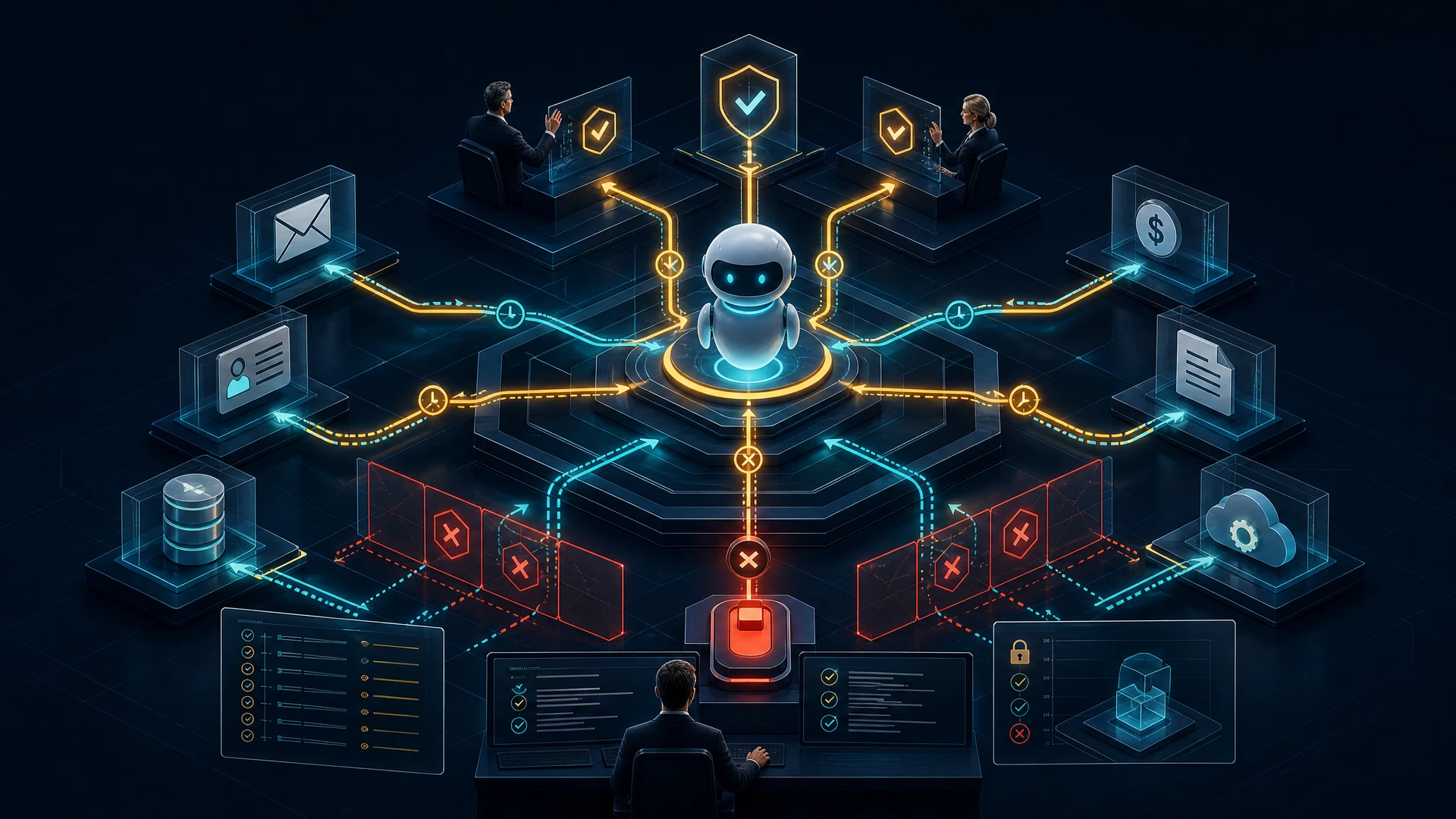
An internal research assistant and an agent that changes campaigns, queries customer systems or prepares customer communications have different risk profiles. Teams should start with the actual task, inputs, tools and authority. Our AI governance service [blocked] focuses on that operating boundary before a capable model receives consequential permissions.
3. How will the team compare suppliers over time?
Use an evaluation set built from representative, permitted work: source-grounded research briefs, approved-content drafts, classification tasks or analysis scenarios. Score factual support, task completion, controllability, latency, cost and escalation behavior. Retest when a model, retrieval layer, prompt policy or connected system changes.
Open Weight Is an Option, Not a Shortcut
Open-weight models can give a capable organization more freedom to host, tune and integrate a system. That may be useful when a business needs a specific deployment environment, wants to avoid a single point of vendor dependency or has sufficient engineering and security capacity to operate the stack.
The trade-off is responsibility. More control can mean more work to manage access, versioning, infrastructure, observability, evaluation and incident response. A team should not turn a model deployment into a hidden production service simply because it has access to the weights.
| Procurement choice | Potential benefit | Governance work that remains |
|---|---|---|
| Managed frontier API | Fast time to pilot and provider-operated infrastructure. | Data terms, prompt/data handling, supplier dependency and output evaluation. |
| Managed open-weight service | Choice of model family with less infrastructure work. | Service terms, regions, access controls, testing and workload boundaries. |
| Private or self-managed deployment | Greater architecture and data-flow control. | Operations, patching, access identity, logging, capacity and recovery. |
| Multi-model design | Reduced reliance on one supplier and task-specific selection. | Comparable evaluation, routing rules, cost visibility and failure handling. |
What It Means for B2B Marketing Teams
Marketing leaders do not need to become model-hosting specialists. They do need to specify the outcome that a model-enabled workflow should improve: research quality, response time, campaign QA, content operations, buyer enablement or measurement diagnosis.
For an agentic AI [blocked] pilot, keep the first system bounded. Give it an approved source set, a defined output format, limits on system access and a named reviewer. Measure whether the result is more useful and more reliable than the current workflow. The AI Token & Cost Calculator [blocked] can make model and workload-cost assumptions visible before a pilot grows into an untracked operating expense.
The commercial advantage will come from the system around the model: clear data rights, better objectives, trusted evidence, measured feedback and controls that let a team expand authority with confidence.
If you are comparing AI deployment approaches, book an AI operating-model review [blocked] before your next procurement decision. For a bounded research or workflow prototype, try Manus with a clear input boundary, expected output and human approval for consequential action.
Frequently Asked Questions
How much did Mistral raise in September 2026?
Mistral announced €3 billion in new capital on 8 September 2026. Reuters separately reported the round and its valuation context. As with any financing announcement, consult the company and transaction reporting for the current terms, completion status and investor details.
Does Mistral’s funding mean open-weight models are better than closed models?
No. The funding indicates investor confidence in Mistral’s strategy; it does not establish a universal technical or commercial winner. The right choice depends on a workload’s capability needs, data boundary, deployment environment, cost profile, operational capacity and evaluation results.
What does sovereign AI mean in practice?
The term is used in different ways. A practical assessment should identify where data is processed and stored, which legal and contractual terms apply, who operates the infrastructure, what access controls exist, how models are updated and how the organization can audit or exit the service. Treat the label as a question for due diligence, not a completed control.
Are open-weight AI models safe to use in an enterprise?
They can be used responsibly, but access to weights does not make a deployment safe by default. Organizations still need task boundaries, authentication, least-privilege access, testing, monitoring, incident response and human approval for consequential decisions. The required controls depend on the data, integrations and authority involved.
How should B2B teams evaluate an AI model supplier?
Start with representative, permitted tasks and score factual support, completion quality, latency, cost, controllability and failure behavior. Add data terms, geographic/deployment requirements, supplier concentration, operational support and exit options. Re-evaluate when the model or its connected workflow materially changes.
References
- Mistral AI, “Mistral makes sovereign, open-weight AI frontier,” September 2026
- Reuters, “French AI company Mistral hits $24 billion valuation in funding round,” September 8, 2026
About the Author
Modi Elnadi is the Founder of Integrated.Social. He helps B2B teams connect agentic AI, AI-search visibility, marketing measurement and governance into commercial operating systems that can be inspected and improved. Explore AI marketing strategy services [blocked] for a practical route from model hype to a governed business workflow.