
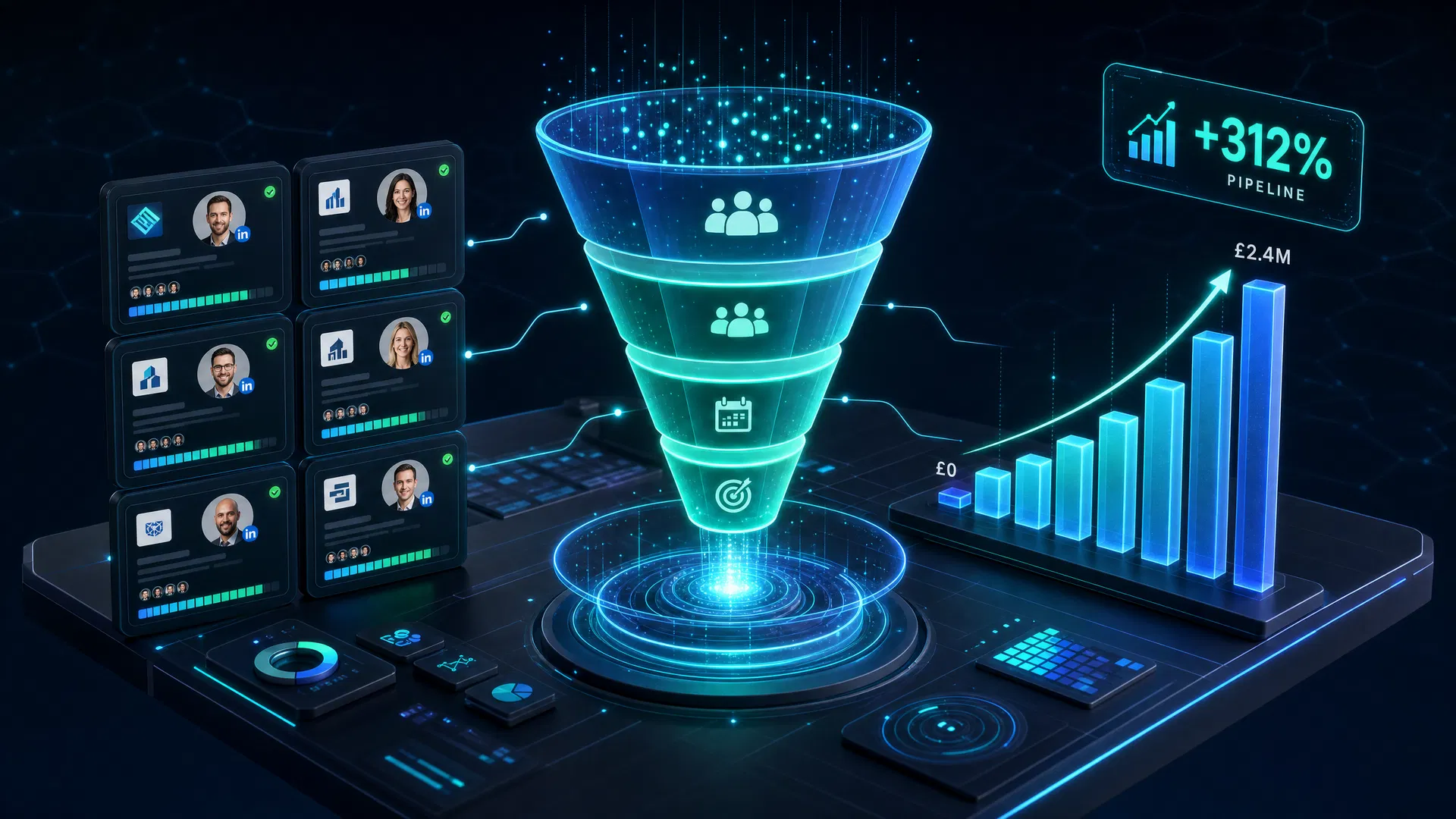
From Spray-and-Pray to Precision ABM: +312% Pipeline in 90 Days
A UK B2B SaaS company was losing deals to longer sales cycles and generic outreach. We rebuilt their ICP, mapped every buying committee, and ran intent-triggered multi-channel ABM, turning 47 target accounts into £2.4M of qualified pipeline.
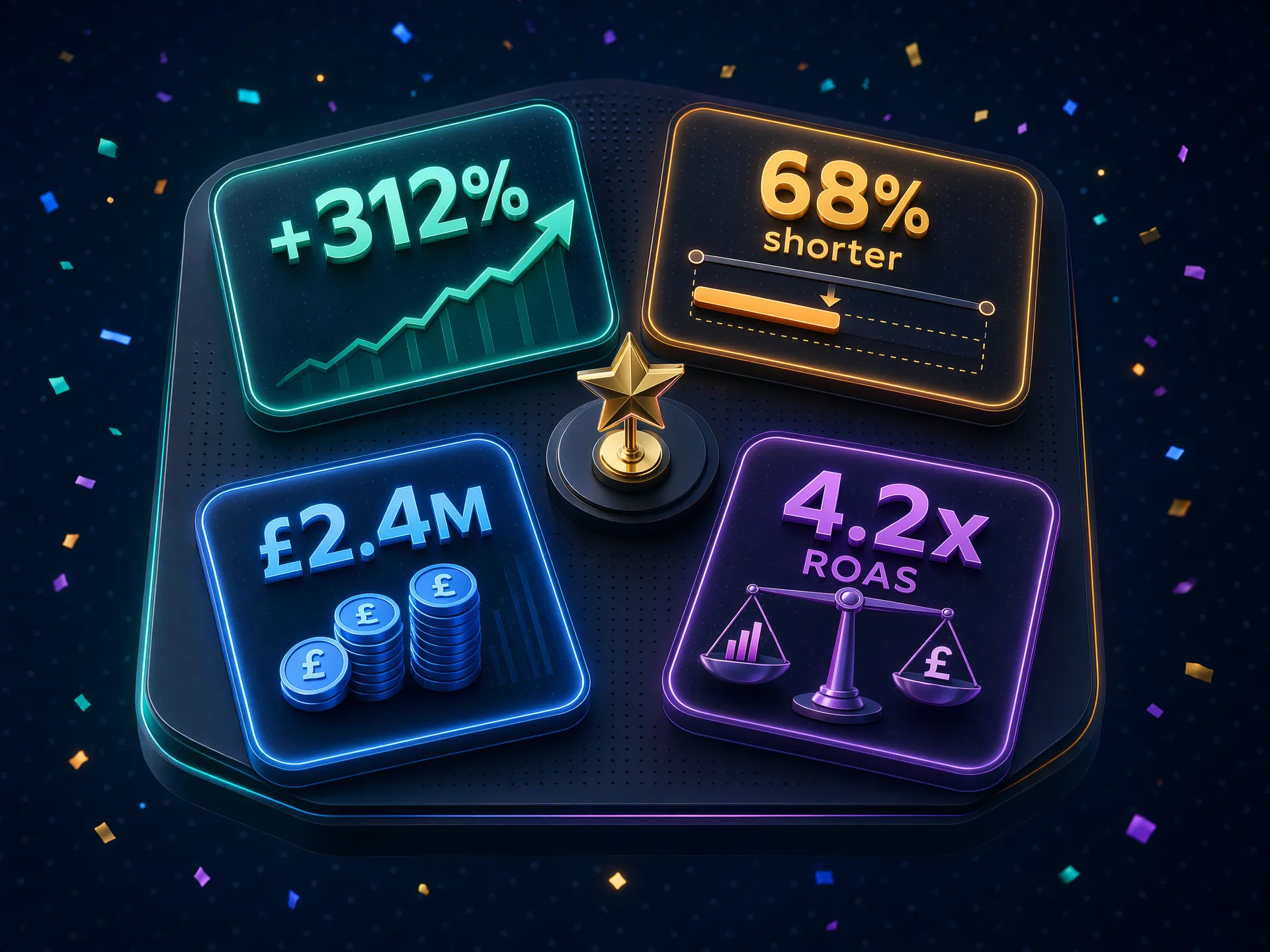
Pipeline Growth
in 90 days
Shorter Sales Cycle
14 months → 4.5 months
New Pipeline
directly attributed
ROAS
on ABM spend
Tier 1 Accounts
high fit + high intent
LinkedIn Reply Rate
4× industry average
THE CHALLENGE
A 14-Month Sales Cycle and a Pipeline That Wasn't Moving
The company had a genuinely strong product, a revenue intelligence platform that integrated with Salesforce, HubSpot, and Gong. Their NPS was high, their churn was low, and their existing customers loved them. But they couldn't replicate that success at scale.
Their outbound sequences were generic. Their LinkedIn ads targeted "VP Sales" across every industry and company size. Their sales team was spending 60% of their time on deals that would never close, because the accounts were simply not a fit.
The average sales cycle had crept to 14 months, nearly double the 6–8 month benchmark for their category. The board had set a clear mandate: fix the pipeline quality problem, or the growth plan was at risk.
THE INSIGHT
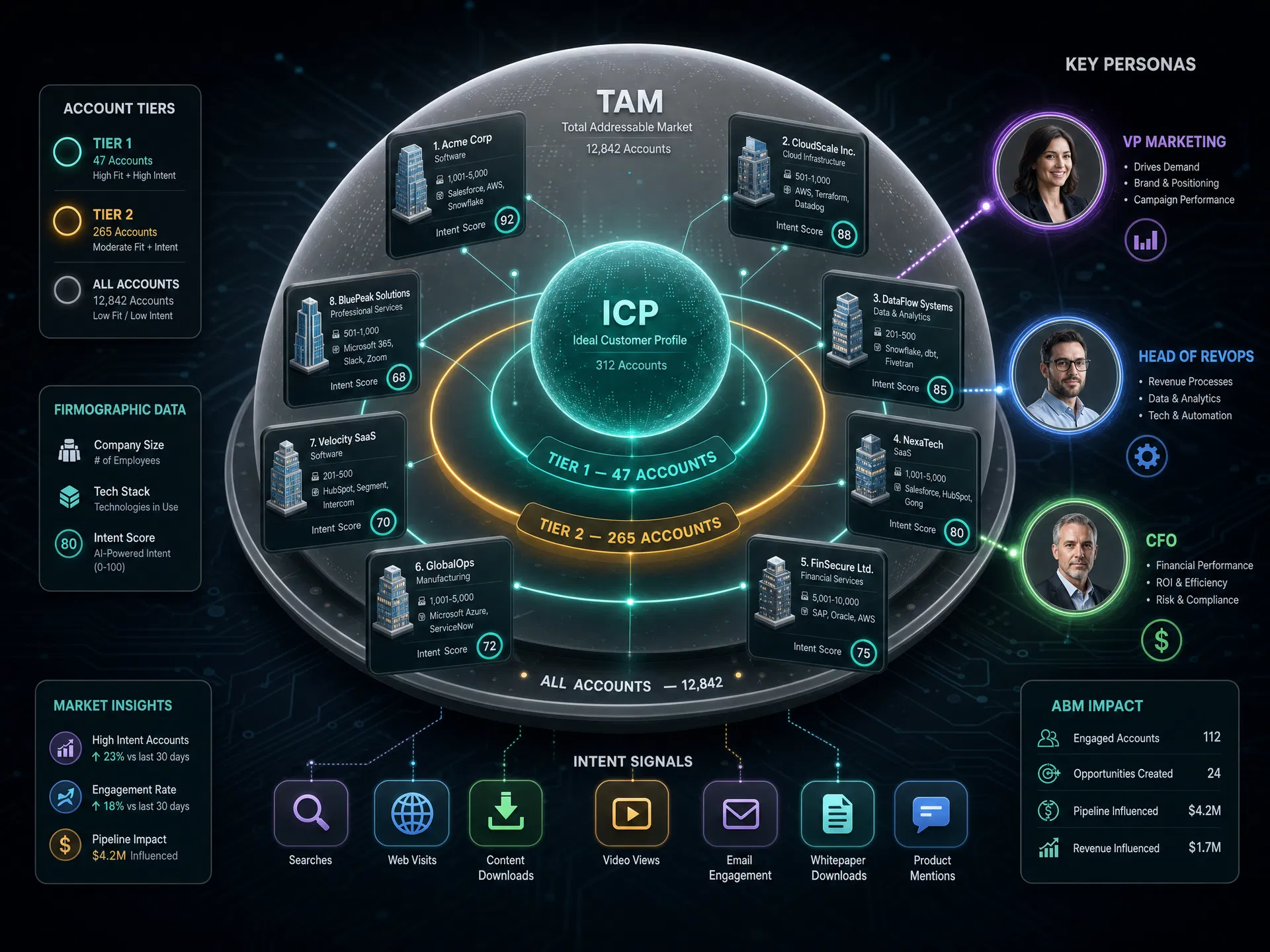
Stop Marketing to Job Titles. Start Marketing to Buying Committees.
B2B SaaS deals are never decided by one person. The average enterprise buying committee has 6–10 stakeholders, each with different priorities, different objections, and different definitions of success. Generic messaging fails all of them.
VP Marketing
Needs to prove pipeline contribution and brand ROI to the board.
Show them attribution clarity and campaign-to-revenue proof.
Case studies, ROI calculators, pipeline dashboards
Head of RevOps
Owns the tech stack. Worried about integration complexity and data quality.
Show them native integrations, clean data models, and fast onboarding.
Technical docs, integration guides, implementation timelines
CFO
Signs the budget. Focused on financial risk, payback period, and compliance.
Show them payback period, risk mitigation, and total cost of ownership.
ROI models, security certifications, contract flexibility
"A message that converts a RevOps lead will actively repel a CFO. Buying committees don't need the same story, they need the same outcome told in completely different languages."
THE EXECUTION
A 6-Stage ABM Program Built Around Intent Signals
Rather than launching campaigns and hoping the right accounts would find them, we built an intent-triggered program that activated only when target accounts showed active buying signals, maximizing relevance and minimizing wasted spend.
CHANNEL PERFORMANCE
When a Tier 1 account showed a Bombora intent surge (score ≥ 70) or visited the pricing page twice in 7 days, an automated sequence fired: LinkedIn connection request from the AE → personalized email within 24 hours → direct mail piece dispatched within 48 hours. This three-touch sequence generated a 41% meeting-booked rate from Tier 1 accounts.
from intent-triggered sequence
THE RESULTS
90 Days. £2.4M Pipeline. 68% Shorter Sales Cycle.
Precision beats volume. 47 carefully selected accounts delivered more qualified pipeline than 12 months of broad-based demand generation.
BEFORE → AFTER
By the end of the 90-day program, the company had 12 Tier 1 accounts in active opportunity, a sales cycle that had been cut by 68%, and a board that finally had a clear, repeatable model for enterprise growth. The ABM program became the foundation of their go-to-market strategy for the following year.
SERVICES USED IN THIS ENGAGEMENT
FAQ
Questions About This Engagement
What was the core challenge for this B2B SaaS company?+
The company had a solid product but was marketing to everyone and converting no one. Their outbound sequences were generic, their LinkedIn ads were targeting by job title alone, and their sales cycle was running at 14+ months, far above the 6–8 month industry benchmark. They needed a complete ICP rebuild and a systematic ABM program to concentrate spend on accounts most likely to close.
How was the Ideal Customer Profile (ICP) defined?+
We ran a full firmographic and technographic audit across their existing customer base: company size (201–1,000 employees), industry verticals (SaaS, Professional Services, FinTech), tech stack signals (Salesforce + HubSpot users showed 3.2x higher close rates), and intent data from Bombora and G2. This produced a Tier 1 list of 47 high-fit, high-intent accounts and a Tier 2 list of 265 accounts for nurture.
What did the buying committee mapping reveal?+
For each Tier 1 account, we mapped three key personas: the VP Marketing (demand-gen owner, cares about pipeline and brand), the Head of RevOps (process and data owner, cares about integration and attribution), and the CFO (financial sponsor, cares about ROI and risk). Each persona received completely different content tracks, ad creative, and outreach sequences, because a message that converts a RevOps lead will actively repel a CFO.
What channels and tactics drove pipeline growth?+
The program combined LinkedIn Conversation Ads targeted at buying committee members, personalized direct mail to Tier 1 accounts, intent-triggered email sequences (firing when an account showed Bombora surge signals), and sales enablement one-pagers tailored to each persona. LinkedIn Conversation Ads to the VP Marketing persona delivered a 34% reply rate, 4x the industry average.
What results were achieved and over what timeframe?+
Over 90 days: qualified pipeline grew by +312%, average sales cycle shortened from 14 months to 4.5 months (68% reduction), £2.4M in new pipeline was attributed directly to the ABM program, and overall ROAS reached 4.2x. Twelve Tier 1 accounts moved from cold to active opportunity within the first 60 days.
How does ABM differ from traditional B2B demand generation?+
Traditional demand gen casts a wide net, maximizing reach and lead volume. ABM inverts this: you identify the exact accounts you want to win, map every stakeholder in the buying committee, and orchestrate personalized multi-channel programs for each one. The result is higher conversion rates, shorter sales cycles, and deals that are far less likely to churn, because you sold to the right people from the start.
ABOUT THE STRATEGIST
Modi Elnadi
Director of Marketing & AI Growth · Founder, Integrated.Social
Modi Elnadi is a senior AI growth marketing strategist with 16+ years of experience across B2B SaaS, FinTech, ecommerce, and enterprise technology. He has led growth programs for VC-backed startups, FTSE-listed companies, and scale-ups across the UK, US, and MENA.
His specialism is the intersection of data science and brand strategy — building systems that are simultaneously analytically rigorous and creatively distinctive. The ABM program described in this case study is a direct application of the (Re)Target framework he developed over a decade of performance marketing engagements.
Modi founded Integrated.Social to bring senior-level AI marketing expertise to ambitious B2B and ecommerce brands. Without the overhead of a traditional agency. He works directly with founders, CMOs, and growth teams.
CREDENTIALS
READY TO BUILD YOUR ABM PROGRAMME?
Let's Build Your ICP and Start Winning the Right Accounts
Book a free 45-minute AI Growth Audit. We'll review your current ICP, identify your top 20 target accounts, and outline a 90-day ABM roadmap.