ChatGPT Ads Is Learning the Language of Performance Media
ChatGPT Ads is no longer only an experimental placement inside a conversational product. It is acquiring the operating features media buyers expect: automated bidding, platform targeting, conversion optimisation and attribution controls.
Search Engine Land reported that OpenAI added a Maximize results strategy, platform-specific targeting and one-day view-through attribution for eligible accounts. OpenAI's own documentation confirms CPM, CPC and conversion-optimised CPC objectives, along with separate reporting for view-through conversions.
That is operational progress. It is also where measurement risk begins.
For advertisers evaluating the channel, our PPC and Performance Max service [blocked] applies the same conversion-governance discipline across bidding, attribution and CRM-qualified outcomes.
The easier a platform makes optimisation, the more disciplined advertisers must become about what the reported result actually means.
What Changed in ChatGPT Ads
The platform now supports a more familiar campaign architecture:
| Capability | What it enables | Governance question |
|---|---|---|
| Maximize results | Automated bid adjustment around a selected outcome | Is the outcome commercially meaningful? |
| Platform targeting | Separate Web, iOS App and Android App inventory | Are results comparable across environments? |
| oCPC optimisation | Bidding toward conversions | Is the conversion clean, deduplicated and qualified? |
| One-day VTA | Supplemental reporting after an impression without a click | Is attributed influence being confused with incremental lift? |
OpenAI's measurement guidance is unusually explicit on one point: view-through conversions do not affect bidding, billing, CPA or conversion optimisation. They are a supplemental metric. If an eligible impression and click both exist, the click receives credit.
That is responsible product design. It does not remove the human temptation to add view-through numbers to a performance deck and call the total "conversions generated."
The Measurement Trap Is Not the Metric. It Is the Decision.
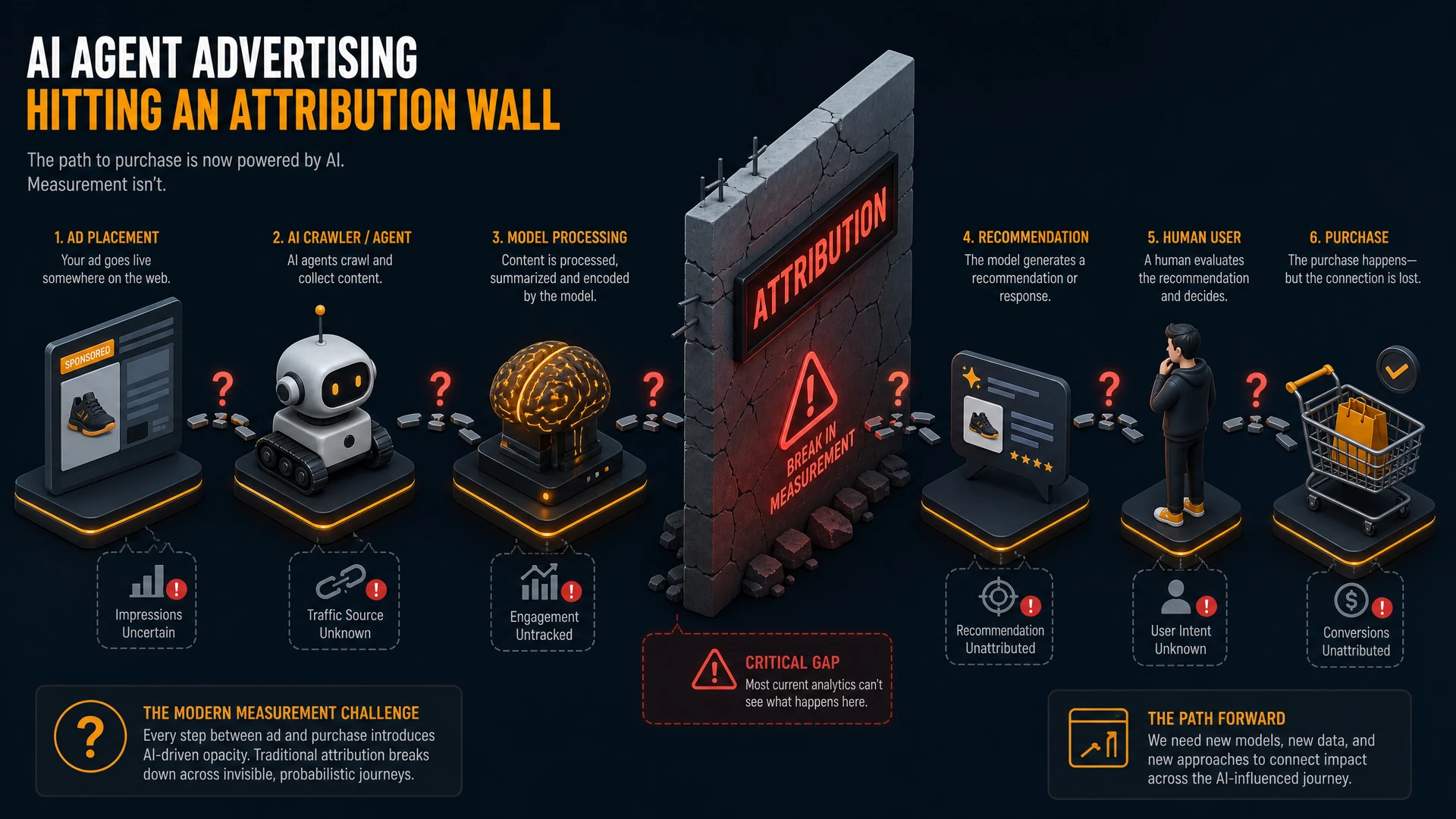
View-through attribution can be useful. A person may see an ad, remember the message and convert later without clicking. The problem begins when the platform-reported relationship is treated as proof that the ad caused the conversion.
Attribution asks, "Which touchpoint can receive credit under this rule?"
Incrementality asks, "Would this conversion have happened without the advertising?"
Those are different questions. Our analysis of the GEO attribution crisis [blocked] reaches the same conclusion for AI search: influence without a click is commercially real, but a platform's model is not a substitute for an experimental counterfactual.
Automated Bidding Makes Conversion Governance More Important
Automated bidding is only as intelligent as the signal it receives. If an advertiser optimises toward every form fill, the system will find inexpensive form fills. If it optimises toward qualified opportunities, it will need reliable feedback from the CRM and enough volume to learn.
Before enabling automated optimisation, define a conversion hierarchy:
- Engagement event: a useful behavioural signal, not revenue.
- Lead event: a person or account has raised a hand.
- Qualified event: the lead meets commercial criteria.
- Revenue event: a transaction, contract or recognised value.
For B2B campaigns, the third and fourth levels should govern budget decisions whenever possible. A channel that produces cheap unqualified leads is not efficient merely because an interface reports a low CPA.
Platform Targeting Creates a New Diagnostic Layer
Separating Web, iOS App and Android App inventory is useful because user behaviour, intent and measurement reliability can differ significantly by environment.
A simple test plan should compare:
- Conversion rate and qualified rate by platform.
- Creative and landing-page performance by environment.
- Click-through versus view-through contribution.
- CRM progression and revenue by campaign and platform.
- Duplicate attribution across search, social, email and direct traffic.
Use the free UTM Campaign Builder [blocked] to keep external destination naming consistent, but remember that UTMs describe traffic. They do not prove causality.
Modi's PoV: Treat ChatGPT Ads as an Influence Channel With Performance Controls
ChatGPT sits close to research, comparison and decision framing. That makes it potentially valuable for categories where buyers ask complex questions before acting.
It also means the channel may influence outcomes that are later completed through branded search, direct navigation or another device. The answer is not to ignore that influence. The answer is to measure it in layers:
| Layer | Metric | Use |
|---|---|---|
| Delivery | Impressions, reach, platform | Operational diagnostics |
| Response | Clicks, engaged visits, enquiries | Behavioural response |
| Attribution | Click-through and view-through conversions | Platform-reported influence |
| Commercial quality | Qualified opportunities, margin, revenue | Business value |
| Incrementality | Holdout or geo-based lift | Causal impact |
Our agent-advertising analysis [blocked] asks what an impression means when software agents, rather than humans, encounter a message. ChatGPT Ads adds a related challenge: a human may be influenced inside a conversation but convert elsewhere. Both require measurement systems designed around decisions, not only clicks.
A Practical B2B Test Plan
Run a limited test with one audience hypothesis, one meaningful offer and one clean qualified conversion. Separate Web and app inventory. Keep VTA visible but outside the primary CPA calculation. Reconcile conversions with CRM outcomes weekly. Where spend is material, use a holdout, matched geography or phased rollout to estimate lift.
Then ask a simple question:
Did ChatGPT Ads create additional qualified demand, or did it become another platform claiming credit for demand that already existed?
The new automation can make campaigns easier to operate. Only disciplined conversion governance will make them easier to trust.