AI Search: The Future of Conversational Commerce in 2026
How AI AI Search Era Direct Offers Are Rewriting the Shopping Digital Funnel
TL;DR Summary
Google AI Mode is evolving from “answers” to transaction-capable shopping, including native checkout for eligible retailers in the U.S., allowing users to discover new products seamlessly.
Universal Commerce Protocol (UCP) standardises how AI surfaces connect to merchant backends for discovery → cart → checkout.
Direct Offers is a Google Home Google Ads pilot that serves incentives inside AI Mode when purchase intent is high, shifting monetisation into the conversation.
The funnel is being compressed: fewer clicks, more “in-session” decisions, and more reliance on product data + offers + trust signals.
Winning now requires a commerce operating system: Merchant Center data hygiene, offer governance, checkout readiness, and incrementality measurement.
The main failure mode is margin erosion (discounting conversions you would have won anyway).
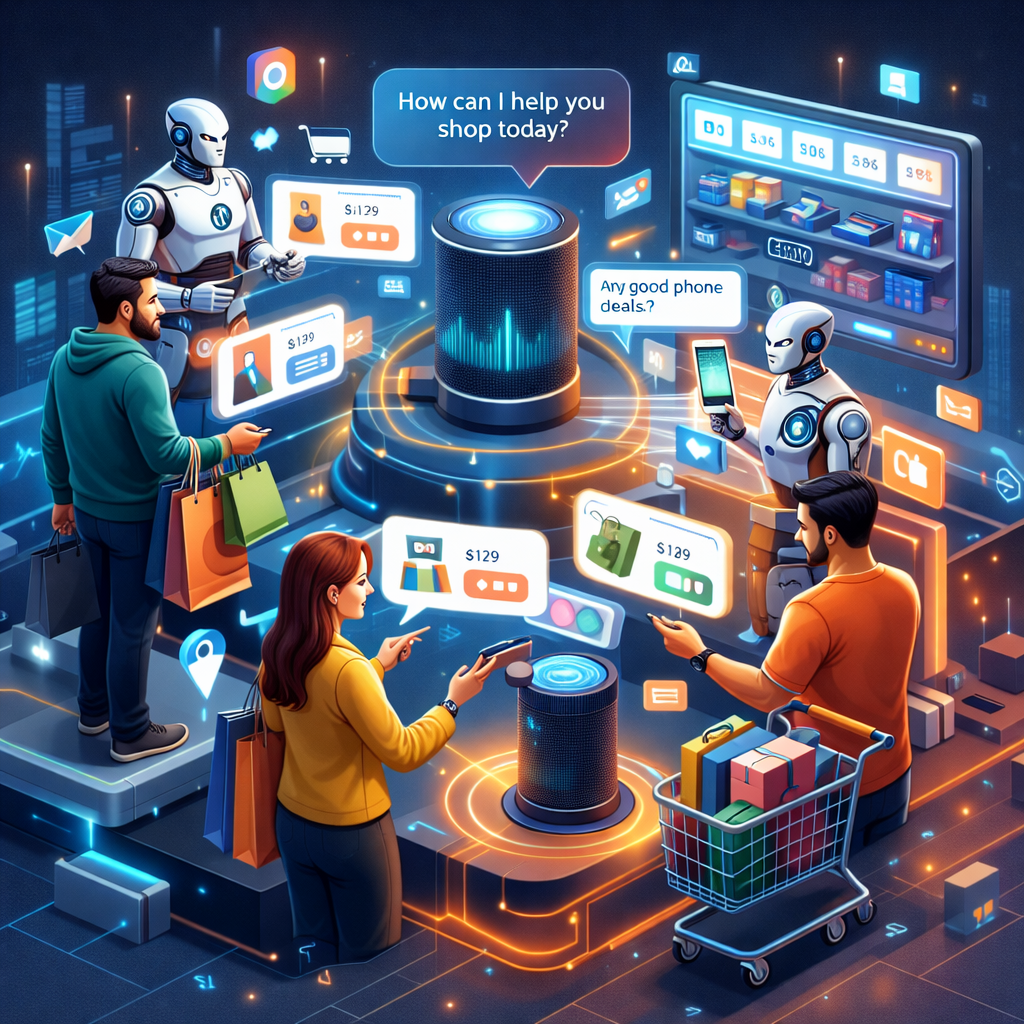
Quick Answer: Transaction-Capable AI Search Engine
Google AI Mode is turning AI search into a commerce channel by combining conversational answers with product listings, native checkout (via UCP), and a new “Direct Offers” ads pilot that serves incentives at the decision moment, allowing customer interactions to help customers complete transactions seamlessly. The practical play is to optimise not only for visibility, but for offer eligibility, product data quality, checkout trust, and incrementality measurement.
AI search monetisation is shifting from “pay for a click” to “influence the decision inside the conversation,” using offers, product data, and checkout readiness.
What is Google AI Mode as an ecommerce channel?
Google AI Mode is an end-to-end conversational search experience powered by Google's Gemini models that can present answers, product recommendations, and (in eligible cases) commerce actions inside the AI experience, leveraging advanced machine learning techniques. The future of conversational commerce indicates that in 2025–January 2026 announcements, Google positioned AI Mode and the Gemini app as shopping surfaces that can connect to merchant backends and enable checkout flows for eligible retailers, initially focused on the U.S.
Who it's for: ecommerce brands, retailers, marketplaces, and performance teams that rely on Google for discovery and conversion.
Why this matters right now for direct shopping online
Google is actively bridging discovery and purchase with (1) UCP to standardise agentic commerce connections, (2) native checkout in AI Mode product listings for eligible merchants, (3) Business Agent experiences, and (4) Direct Offers, an AI Mode ads pilot that surfaces incentives when intent is high, guiding customers through their purchase journey on a conversational commerce platform. This compresses the funnel into fewer steps and increases the importance of product data freshness, offers strategy, and trust signals.
If your 2026 plan treats AI Mode as a part of the digital shopping experience and “just another SERP,” you will misallocate budget. Treat it like a new commerce surface with its own merchandising, pricing, and measurement rules.
Brands should run AI search like a commerce channel, not a visibility channel. If your 2026 plan treats AI Mode as “just another SERP,” you will misallocate budget. AI-driven discovery is a distinct commerce surface with its own merchandising, pricing and measurement rules, not merely an additional place to chase visibility. Treat it like a commerce channel: optimise for intent-to-buy interactions, curate concise answerable inventory, design conversational offers that enhance customer engagement supported by AI-powered service agents, and price points that convert within the model's UX, and instrument bespoke conversion events and ROI metrics instead of relying on traditional click-through or impression counts. Brands that run AI search with retail-first tactics (prioritising buyability, attribution-ready experiments and channel-specific creative) will capture higher-intent demand and avoid wasting spend on tactics that work only for legacy SERPs.
How AI Conversational Commerce Works
Universal Commerce Protocol (UCP)
UCP is Google's described standard for enabling agentic commerce experiences across the ecosystem, creating a common language between consumer AI surfaces (like AI Mode on Search and Gemini) and business backends (catalogue, cart, checkout), enhancing customer support interactions through live chat.
Native/agentic checkout
Google has described checkout experiences in AI Mode and the Gemini app where eligible shoppers can purchase from eligible U.S. retailers while researching, using payment methods and shipping details saved in Google Wallet, potentially interacting with a virtual assistant, enhancing the conversational commerce experiences (with PayPal mentioned as “soon”).
Direct Offers and Conversational Ads
Direct Offers is positioned as an ads pilot that surfaces exclusive deals inside AI Mode when Google detects high purchase intent, effectively inserting an incentive at the decision point within the conversation, including in social media direct messages, enhancing the handling of customer inquiries.
Conversational commerce (AI commerce)
This is the umbrella shift: the “session” is no longer just research, it can become discovery → evaluation → deal → checkout in one conversational flow.
Conversational commerce in AI search is when an AI answer experience (AI Mode/Gemini) can recommend products, answer objections, present incentives, and trigger checkout without requiring the user to follow a traditional click path.
Step-by-step: How to win revenue in AI search without destroying margin
This is the practical operating model I would implement in 30–60 days.
Step 1: Separate “AI visibility” from “AI commerce eligibility”
AI Mode success splits into two tracks:
Visibility: citations, product panels, recommendation inclusion.
Eligibility: the ability to convert in-session (checkout readiness, promotions, trust signals).
Google's announcements make clear that commerce actions depend on eligibility and integrations, not just content.
Step 2: Treat Merchant Center as your “AI product knowledge base”
AI Mode shopping experiences are data-driven. Your feeds, attributes, availability, pricing freshness, and product media assets become the inputs to what the AI can confidently recommend.
Implementation checklist (minimum viable):
Tight availability + price refresh cadence
High-quality images (consistent angles, accurate variants)
Clear shipping, returns, and delivery promises
Structured attributes for compatibility, alternatives/substitutes, and product Q&A-style details (where available)
Step 3: Design an “offer system” not more discounts
Direct Offers will tempt teams to over-discount. Instead, define:
Offer types (discount, free shipping, bundle, loyalty value)
Eligibility rules (high-intent only, margin bands, stock constraints)
Measurement rules (incrementality threshold, new-to-brand guardrails)
Initial commentary suggests Direct Offers starts discount-led and may expand to value attributes beyond price.
Step 4: Align paid strategy to AI Mode realities
If Direct Offers runs alongside PMax and Standard Shopping, your structure needs clarity on:
What inventory is “promo-eligible”
How you avoid cannibalising conversions you would win anyway
How creative, price, and availability consistency is maintained across surfaces
Step 5: Build incrementality measurement before scaling
Your core question should be: “Did AI Mode offers create net-new profit, or did they buy the same customer with a discount and affect customer loyalty?”
This concern is explicitly raised in LinkedIn discussion patterns about Direct Offers.
Pragmatic incrementality tactics:
Geo split tests (where feasible)
Holdout audiences (new vs returning)
Margin-based ROAS targets
“Promo cost per incremental order” as a KPI, not just conversion rate
Common mistakes and how to avoid them
Mistake 1: Optimising for “mentions” while your product data is stale
AI commerce surfaces penalise uncertainty. If price/availability is unreliable, the AI has less reason to recommend or push checkout prompts.
Fix: Treat feed freshness like uptime.
Mistake 2: Using Direct Offers as a blunt discount weapon
The fastest way to lose is teaching the market to wait for AI-triggered discounts. Community debate already highlights concerns about pricing manipulation and fairness.
Fix: Use value-led offers (bundles, shipping, loyalty) where possible, and cap discount depth.
Mistake 3: Measuring the wrong thing (clicks instead of decisions)
In a compressed funnel, “click” becomes a weaker proxy. If checkout and decisioning shift into AI Mode, your analytics must track assist and conversion differently.
Fix: Add a measurement layer for AI Mode influenced conversions and incrementality.
Mistake 4: Treating SEO/AEO and paid media as separate silos
AI Mode blends answer quality, product knowledge, and offer relevance. Your SEO/AEO team and performance team need a shared operating model.
AI Tools: what to use, and when
If you are operationalising AI commerce visibility, these are the main “option categories” teams are choosing between: build vs buy (in‑house models and pipelines versus vendor platforms and APIs), horizontal vs vertical solutions (generalist search and recommendation engines versus domain‑specific models tuned for retail, grocery or luxury), first‑party data enrichment vs third‑party augmentation (leveraging CRM, behavioural and catalogue signals internally or enhancing with external datasets), real‑time inference vs batch optimisation (instant personalised responses and pricing versus periodic model retraining and bulk updates), closed loop experimentation vs rules‑based governance (A/B/n testing and automated learning versus manually curated fallbacks and guardrails), and platform integration scope (point solutions for search, ads or fulfilment versus end‑to‑end stacks including buy buttons, inventory and analytics). Each choice carries trade‑offs in speed to market, control, cost, explainability and regulatory risk, so teams should map options to their customer journey priorities and operational maturity before committing.
| Option | Best for | Pros | Cons | Watch-outs |
|---|---|---|---|---|
| Merchant Center feed + promotions excellence | Retailers ready to compete on AI Mode shopping | Strong control over product truth (price, availability, attributes) | Requires ops discipline and data engineering | Stale feeds reduce trust and visibility (productsup.com) |
| Performance Max (PMax) + Shopping alignment | Scale with Google’s automation | Broad reach across surfaces | Attribution opacity, cannibalisation risk | Needs incrementality guardrails (LinkedIn) |
| Direct Offers pilot (where available) | High-intent conversion lift | Incentives at decision moment in AI Mode | Margin risk, may discount “sure wins” | Treat as assisted selling, measure net-new profit (Search Engine Roundtable) |
| Business Agent / merchant-trained AI | Complex products, high consideration | Answers objections in brand voice | Setup effort, content governance | Needs accurate policies and product truth (Google Business) |
| On-site CRO and checkout optimisation | Maximising conversion outside AI Mode | Improves all channels | Doesn’t solve AI Mode eligibility alone | Align messaging with AI Mode promises |
Use cases
Home and furniture retail (high AOV, heavy research): AI Mode can compress comparison + deal + checkout, if trust signals are strong, enhancing product discovery for shoppers.
Beauty and personal care: questions + shade/fit concerns benefit from conversational answers plus value offers, facilitating effective product discovery.
Consumer electronics: compatibility and alternatives/substitutes attributes become decisive in AI answers.
Marketplace sellers (Shopify ecosystem): standardised protocol rails reduce integration friction, but increase dependency on Google's surface rules.
DTC subscription brands: Direct Offers could be powerful if used as “trial incentives” with strict incrementality controls.
Industry-specific opportunities for conversational commerce
Conversational commerce presents a wealth of industry-specific opportunities, allowing businesses to engage customers in tailored and meaningful ways, including interactions with human agents. Retailers can leverage this trend by integrating AI-driven chatbots that optimize conversation flows and offer personalized shopping experiences based on individual preferences and purchase history. For instance, a customer browsing a fashion website might receive tailored outfit recommendations through a chatbot, enhancing their shopping journey and driving sales conversions.
In the travel sector, conversational commerce can revolutionize the entire customer journey by providing real-time support for trip planning, booking modifications, and personalized recommendations. By utilizing messaging platforms, travel agencies can offer instant assistance and service experiences to travelers, ensuring a seamless experience that enhances customer satisfaction and loyalty. Overall, the rise of conversational commerce enables businesses across various industries to foster deeper customer connections, improve engagement, and ultimately drive revenue growth.
Retail, Travel, and Financial Services Applications
Retail applications of conversational commerce are rapidly evolving, with brands harnessing the power of chatbots and virtual assistants to personalize the better shopping experience. For example, a major clothing retailer can implement an AI-driven chatbot that assists customers in finding the perfect outfit. By analyzing customer feedback, preferences, and prior purchases, the chatbot can provide tailored suggestions, making shopping more efficient and enjoyable.
In the travel industry, conversational commerce is transforming how customers interact with travel services. Travel agencies can utilize generative AI-powered chatbots to help customers facilitate feedback collection, manage their bookings, provide real-time updates on flight statuses, and even suggest destinations based on user preferences. This level of personalization not only enhances the travel experience but also fosters customer loyalty as travelers feel more connected and supported throughout their journey.
The financial services sector is also embracing conversational commerce tools by integrating AI chatbots for customer inquiries, account management, and personalized financial advice, offering a kind of digital concierge experience. Customers can easily interact with these chatbots to check their account balances, inquire about loan options, or receive tailored investment recommendations. This seamless interaction not only improves customer satisfaction but also enhances operational efficiency for financial institutions, allowing them to serve clients more effectively while minimizing operational costs.
Key Takeaways
AI Mode is converging answers, offers, and checkout into one surface, enabling a better understanding of human language.
UCP is the connective tissue: AI surfaces ↔ merchant backends.
Direct Offers shifts monetisation into the conversation, not the click.
Merchant Center data quality is now “AI merchandising,” not admin.
The biggest risk is margin loss through non-incremental discounting.
Measurement must evolve toward incrementality and assist-to-purchase.
Teams that unify SEO/AEO + paid + feed ops will out-ship teams that optimise in silos.
AI Commerce FAQs
1) What is the Universal Commerce Protocol (UCP)?
UCP is a protocol Google describes as a standardised language that lets artificial intelligence consumer surfaces (AI Mode, Gemini) connect securely to commerce backends for discovery, cart, and checkout. In practice, it is Google's attempt to make agentic commerce integrations repeatable across merchants and partners.
2) What are “Direct Offers” in Google AI Mode?
Direct Offers is a Google Ads pilot that surfaces exclusive deals and relevant products directly inside AI Mode results when the system detects high purchase intent. It's designed to convert “in-session” by presenting an incentive at the decision moment.
3) Do Direct Offers replace Performance Max or Shopping campaigns?
Current commentary indicates Direct Offers runs alongside PMax and Standard Shopping, rather than replacing them. Practically, treat it as a lever for good customer relationships and customer service and incremental conversion, and measure whether it adds net-new orders or just discounts existing demand.
4) Is Google AI Mode commerce available globally?
Announcements referenced eligible U.S. retailers first for checkout-related features. Do not assume parity in the UK/EU until Google confirms rollout and eligibility rules for your region.
5) Will AI Mode reduce website traffic?
If more evaluation and conversion of customer data happen inside the AI experience, some click-through patterns can change. That does not mean you “lose,” but it does mean you must measure average order value and revenue influence beyond last-click landing sessions.
6) What data matters most to be recommended in AI Mode shopping?
High-confidence product truth: up-to-date price, availability, shipping/returns promises, and clean assets. Industry writeups emphasise frequent refresh and consistent media as a ranking and trust factor in AI Mode panels.
7) Will this become a discount race?
It could, if teams treat Direct Offers as “always-on discounts.” The safer play is offer governance: cap discount depth, use value-led offers (shipping, bundles), and require incrementality proof before scaling.
8) Can merchants manipulate pricing in agentic commerce?
Community discussion has already raised concerns that merchants could expose different pricing via protocol channels, and that regulation differs by region. The key takeaway is trust will become a competitive moat, and inconsistent pricing can backfire in the purchasing process.
9) What is “Business Agent” and why does it matter?
Business Agent is positioned as a merchant-configurable AI that can answer product questions in a brand's voice during shopping moments, taking into account individual customer preferences and purchase history. Thanks to the power of AI, for high-consideration categories, it can reduce friction by addressing objections before checkout.
10) How do I measure incrementality for AI Mode offers?
Run holdouts where possible, compare new-to-brand rates, and track “promo cost per incremental order.” LinkedIn patterns around Direct Offers explicitly ask for guidance on net-new impact versus PMax/Shopping.
11) What is the best “first move” for a mid-sized retailer?
Start with Merchant Center and feed quality, then align promotions governance, then test Direct Offers only when measurement guardrails exist. UCP and checkout features enhance customer experience as enablement, while also providing the benefits of conversational commerce; however, data quality is the foundation.
12) What’s the strategic shift for SEO/AEO?
The goal expands from “rank and earn clicks” to “be the trusted product answer and the eligible checkout option.” That means content, entity clarity, and product truth must work together. The strategic shift for SEO/AEO is from optimising for indexed keywords and backlinks to designing for intent-driven, answer-first discovery across AI and search ecosystems: marketers must prioritise structured, conversational content, entity clarity, and experience signals that feed AI answer engines and marketplace search layers. This means moving investment into high-quality, authoritative content that anticipates multi-step user journeys, implementing schema and semantic markup to ensure entity and attribute clarity, and aligning technical SEO with promptable assets; snippets, FAQs, product data and performance creative, that maximise visibility within AI responses and commerce surfaces. Measurement shifts too: success metrics evolve from rank and clicks to outcome-based indicators—answer impressions, conversions from AI referrals, attributable revenue and repeat purchase and require integrated measurement across search, shopping and conversational endpoints.
13) Are conversational ads different from traditional Search ads?
Yes, the key difference is timing and context: conversational ads like Direct Offers appear within AI answers when intent is inferred as high, providing instant support and freeing up valuable time rather than relying on a static query-to-ad pattern.
14) Is privacy becoming a performance variable?
Yes. As AI experiences incorporate more personal context, personalisation can improve relevance but also increases governance and trust requirements.
Conversational Commerce vs. Social Commerce: Key Differences
Two distinct paradigms shape the modern shopping landscape: conversational commerce and social commerce. While conversational commerce focuses on enhancing customer experience through personalized interactions—utilizing voice assistants, Facebook Messenger, and AI-driven chatbots for product discovery—social commerce leverages social media platforms to drive sales through user-generated content and peer influences. The engagement in conversational commerce facilitates direct communication and instant support, while social commerce capitalizes on customer social dynamics and relationships. Understanding these differences will help businesses tailor their strategies to better meet customer preferences and expectations.
Optimizing Brand Presence in the Conversational Commerce Era
Optimising brand presence in the conversational commerce era requires a unified strategy that blends AI-driven discovery with human-centred experience; ensure your brand is discoverable across search, marketplaces and AI answer engines by aligning taxonomy, content and structured data for intent-led queries; deploy conversational assets (chatbots, voice and messaging) that reflect brand tone and resolve purchase intent quickly; personalise recommendations and messaging using customer signals while safeguarding privacy; invest in performance creative optimised for micro-moments across channels; and close the loop with measurement that ties conversational interactions to revenue, ROAS and lifetime value so optimisation decisions prioritise high-intent conversion and repeat purchase.
Real-World Case Studies of AI-Powered Retail Experiences
Retailers deploying AI-powered experiences now showcase measurable uplifts across discovery, conversion and lifetime value: supermarkets use computer vision and shelf-sensor AI to cut out-of-stocks and raise on-shelf availability, boosting basket size; fashion brands apply generative AI to create personalised virtual try-ons that reduce returns and increase repeat purchases; grocery marketplaces combine shopper behaviour models with dynamic pricing and contextual search (AEO/GEO) to improve click‑through rates and order frequency; and homewares chains leverage predictive replenishment and automated merchandising to shorten fulfilment times and lift gross margin. Case studies routinely report double‑digit improvements in conversion rates, meaningful reductions in acquisition cost, and clearer attribution of incremental revenue to specific AI interventions, illustrating that when data governance, UX design and inventory operations align, AI converts discovery into durable commercial growth.
Conclusion
Google is building a future where AI Mode can answer queries, recommend products, including similar items, negotiate value and even trigger checkout, effectively turning search into a direct commerce channel for online retailers. In that landscape the winners won't be those who simply chase visibility metrics; they will be brands that operationalise product truth through accurate, real‑time feeds, enforce governance around offers and messaging, ensure checkout readiness across devices and platforms, and measure true incrementality rather than attribution vanity. Success will depend on treating the search interface as a transactional endpoint; optimising catalogue integrity, pricing and availability signals, conversion infrastructure and experiment frameworks; so AI‑driven answers reliably convert intent into measurable revenue.
What Next?
If you want a practical implementation plan, run an AI Search Commerce Audit covering Merchant Center data, offer governance, and measurement. Get in touch.
About Modi Elnadi
Modi Elnadi is the founder of Integrated.Social, a London-based AI Search, AEO (Answer Engine Optimisation), and performance marketing consultancy. He helps B2B and ecommerce brands translate AI search changes (Google AI Mode, AI Overviews, conversational ads, agentic commerce) into measurable growth by improving entity visibility, product data readiness, and product catalog optimization to enhance conversion-focused content and paid media execution.
Work with Modi: