

Understanding AI Governance: Quality Control in 2026
AI adoption is no longer a race for speed, it is a competition for provable quality. In 2026, “work with AI” only works if you can demonstrate governed outputs at scale: QA gates, red teaming, audit trails, monitoring, and human-in-the-loop controls where risk is real. This guide explains the frameworks (NIST, OWASP, EU AI Act, ISO 42001) and gives a practical step-by-step system to ship AI safely, credibly, and profitably.

11 Top AI Answers SEO Services for B2B Fintech Brands 2026
In 2026, B2B fintech visibility is won inside AI answers, not only on page-one rankings. This guide reviews the top AI Answers SEO services and agencies for fintech brands, and explains what matters most: compliance-aware content, technical SEO, structured data, Answer Engine Optimisation (AEO), and Generative Engine Optimisation (GEO) for Google AI Overviews, Google AI Mode, and ChatGPT-style discovery. You will also see practical AI performance marketing methods for scaling lead generation, from predictive scoring and personalisation to conversational AI qualification and revenue-linked reporting.

AI Search: The Future of Conversational Commerce in 2026
AI search is shifting from “answers” to “assisted buying.” Google AI Mode is starting to surface product recommendations, incentives, and even checkout flows inside the conversation, powered by the Universal Commerce Protocol (UCP) and pilots like Direct Offers. This guide explains what’s changing, why it matters for ecommerce and performance teams, and how to respond without destroying margin. You’ll get a practical framework for feed readiness, offer governance, and incrementality measurement in the new AI commerce funnel.

ChatGPT 5.2 Is Finally Here: What’s New, Why It’s Better, and How It Stacks Up vs Gemini 3 and Claude
GPT-5.2 is here: what’s new, key benchmarks (GDPval, SWE-bench, GPQA, ARC-AGI-2), and how it compares with Gemini 3 and Claude. ChatGPT GPT-5.2 analysed: new Instant/Thinking/Pro tiers, benchmark results, Gemini 3 vs Claude comparisons, and why OpenAI’s “code red” ends by January.
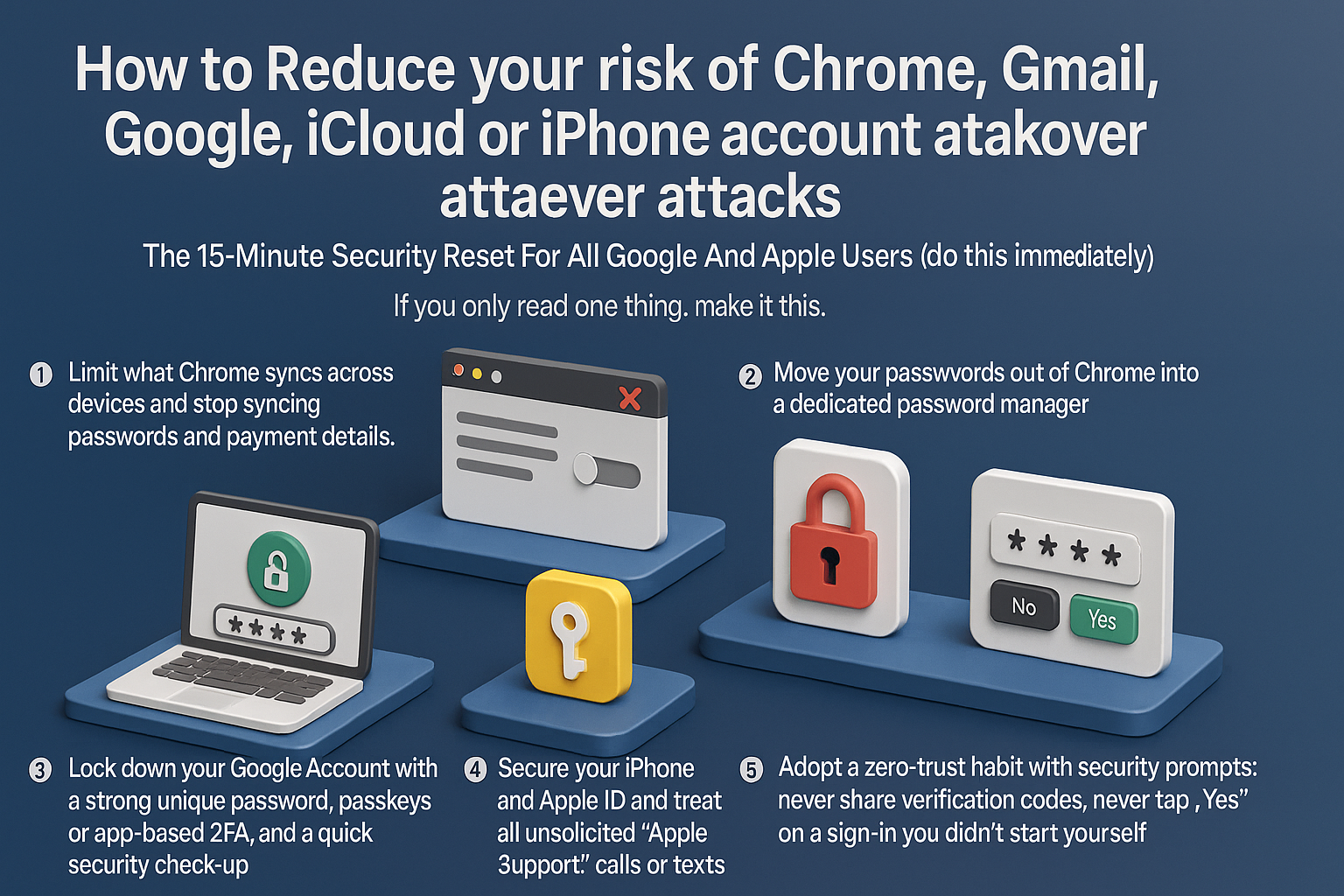
How To Stop Chrome & iPhone Account Takeovers: A 15-Minute Security Reset For Google And Apple Users
To reduce your risk of account takeovers, you must limit browser data exposure and adopt a zero-trust approach to security prompts. Start by disabling Chrome’s ability to sync passwords and payment details; move credentials to a dedicated password manager and delete old synced cloud data. Next, harden your Google and Apple accounts by enabling passkeys or app-based 2FA instead of SMS, and audit browser extensions to remove potential spyware. Crucially, defend against social engineering: never share verification codes, ignore unsolicited “support” calls, and deny any 2FA request you didn’t personally trigger. Attackers now prioritize hijacking browser sessions and manipulating recovery flows over simple password guessing. By isolating your passwords from your browser and refusing to validate unexpected login attempts, you neutralize the primary methods hackers use to compromise your digital identity.