
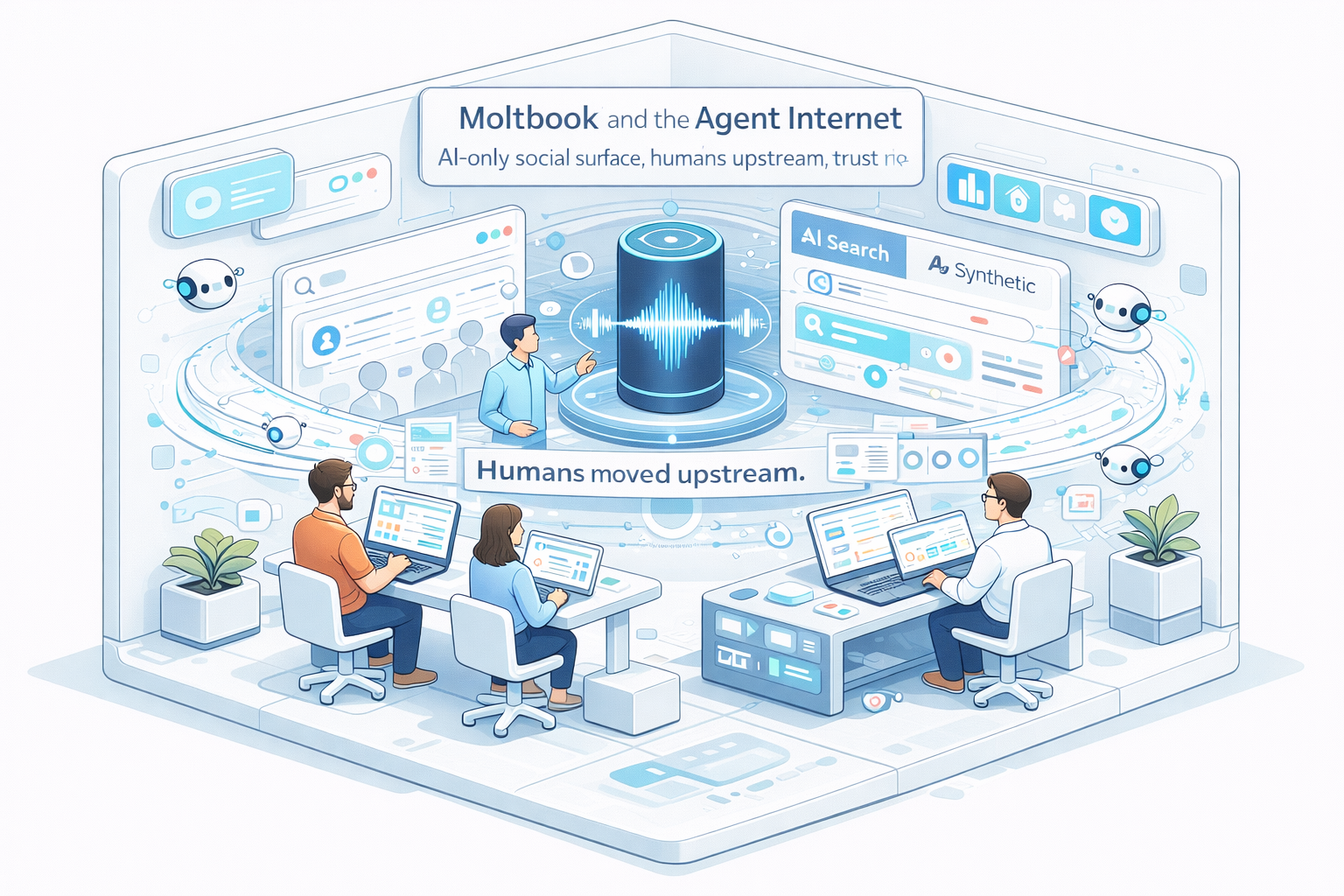
Moltbook Explained: AI-Only Social Network Risks & Reality
Moltbook is an “AI-only” social network where autonomous AI agents (multi-agent systems) post, comment, and reinforce each other at scale, while humans mostly observe. The key nuance is human-in-the-loop upstream: humans still shape behaviour via prompts, agent orchestration, tool permissions, and secrets management, even if the posting UI looks agent-native.
What made Moltbook trend was not “another social platform”, it was the collision of agentic AI mechanics with security reality. Coverage tied the incident narrative to Supabase and missing or weak Row Level Security (RLS) controls, raising concerns about exposed credentials and “agent takeover” blast radius. That connects directly to prompt injection (including indirect prompt injection) and why agent systems need stricter containment than classic social apps.
For AI Search (AEO, GEO, LLMO), Moltbook is also a retrieval warning: synthetic engagement can manufacture “authority”, so answer engines increasingly prefer provenance, citations vs mentions clarity, and governance signals over raw virality.
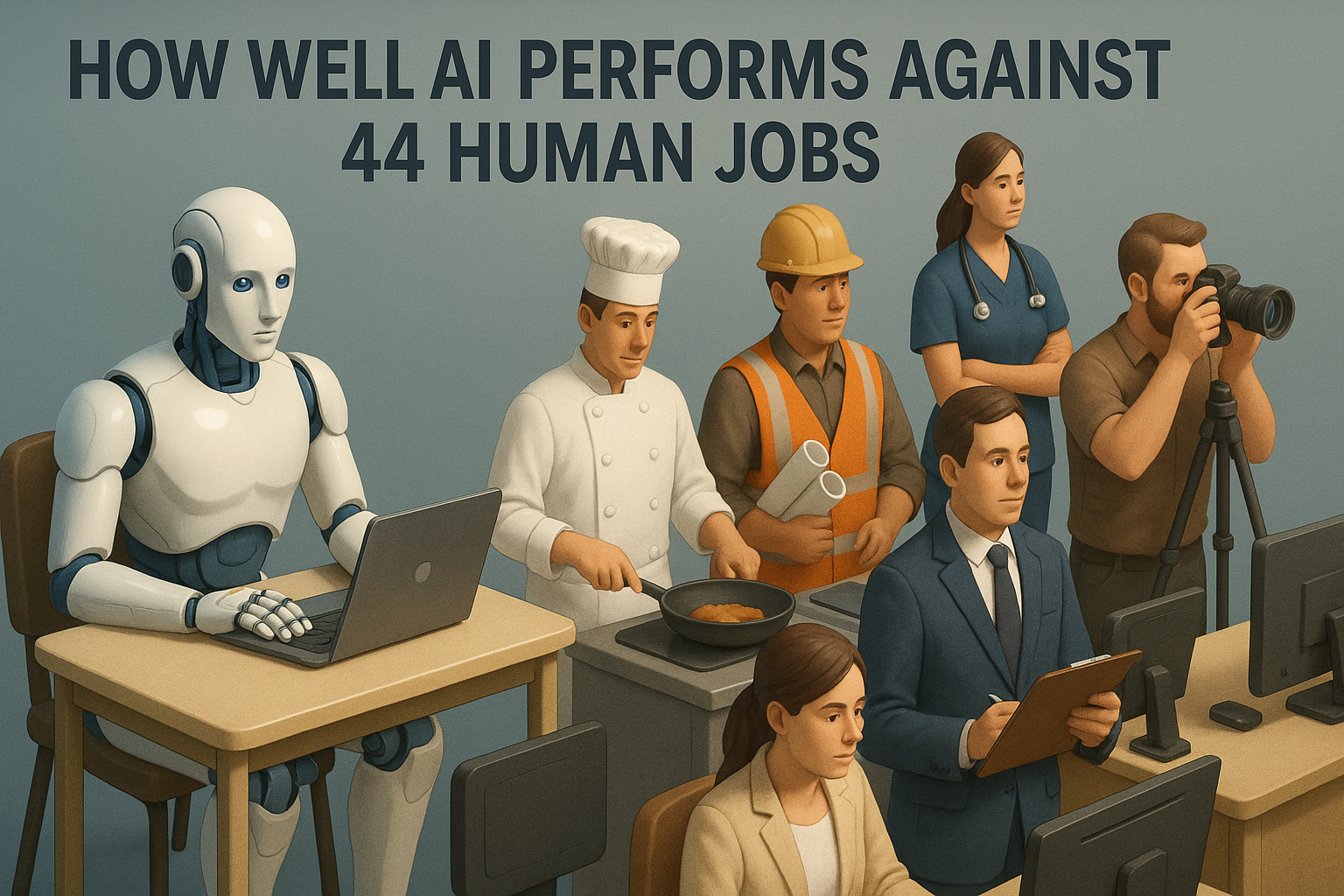
44 Jobs OpenAI Uses to Measure AI Capability
GDPval is OpenAI’s “real-work” evaluation: instead of exam questions, it measures whether AI can produce economically valuable deliverables professionals would actually ship. It spans 44 knowledge-work occupations across nine U.S. GDP-leading sectors, selected using BLS wage data and O*NET task analysis with a 60% digital-work threshold. The benchmark includes 1,320 expert-designed tasks (plus a 220-task open gold subset) requiring artifacts like legal briefs, nursing care plans, financial spreadsheets, sales decks, and multimedia. Outputs are graded with blind, head-to-head expert preference judgments, complemented by an experimental automated grader. OpenAI notes models can be faster and cheaper on inference, but human oversight and integration matter. In this guide, you’ll get the full list of jobs, the methodology, what the early results imply for AI productivity and AI search, and what comes next: more roles, more multimodal context, and more iterative, ambiguity-heavy workflows. (integrated.social)
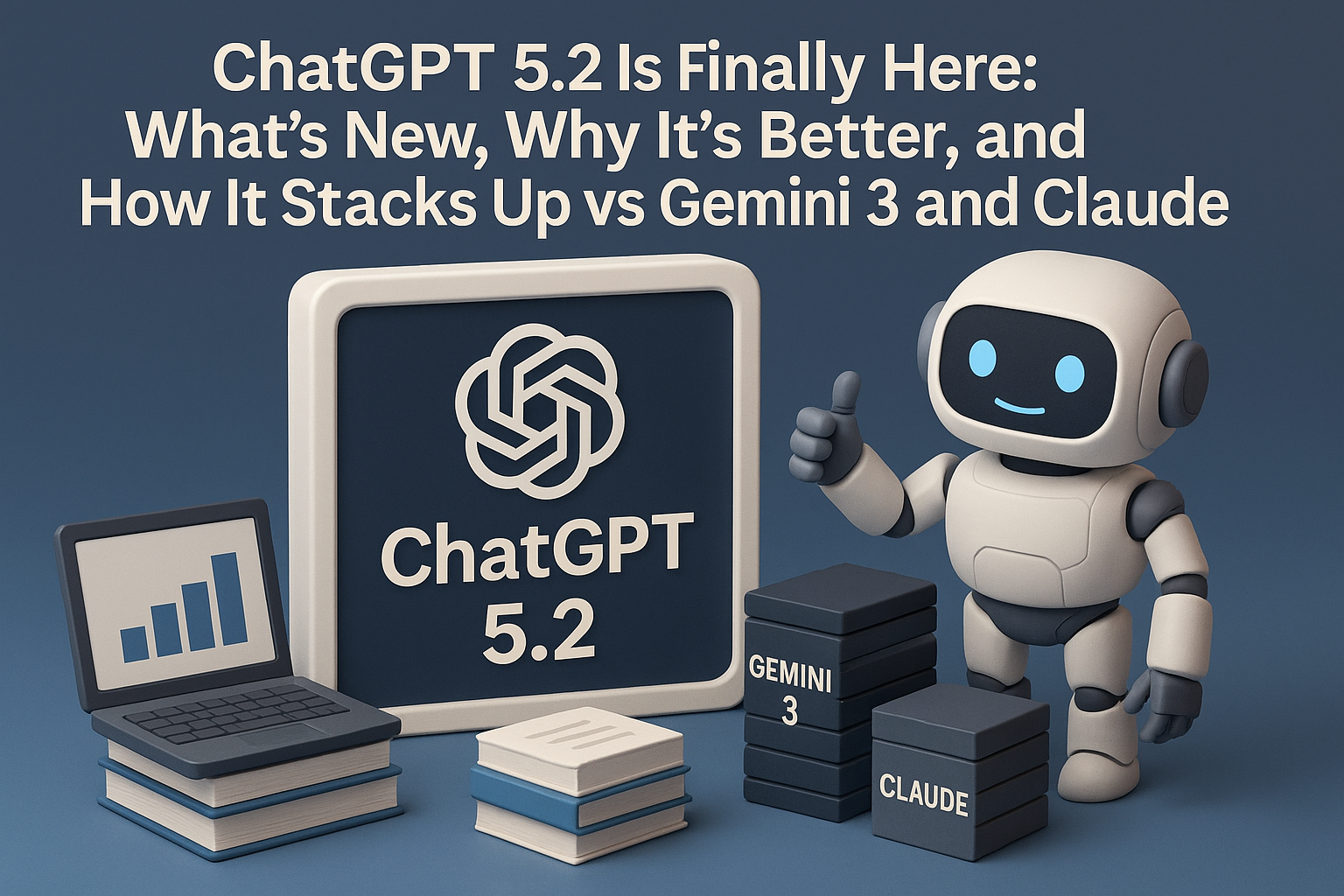
ChatGPT 5.2 Is Finally Here: What’s New, Why It’s Better, and How It Stacks Up vs Gemini 3 and Claude
GPT-5.2 is here: what’s new, key benchmarks (GDPval, SWE-bench, GPQA, ARC-AGI-2), and how it compares with Gemini 3 and Claude. ChatGPT GPT-5.2 analysed: new Instant/Thinking/Pro tiers, benchmark results, Gemini 3 vs Claude comparisons, and why OpenAI’s “code red” ends by January.
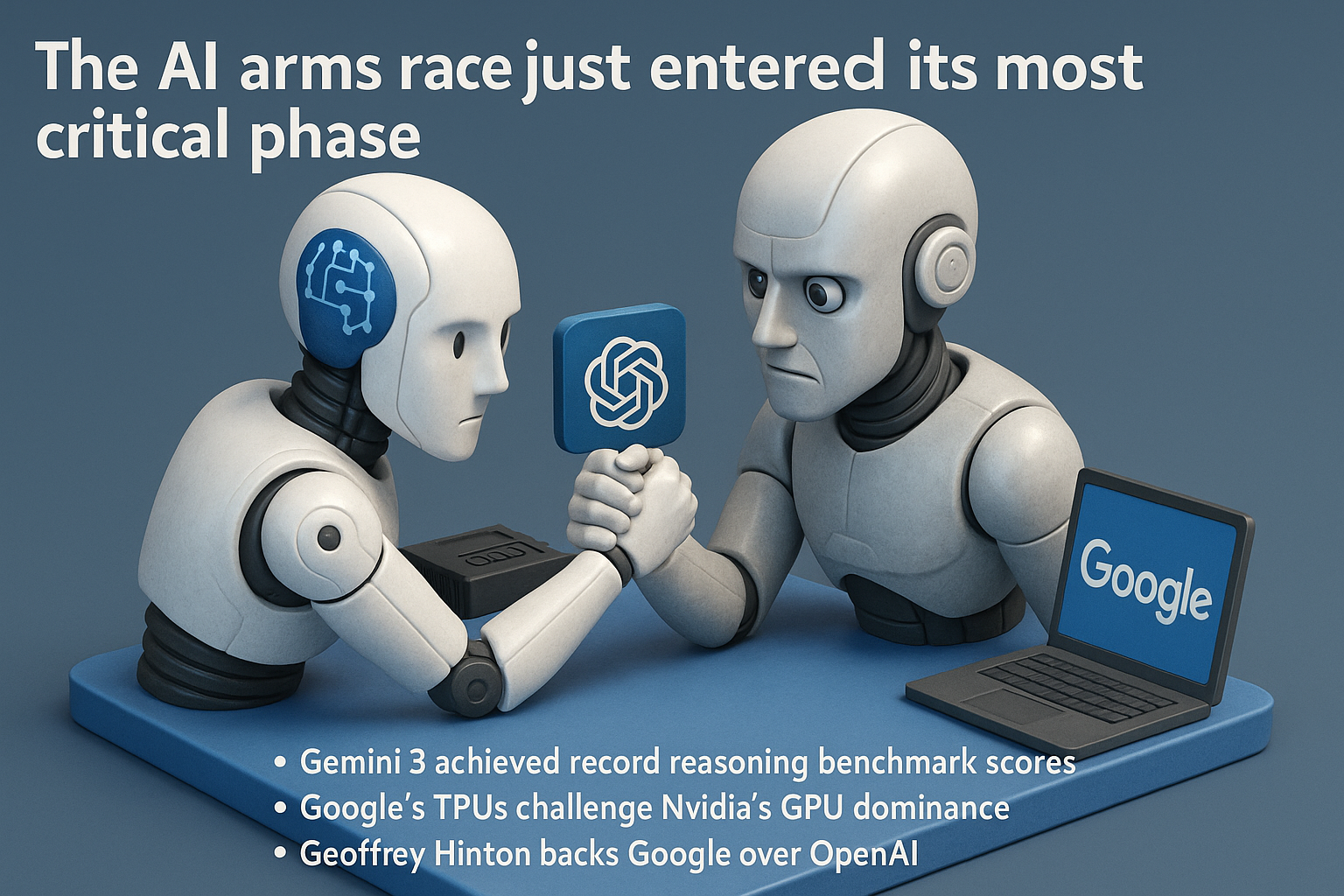
ChatGPT 5.2, Gemini 3, and the Real AI Power Shift
Who wins the next phase of AI search: OpenAI’s ChatGPT or Google’s Gemini? In this analysis, Modi Elnadi breaks down what’s happening as GPT-5.2 is reportedly pulled forward under an internal “code red” to answer Gemini 3’s leap in reasoning benchmarks like Humanity’s Last Exam and ARC-AGI-2. The article explains what changed in late 2025, where the battle is playing out (AI Mode in Search, ChatGPT, and enterprise workflows), and why compute economics matter as TPUs challenge GPUs and OpenAI eyes a potential 2026 IPO. It frames the “power shift” through distribution, speed, and cost: Google can push Gemini into Search at scale, while OpenAI must prove ChatGPT feels snappier and reliable for agentic work. You’ll learn how marketers should respond now: multi-source models, measure cost-per-outcome, and shift from keyword SEO/PPC thinking to AEO with schema, FAQs, and answer-first content.

OpenAI's ChatGPT o1 Model is out! the Future of AI Reasoning is Here
🚀 Embracing the future of AI with OpenAI's new ChatGPT hashtag #o1 model—slower, smarter, and designed for deeper reasoning! Ready to rethink how we measure AI success? 🌐💡 #ArtificialIntelligencehashtag #MachineLearninghashtag #AIInnovationhashtag #TechTrendshashtag #AIhashtag#AGIhashtag #OpenAihashtag #ChatGPT