AI Summary
- 87% of creative professionals are already using AI tools in their workflows (Adobe State of Creativity 2025), making creative industries one of the fastest AI-adopting sectors.
- Goldman Sachs estimates 26% of creative tasks are automatable by current AI — but the remaining 74% require human judgment, cultural intelligence, and emotional resonance that AI cannot replicate.
- The creative industries are bifurcating: AI is commoditising execution-level creative work (stock imagery, basic copywriting, template design) while simultaneously creating new demand for strategic creative direction and AI-augmented creative production.
- WEF's 2025 Future of Jobs Report identifies "AI and Machine Learning Specialist" and "Creative Director (AI-augmented)" as among the fastest-growing roles globally.
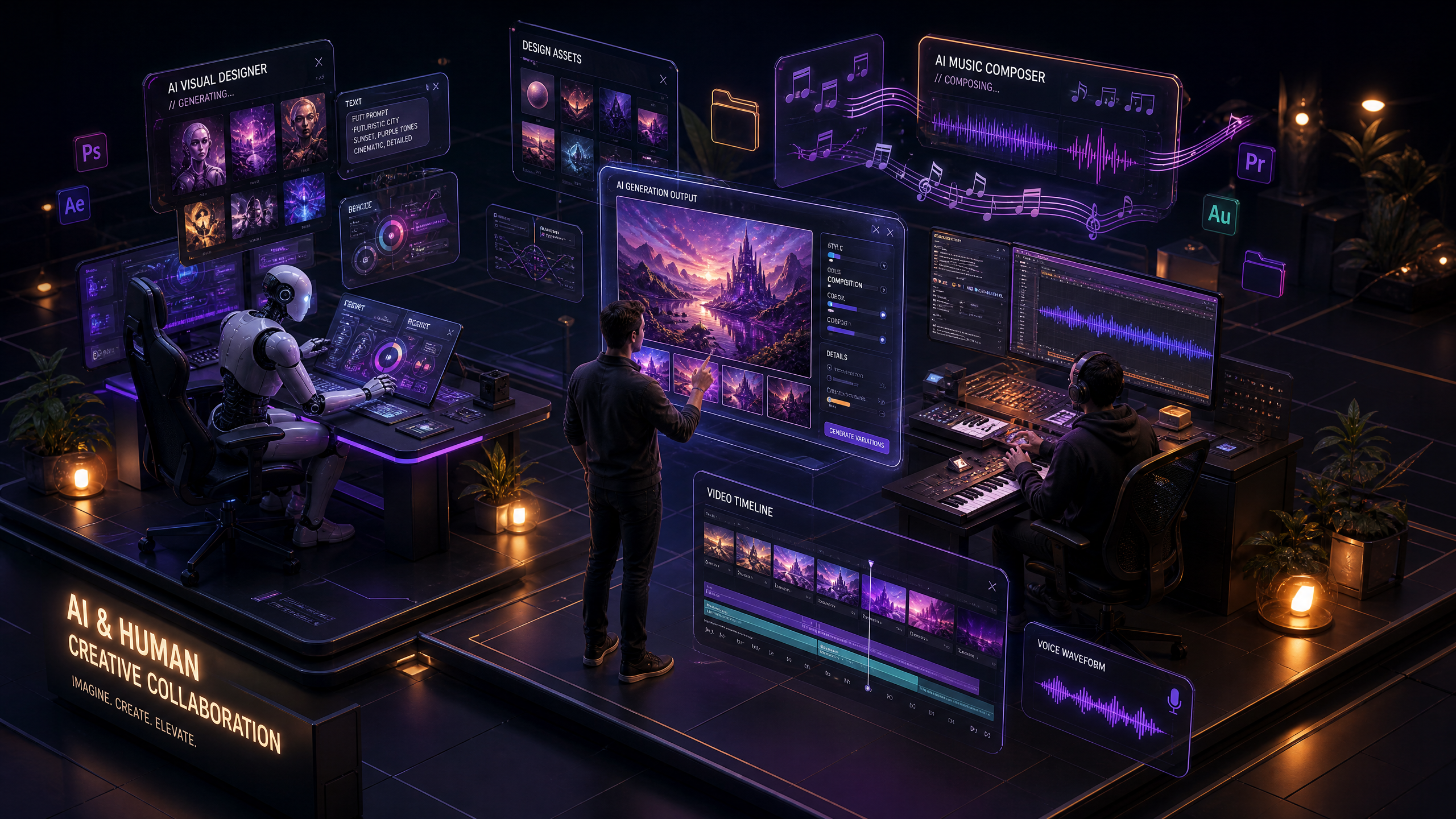
- The brands winning in AI-era creative are those that have developed a clear point of view on what human creativity is for — and are using AI to amplify it, not replace it.
The Creative Industries Are Not Being Replaced — They Are Being Bifurcated
When I wrote about AI's impact on creative industries in 2024, the conversation was dominated by anxiety: AI image generators threatening illustrators, AI writing tools threatening copywriters, AI music generators threatening composers. That anxiety was not unfounded — but it was incomplete.
Twelve months on, the picture is more nuanced and, in some ways, more interesting. The creative industries are not being replaced by AI. They are being bifurcated. The execution-level creative work — the stock photography, the template-based design, the formulaic copywriting, the background music — is being automated at scale. But the strategic creative work — the brand thinking, the cultural intelligence, the emotional resonance, the original vision — is becoming more valuable, not less.
Adobe's 2025 State of Creativity report found that 87% of creative professionals are already using AI tools in their workflows. This is not a future scenario. It is the current reality of the creative industry. The question is not whether AI will be part of creative work — it already is. The question is what kind of creative work humans will be doing, and what kind of value they will be creating.
What AI Is Actually Doing to Creative Work
Goldman Sachs' 2025 analysis estimated that 26% of creative tasks are automatable by current AI systems. This sounds alarming until you consider what that 26% actually consists of: repetitive execution tasks, template-based production, format conversion, basic editing, and the kind of creative work that was never particularly creative in the first place.
The 74% that is not automatable is the work that matters most commercially: brand strategy, creative direction, cultural insight, emotional storytelling, campaign architecture, and the ability to produce creative work that connects with specific human audiences in specific cultural contexts.
The practical impact on the creative economy is playing out in two directions simultaneously:
Commoditisation of execution: The cost of producing a first draft, a stock image, a basic video, or a template-based design has dropped to near zero. This is devastating for the segment of the creative industry that competed on execution speed and volume. Freelance copywriters who produced first drafts, stock photographers, template designers, and basic video editors are facing genuine displacement.
Premium on strategic creativity: The value of the creative work that AI cannot do — the original thinking, the cultural intelligence, the brand vision, the emotional resonance — has increased significantly. Brands are discovering that AI-generated content, while efficient, lacks the distinctiveness and cultural authority that builds long-term brand equity. The demand for genuinely creative human talent has not decreased. It has become more concentrated and more valuable.
The Sectors Most Affected
| Creative Sector | AI Disruption Level | Primary AI Driver | Human Value Remaining |
|---|---|---|---|
| Stock Photography / Illustration | Very High | Midjourney, DALL-E, Firefly | Original art direction, cultural specificity |
| Copywriting (execution) | High | ChatGPT, Claude, Gemini | Brand voice, strategic messaging, editorial judgment |
| Video Production (basic) | High | Sora, Runway, Kling | Narrative direction, emotional storytelling |
| Music (background/functional) | High | Suno, Udio, Stability Audio | Original composition, cultural resonance |
| Graphic Design (templates) | High | Adobe Firefly, Canva AI | Brand identity, visual strategy |
| Brand Strategy | Low | AI research tools | Creative vision, cultural intelligence |
| Creative Direction | Low | AI ideation tools | Judgment, taste, cultural authority |
| UX/Product Design | Medium | AI prototyping tools | User research, strategic design thinking |
Sources: Goldman Sachs 2025, Adobe State of Creativity 2025, WEF Future of Jobs 2025
The New Creative Roles Emerging
WEF's 2025 Future of Jobs Report identifies several creative-adjacent roles among the fastest-growing globally. The pattern is consistent: the emerging roles combine domain creative expertise with AI proficiency and strategic judgment.
AI Creative Director: Responsible for the strategic direction of AI-augmented creative production. Sets the creative vision, directs AI systems, and makes the final aesthetic and strategic judgments. This role is being hired for at senior levels across advertising, publishing, and entertainment.
Prompt Engineer (Creative): Develops the prompting strategies and workflows that produce consistently high-quality AI creative output. This is not a junior role — it requires deep creative expertise combined with technical understanding of how AI systems interpret and execute creative briefs.
AI Content Strategist: Designs the content architecture and production workflows that leverage AI for scale while maintaining brand voice and creative quality. Increasingly important as brands scale content production with AI.
Human-AI Creative Collaboration Lead: Manages the interface between human creative teams and AI systems, ensuring that AI augments rather than replaces human creative judgment. A new role that did not exist three years ago.
The Integrated.Social Perspective: What We Are Seeing
In our work with B2B brands, we are seeing a consistent pattern in how the most successful companies are approaching AI in their creative operations.
The brands that are winning are not the ones that have automated the most creative work. They are the ones that have been most deliberate about what they are automating and what they are protecting. They have made a clear strategic choice: use AI to scale the execution of creative work that has already been strategically defined, and invest human creative talent in the strategic definition.
This means that the brief, the brand voice, the creative strategy, the cultural insight, and the editorial judgment remain human. The production, the variation, the adaptation, and the distribution become AI-augmented. The result is creative work that is both more efficient and more strategically coherent than either purely human or purely AI approaches.
The practical implication for creative professionals is significant. The most valuable skill in the AI era is not the ability to produce creative work faster — AI can do that. It is the ability to define what creative work should be produced, why it should resonate with a specific audience, and how it should express a brand's distinctive point of view. That is a strategic and cultural skill, not a production skill.
The Reskilling Path for Creative Professionals
The reskilling imperative for creative professionals is different from that for marketing or customer service professionals. The core creative skills — visual thinking, narrative construction, cultural intelligence, emotional resonance — are not being automated. What is changing is the production layer around those skills.
Immediate (0–3 months): Develop working proficiency with the AI tools most relevant to your creative discipline. For designers: Adobe Firefly, Midjourney, and AI-powered design tools. For writers: ChatGPT, Claude, and Gemini for research, ideation, and first-draft production. For video producers: Runway, Sora, and AI-powered editing tools.
Short-term (3–12 months): Develop a strategic point of view on how AI changes the economics and creative possibilities of your discipline. The most valuable creative professionals in the AI era are those who understand both the creative and the technical dimensions of AI-augmented production.
Medium-term (12–24 months): Position yourself as a creative strategist rather than a creative executor. The premium in the AI era is on the ability to define creative strategy, direct AI systems, and make the final judgments about creative quality and cultural resonance.
Frequently Asked Questions
Will AI replace human creativity? No — but it will replace human execution of routine creative tasks. Goldman Sachs estimates 26% of creative tasks are automatable by current AI. The remaining 74% — strategic creative direction, cultural intelligence, original vision, emotional storytelling — requires human judgment that AI cannot replicate. The creative professionals who are thriving are those who have shifted their focus from execution to strategy.
Which creative jobs are most at risk from AI? Roles focused primarily on execution of templated or formulaic creative work face the highest risk: stock photography, basic copywriting, template-based graphic design, background music production, and basic video editing. Roles requiring original creative vision, cultural intelligence, brand strategy, and emotional storytelling are significantly less exposed.
How is AI changing the economics of creative production? AI has dramatically reduced the cost of execution-level creative production. The cost of a first draft, a stock image, or a basic video is now near zero. This is devastating for creative professionals who competed on execution speed and volume, but it has increased the premium on strategic creative work that AI cannot produce.
What is the most valuable creative skill in the AI era? The ability to define what creative work should be produced, why it should resonate with a specific audience, and how it should express a brand's distinctive point of view. This is a strategic and cultural skill — not a production skill — and it is becoming more valuable as AI handles more of the production.
How should creative agencies adapt to AI? The most successful creative agencies are repositioning from execution-focused to strategy-focused. They are using AI to scale production while investing human talent in creative strategy, brand thinking, and cultural intelligence. The agencies that are struggling are those trying to compete on execution speed and volume — a battle they cannot win against AI.
What is AI-augmented creative production? AI-augmented creative production uses AI systems to execute creative work that has been strategically defined by humans. The human creative professional defines the brief, the brand voice, the creative strategy, and the quality standards. AI executes the production, variation, and adaptation. The human makes the final judgments about creative quality and strategic fit.
How is AI changing brand storytelling? AI is making it easier to produce more content faster, but it is making it harder to produce content that is genuinely distinctive and culturally resonant. Brands that rely heavily on AI-generated content are discovering that it lacks the distinctiveness that builds long-term brand equity. The most effective brand storytelling in the AI era combines AI-augmented production with human creative direction and cultural intelligence.
Related Articles
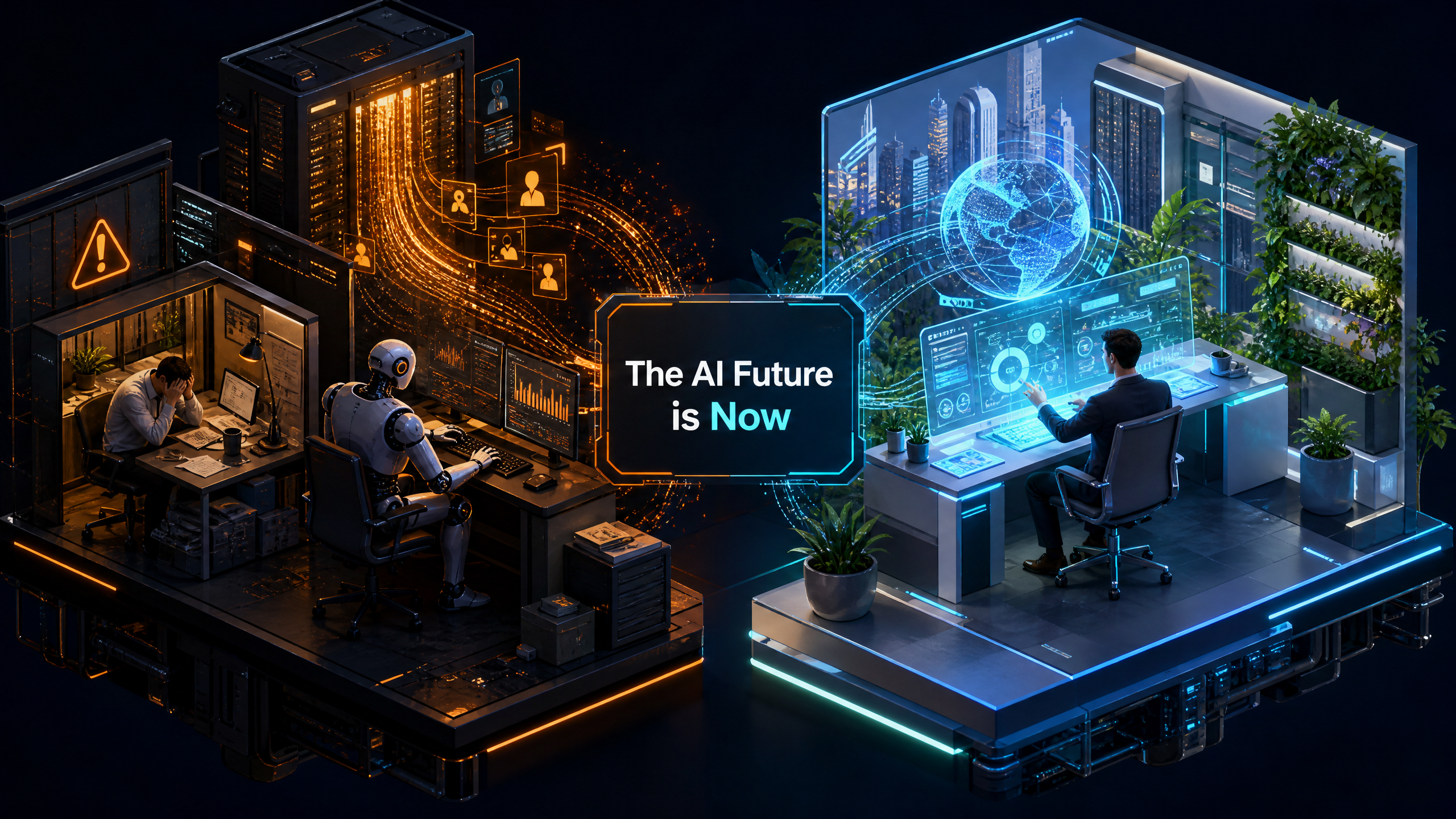
- The AI Future is Now: Embrace AI, Prepare Well or Face Displacement [blocked]
- AI Is Reshaping Marketing and Customer Service — Are You Ahead or Behind? [blocked]
- Are AI Layoffs Real Job Replacement or a More Investor-Friendly Restructuring Story? [blocked]
- Why Human-in-the-Loop AI Fails After Companies Remove Their Experts [blocked]
🎨 Is Your Creative Strategy AI-Ready?
Get a free AI creative readiness assessment. We evaluate your current creative operations, identify the highest-value automation opportunities, and map the strategic repositioning path for your creative team.
Request Free Creative AI Assessment →About the Author
Modi Elnadi is the founder of Integrated.Social [blocked], a B2B, B2B2C, and B2C AI marketing agency in London specialising in agentic AI strategy, AEO/GEO, performance marketing, and go-to-market execution. With over 16 years of experience working with enterprise brands across financial services, technology, FMCG, and professional services, he designs multi-model AI architectures and commercial growth systems that are operationally resilient and commercially effective. Read Modi's full profile [blocked] or connect on LinkedIn.