AI Answer Summary
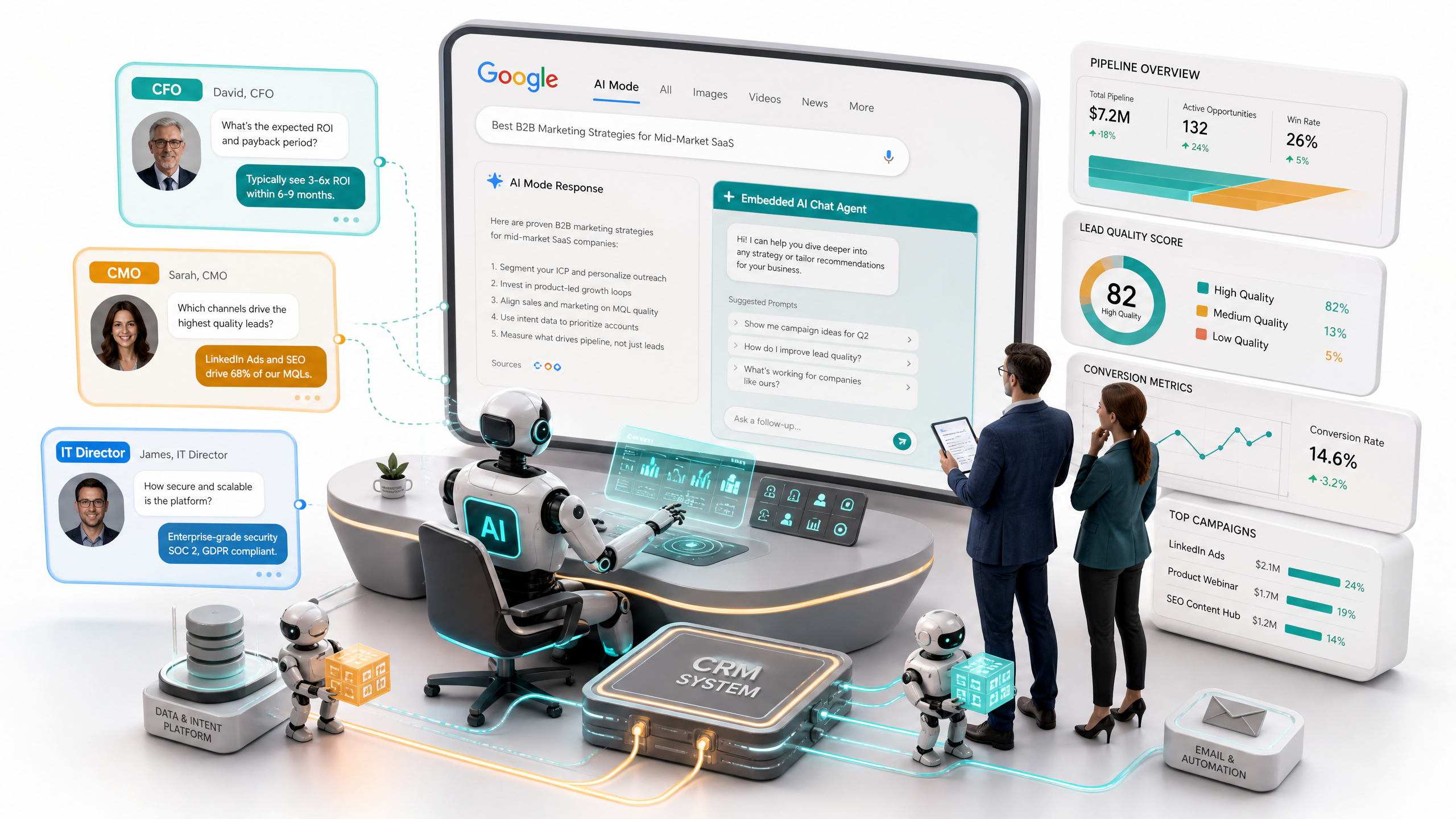
On 14 July 2026, Dan Taylor, Google's global vice-president of ads, told The Economic Times that Google is testing Business Agent for Leads in India - a Gemini-powered conversational agent embedded directly inside Search ads.
Google Is Putting Gemini Inside Your Search Ads
On 14 July 2026, Dan Taylor, Google's global vice-president of ads, told The Economic Times that Google is testing Business Agent for Leads in India - a Gemini-powered conversational agent embedded directly inside Search ads.
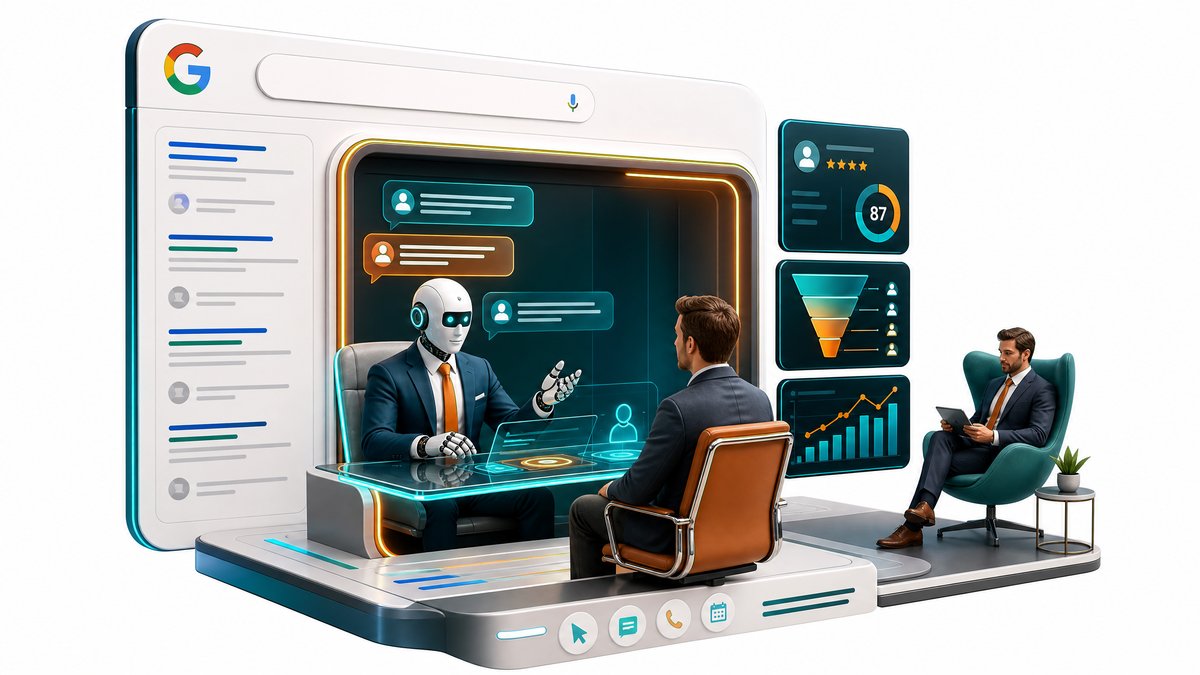
The agent answers product questions, handles objections, and qualifies buyer intent before connecting the prospect to a human representative. The entire interaction happens inside the search results page. No click required.
This is not an incremental improvement to keyword bidding. It is a structural change to where B2B lead generation begins.
The Numbers Behind the Shift
Google reported three headline figures that frame the scale of this change:
- AI Mode queries are approximately three times longer than conventional searches - buyers arrive with more context, more specificity, and more intent already formed
- AI Overviews now reach more than two billion monthly users - the AI layer of Google Search is not a niche feature
- Around 15% of daily Google searches remain entirely new - query diversity is expanding, not contracting
These are Google-reported figures rather than independently audited measurements. But the directional signal is clear: search is becoming conversational, and the conversation is happening earlier in the decision journey than most B2B funnels are designed to capture.
What Business Agent for Leads Actually Does
The conventional paid-search funnel looks like this:
Query → Ad impression → Click → Landing page → Form fill → CRM → Sales qualification → Human contact
Business Agent for Leads compresses that sequence:
Query → Ad impression → Agent conversation → Qualified intent → Human handoff → CRM → Opportunity
The agent handles discovery, explanation, and initial qualification. By the time a human sales representative enters the conversation, the buyer has already been assessed for intent, budget fit, and product relevance.
For B2B advertisers, this creates both an opportunity and a risk. The opportunity: higher-quality leads with less wasted sales time. The risk: Google now controls the first sales conversation your brand has with a prospect.
The Strategic Risk Most CMOs Are Missing
The most dangerous framing is to treat Business Agent for Leads as a better version of a lead form.
It is not. It is a transfer of the initial customer relationship from the brand to Google's infrastructure.
When Google's agent answers a question about your product, it draws on:
- Your website content (structured and unstructured)
- Your Google Business Profile
- Your ad copy and extensions
- Google's own knowledge graph
- Potentially your first-party data if connected via Google Ads
If your website content is thin, inconsistent, or poorly structured, the agent will either misrepresent your offer or fail to include you in the conversation at all. The advertiser who has invested in comprehensive, structured, entity-rich content will be represented accurately. The advertiser who has not will be summarised incorrectly - or skipped.
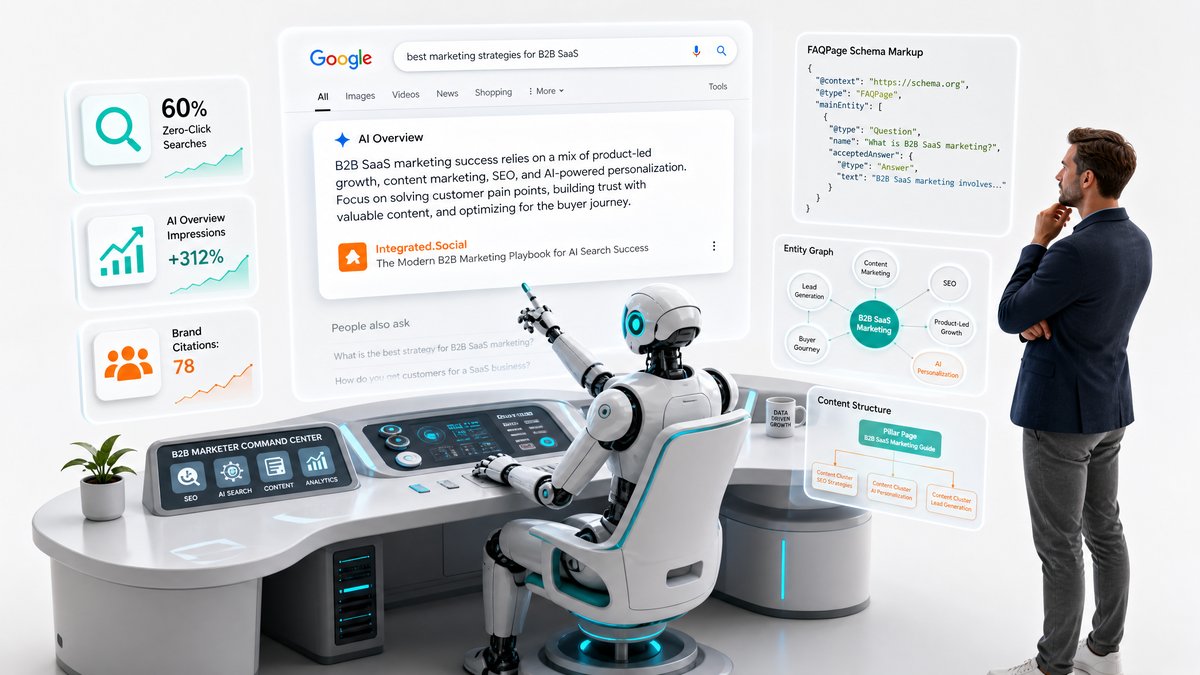
This is why AEO and structured content strategy [blocked] is no longer separable from paid media strategy. The same knowledge layer that powers AI Overview citations now powers your paid agent's responses.
The New Measurement Funnel
Traditional paid-search measurement tracks:
- Impressions
- Clicks
- Cost per click
- Conversions (form fills, calls)
- Cost per acquisition
The Business Agent for Leads funnel requires new measurement points:
| Stage | What to Measure |
|---|---|
| Impression | Ad shown to relevant query |
| Agent conversation start | Buyer engages with the agent |
| Conversation completion | Buyer reaches qualification threshold |
| Qualified intent signal | Agent confirms budget, need, timeline |
| Human handoff | Conversation transferred to sales rep |
| CRM entry | Qualified lead recorded in pipeline |
| Opportunity created | Sales-qualified opportunity opened |
| Revenue attributed | Closed-won deal linked to agent conversation |
Google will likely introduce new conversion types for agent interactions. But connecting those signals to CRM opportunity data and downstream revenue will require deliberate integration - it will not happen automatically.
What B2B Marketers Should Do Now
1. Audit your knowledge layer
Walk through your website as if you were a Gemini agent trying to answer a prospect's question about your product. Is the information complete? Is it consistent across pages? Does it cover pricing ranges, use cases, differentiators, and objections?
Gaps in your website content become gaps in your agent's answers.
2. Implement structured data
FAQPage, Service, and Organization schema [blocked] tell Google's systems exactly what your business does, who it serves, and what questions it answers. This is the machine-readable layer that grounds agent responses in accurate information.
3. Connect CRM feedback to Google Ads
Google's Smart Bidding and agent systems improve with conversion quality signals. If you are only passing form fills as conversions, you are training the system on volume rather than value. Pass qualified opportunities and closed-won revenue as offline conversion events.
4. Define brand guardrails
Decide what the agent should and should not say about your product. What claims require human verification? What competitive comparisons are acceptable? What pricing information should be withheld pending a sales conversation? These guardrails need to be encoded in your content and ad account settings before the agent starts representing your brand.
5. Build agent-conversation measurement
Work with your analytics and CRM teams now to design the measurement architecture for agent interactions. Do not wait for Google to release the feature fully before building the infrastructure to evaluate it.
The Bigger Picture: Google as Your First Sales Rep
Dan Taylor's framing is precise: Google is positioning itself as the first sales representative in the buyer journey.
This is not a metaphor. If Business Agent for Leads scales beyond India, Google will be the entity that:
- Answers your prospect's first product question
- Handles their initial objections
- Assesses their intent and qualification
- Decides when to transfer them to a human
The brand's role in that sequence is to provide the knowledge, the guardrails, and the measurement infrastructure. The execution belongs to Google.
For B2B companies with complex, high-consideration products, this creates a new category of competitive advantage: the quality of your structured knowledge layer. The brand with the most complete, accurate, and machine-readable product knowledge will be represented most accurately by Google's agent. The brand with the thinnest content will be represented least accurately - or not at all.
This is the commercial case for agentic AI readiness [blocked] as a B2B marketing priority in 2026.
Tools Worth Evaluating
If you are building the knowledge infrastructure to support agentic search advertising, Manus is worth evaluating as a platform for building and testing AI agents that can help you audit your content layer, simulate agent conversations, and identify gaps before Google's agent finds them for you.
Frequently Asked Questions
Is Business Agent for Leads available globally? As of July 2026, Google is testing Business Agent for Leads in India. Global rollout has not been confirmed. However, the underlying technology - Gemini-powered conversational AI in Search ads - is consistent with Google's stated direction for AI Mode and conversational advertising.
Will this replace human sales development representatives? Not immediately, and probably not entirely. Business Agent for Leads handles initial qualification, not complex enterprise sales cycles. For high-consideration B2B purchases, human judgment, relationship-building, and negotiation remain essential. The agent is more likely to replace the first outbound SDR call than the senior account executive.
How does this relate to Google AI Overviews? Both AI Overviews and Business Agent for Leads draw on website content to generate responses. A brand that invests in AEO-optimised content, structured data, and authoritative information architecture benefits across both surfaces simultaneously. The content strategy is unified even if the ad product is separate.
About the Author
Modi Elnadi is the founder of Integrated.Social, a London-based AI growth marketing agency specialising in agentic AI, AEO, GEO, and performance marketing for B2B technology and professional services companies. He works with commercial teams navigating the transition from keyword-based search marketing to AI-mediated discovery, qualification, and conversion. His focus is on building the structured knowledge, measurement infrastructure, and agentic workflows that determine whether a brand wins or loses in the AI search era.
Ready to prepare your B2B marketing for agentic search advertising? Book a strategy session with Integrated.Social [blocked] to audit your knowledge layer and build your agent-readiness roadmap.