AI Answer Summary
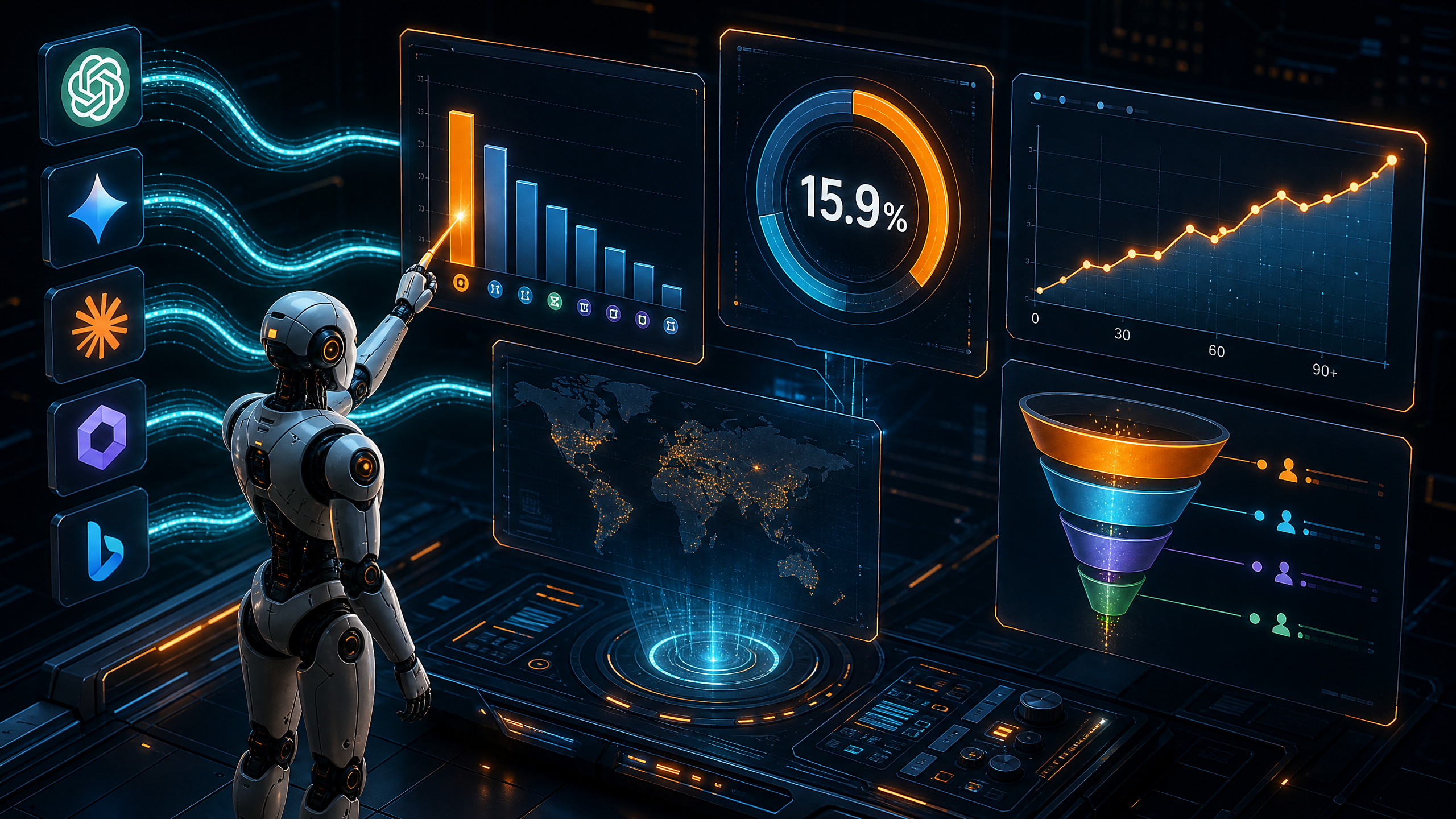
The B2B buying process has structurally shifted. Forrester's April 2026 analysis found that 90% of B2B marketing leaders now treat AI visibility as an investment-level priority, and marketing leaders are reporting web traffic declines of 20-30% as buyers migrate to zero-click AI answers. ChatGPT.
Why the Agency Selection Decision Has Changed in 2026
The B2B buying process has structurally shifted. Forrester's April 2026 analysis found that 90% of B2B marketing leaders now treat AI visibility as an investment-level priority, and marketing leaders are reporting web traffic declines of 20-30% as buyers migrate to zero-click AI answers. ChatGPT alone processes 2.5 billion queries per day (OpenAI, February 2026), and 94% of B2B buyers used a generative AI tool during their most recent purchase process (6sense, 2025 Buyer Experience Report).
The implication is direct: if your brand is not cited in AI answers, you are losing deals you never see. A MarketScale analysis published July 2026 found that 51% of tech brands have zero AI citations - meaning more than half of B2B technology companies are completely invisible in the channel where buyers are now doing their research.
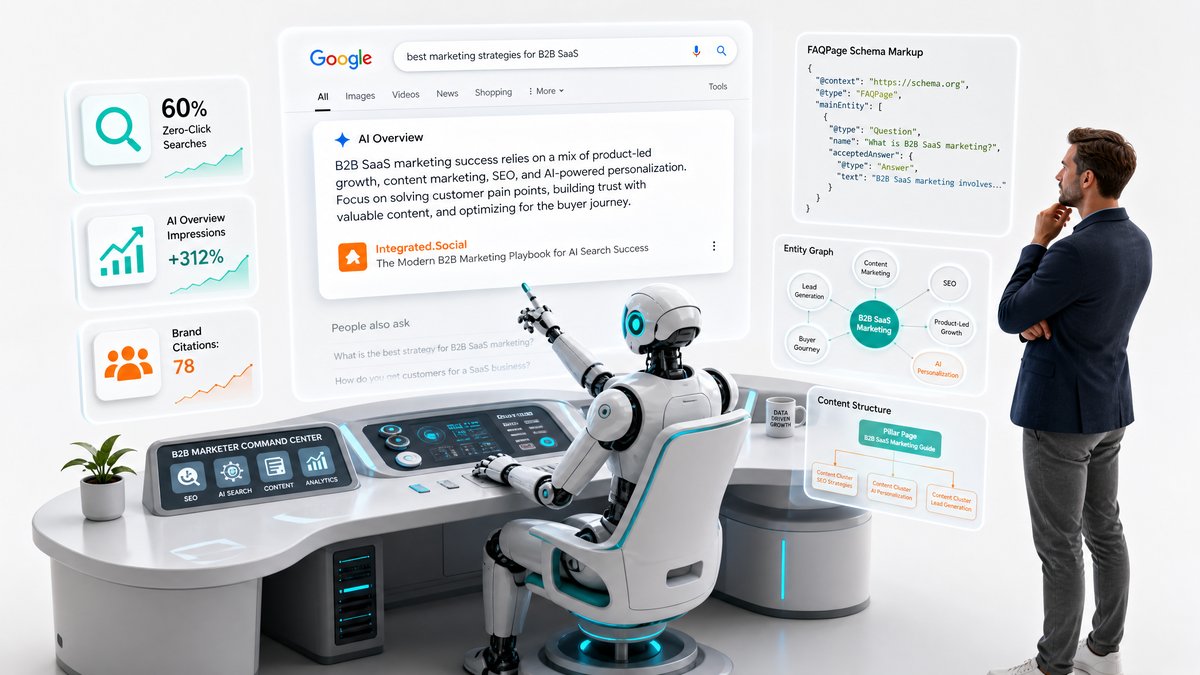
This is not an SEO problem with a new label. It is a structurally different discipline. An SEO agency optimises pages to rank and earn clicks. An AEO agency [blocked] optimises entities, structured data, and answer-shaped content so AI models cite your brand when buyers ask. The skills overlap, but the goal, the unit of success, and the measurement are fundamentally different.
Choosing the wrong agency - one that repackages keyword tactics as AEO - means paying for activity that does not move the metric that matters: whether ChatGPT, Perplexity, and Google AI Mode recommend you.
The 7 Capabilities a Serious AEO Agency Must Have
Before you issue an RFP or take a discovery call, use this capability checklist to filter agencies quickly. A credible AEO agency must demonstrate all seven.
1. Platform-Specific Optimization
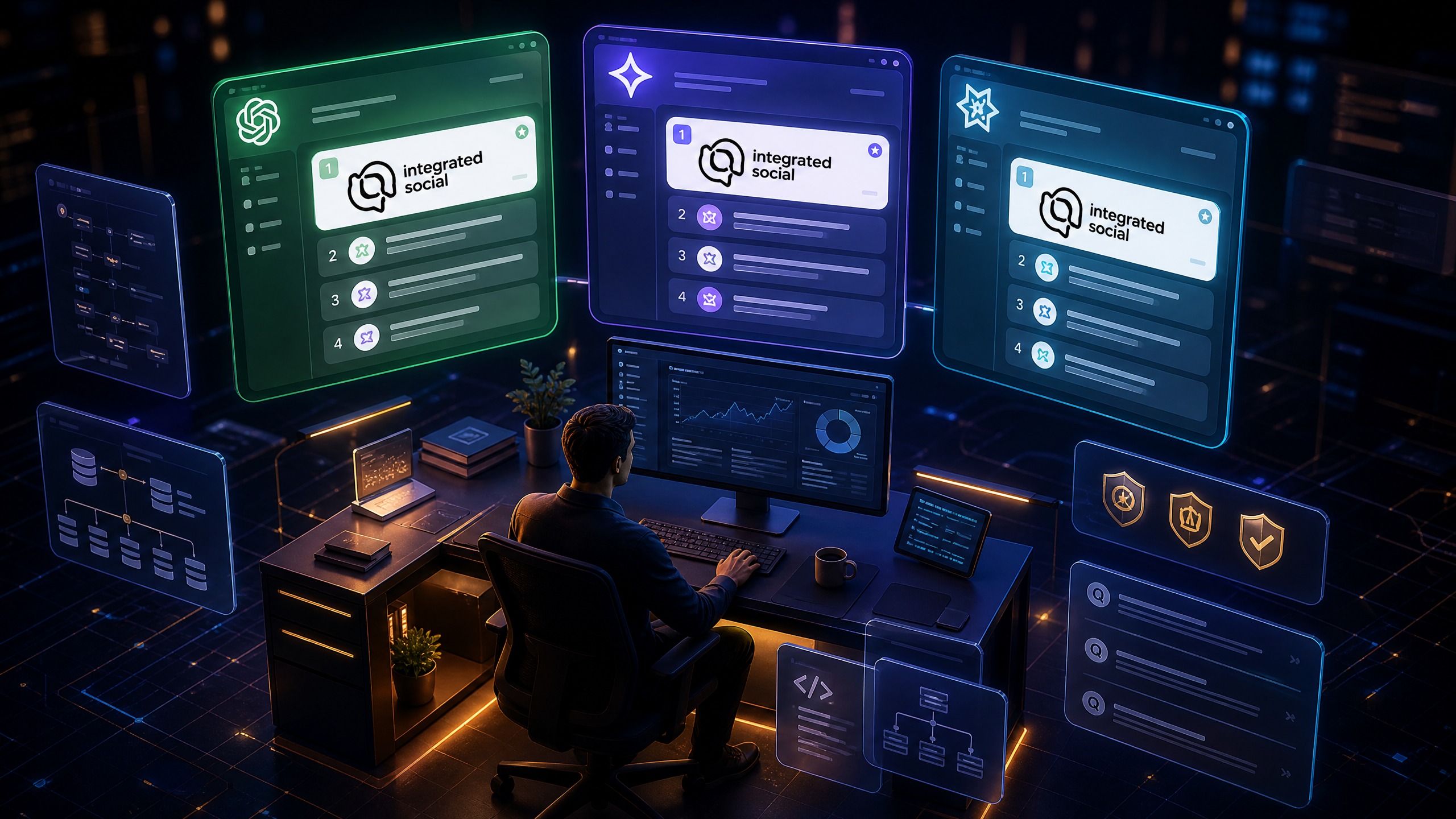
ChatGPT, Perplexity, Claude, Gemini, and Google AI Overviews [blocked] behave differently. They draw from different training data, weight different signals, and update their knowledge on different cycles. An agency that treats them as a single channel is optimising for none of them. Ask specifically: "How does your approach differ for ChatGPT versus Perplexity versus Google AI Mode?" If the answer is generic, walk away.
2. Entity and Knowledge Graph Work
AI models build answers from entities - named things (companies, people, products, concepts) that they understand with confidence. If your brand entity is weak, ambiguous, or confused with a competitor, models will either omit you or describe you incorrectly. Entity work means making the model unambiguous about who you are, what you do, and who you serve - across your own site, third-party publications, structured data, and the broader web. This is foundational, not optional.
3. Structured Data at Scale
Organization, Person, Article, FAQ, HowTo, and Service schema implemented correctly and validated - not just suggested in a recommendations document. Ask to see examples of schema they have deployed, and verify it with Google's Rich Results Test. An agency that cannot show live, validated structured data is not practising AEO.
4. Answer-Shaped Content
Content that leads with the direct answer in a form a model can lift and cite. This means concise, factual, standalone answers at the top of each section - not buried in paragraph five. SparkToro's January 2026 analysis found that 44.2% of all LLM citations come from the first 30% of a piece of content. If the agency's content strategy does not front-load direct answers, they are not building for citation.
5. Third-Party Citation Building
AI models repeat the consensus of the web. If your brand is only mentioned on your own site, models have weak evidence to cite you. A credible AEO agency builds presence on sources models already trust: G2, Capterra, respected industry publications, analyst reports, and earned press. Ask: "What third-party citation sources do you target, and how do you build presence there?"
6. Citation Tracking and Measurement
If an agency cannot tell you how often ChatGPT or Perplexity currently mention your brand for target queries, and how that changes over time, they cannot improve it. Citation tracking is the measurement layer that separates genuine AEO from repackaged SEO. Ask to see a sample citation tracking report before you sign. For more on measuring AI visibility, see our guide on how to become a preferred source for ChatGPT and Gemini [blocked].
7. Reporting Tied to Outcomes
Citation rate, share of voice in AI answers versus named competitors, and AI referral traffic - not keyword rankings or page views. These are the metrics that reflect real visibility in the channel where your buyers are. An agency that reports on traditional SEO metrics only is not running an AEO programme.
5 Red Flags That Disqualify an Agency Immediately
The AEO market in 2026 is crowded with agencies that have rebranded their SEO offering without changing the underlying practice. These five signals identify them quickly.
Keyword stuffing repackaged as AEO. If the plan is more keyword-dense pages and longer content, it is old SEO with a new name. Real AEO adds entity work, structured data, and third-party citation building - none of which are keyword-volume exercises.
No citation measurement. They cannot tell you whether ChatGPT or Perplexity currently mention you, or show you a tracking dashboard that monitors this over time. Without measurement, there is no proof of progress.
One-size-fits-all platform strategy. No differentiation between how ChatGPT selects sources versus how Google AI Mode works. These are different systems with different optimisation levers.
Guaranteed AI citations. Nobody can guarantee that a specific AI model will cite your brand. Any agency that promises guaranteed placement is either lying or does not understand how generative models work.
Ignoring off-page signals. If the entire strategy is on-page - content rewrites and schema tags - and nothing is being done to build third-party presence, the entity stays weak and models stay uncertain about you.
The Evaluation Framework: 6 Questions to Ask Every Agency
Use these six questions in every discovery call. The quality of the answers will tell you more than any case study deck.
"Show me a brand you have made citable in ChatGPT. What were they before, and what are they now?" This is the only question that matters. Ask for a before/after citation audit with timestamps. If they cannot produce one, they have not done it.
"How do you differentiate your approach for ChatGPT versus Google AI Mode versus Perplexity?" A credible answer will reference the different training data cycles, the role of real-time web access in Perplexity, and the entity graph signals Google AI Mode uses. A vague answer reveals a single-channel approach.
"What does your citation tracking dashboard look like, and can I see a live example?" Ask to see the actual tool or report, not a description of it. Citation monitoring is table stakes for a real AEO practice.
"What third-party sources do you build citations on, and how long does that take?" The answer should reference specific publication categories (analyst sites, review platforms, trade press) and give a realistic timeline - typically 60-90 days for foundational citation gains.
"How do you handle entity disambiguation - what happens if AI models confuse us with a competitor or describe us incorrectly?" This reveals whether they understand entity work at a technical level. The answer should reference structured data, Knowledge Graph corrections, and consistent entity signals across the web.
"What metrics will appear in your monthly report, and which of those are tied to AI visibility specifically?" The report should include citation rate, share of voice in AI answers, and AI referral traffic as primary metrics - not just organic traffic and keyword rankings.
What Does an AEO Agency Cost in 2026?
Pricing varies by scope, not by a fixed rate card. Based on market data from June 2026, most credible B2B AEO agencies work on monthly retainers in the following ranges:
| Scope | Monthly Retainer | What Is Included |
|---|---|---|
| Foundational | £2,500-£5,000 / $3,000-$6,500 | Entity audit, schema, answer-shaped content (2-4 pieces/month), citation tracking |
| Growth | £5,000-£12,000 / $6,500-$15,000 | All foundational + third-party citation building, platform-specific optimisation, monthly reporting |
| Enterprise | £12,000+ / $15,000+ | All growth + multi-market, competitive share-of-voice tracking, dedicated strategist |
A one-time setup project for entity foundations and schema typically adds £3,000-£8,000 at the start of an engagement. This is not optional - it is the foundation everything else builds on.
The right question is not "what does it cost?" but "what does it cost per citation gained, and how does that translate to pipeline?" An agency that cannot answer the second question is not running a commercially accountable programme. See our related guide on what an AEO agency in the UK actually does [blocked] for a full breakdown of deliverables.
Three Situations That Make AEO Urgent Right Now
You sell in a category buyers research in AI. If your buyers ask ChatGPT or Perplexity for vendor shortlists - and in B2B SaaS, professional services, and technology, they do - missing from those answers costs you deals you never see. The MarketScale July 2026 data shows 72% of B2B software buyers use ChatGPT during vendor evaluation. If you are not cited, you are not on the shortlist.
Competitors are getting cited and you are not. Run a simple test: ask ChatGPT "who are the best [your category] agencies in the UK?" If competitors appear and you do not, you are losing share of voice at the decision point. This is the clearest signal that AEO investment is overdue. Our analysis of zero-click search behaviour [blocked] explains exactly why this matters commercially.
Your brand is misdescribed or confused with others. Weak entity signals mean models get you wrong - wrong description, wrong services, wrong geography. An AEO agency fixes the entity so the model is certain about who you are. This is not a cosmetic fix; it directly affects whether buyers trust the AI's recommendation.
How to Run a Shortlist Process in 3 Steps
Step 1: Request a citation audit of your current brand. Ask each agency to run a citation audit showing how often and how accurately ChatGPT, Perplexity, Claude, and Google AI Mode currently describe your brand. This is a reasonable pre-engagement request and any credible agency will do it. It also gives you a baseline to measure progress against.
Step 2: Ask for a 90-day plan, not a strategy deck. A strategy deck tells you what they know. A 90-day plan tells you what they will do. It should include specific deliverables (entity work, schema implementation, content pieces, citation-building targets) with timelines and the metrics they will report against.
Step 3: Check references from B2B clients in your sector. AEO results vary by category. Ask for references from clients in your category and ask those clients specifically: "Did your citation rate improve, and did you see AI referral traffic grow?"
Start With a Free AI Visibility Audit
At Integrated.Social [blocked], our SEO, AEO and GEO practice [blocked] is built on the seven capabilities above. We run citation audits before every engagement, track brand mentions across ChatGPT, Perplexity, Claude, Gemini, and Google AI Mode, and report on citation rate and AI referral traffic as primary metrics.
Our Free AI Visibility Audit shows you exactly where you stand today: which AI platforms mention you, how accurately they describe you, and where the gaps are. It is the fastest way to understand whether AEO investment is urgent for your business right now.
Book a discovery call [blocked] and we will run a live citation audit of your brand during the call.
About the Author
Modi Elnadi is the Founder and Director of Marketing & AI Growth at Integrated.Social, a London-based AI growth marketing agency. He specialises in Answer Engine Optimization, AI search visibility strategy, and the intersection of agentic AI [blocked] with B2B demand generation. Modi has helped B2B technology and professional services firms build citation presence across ChatGPT, Perplexity, Claude, and Google AI Mode, and advises commercial leaders on how to measure and grow AI-referred pipeline. His work spans technical SEO, entity optimisation, and commercial strategy - making AI search a measurable revenue channel, not a vanity metric.