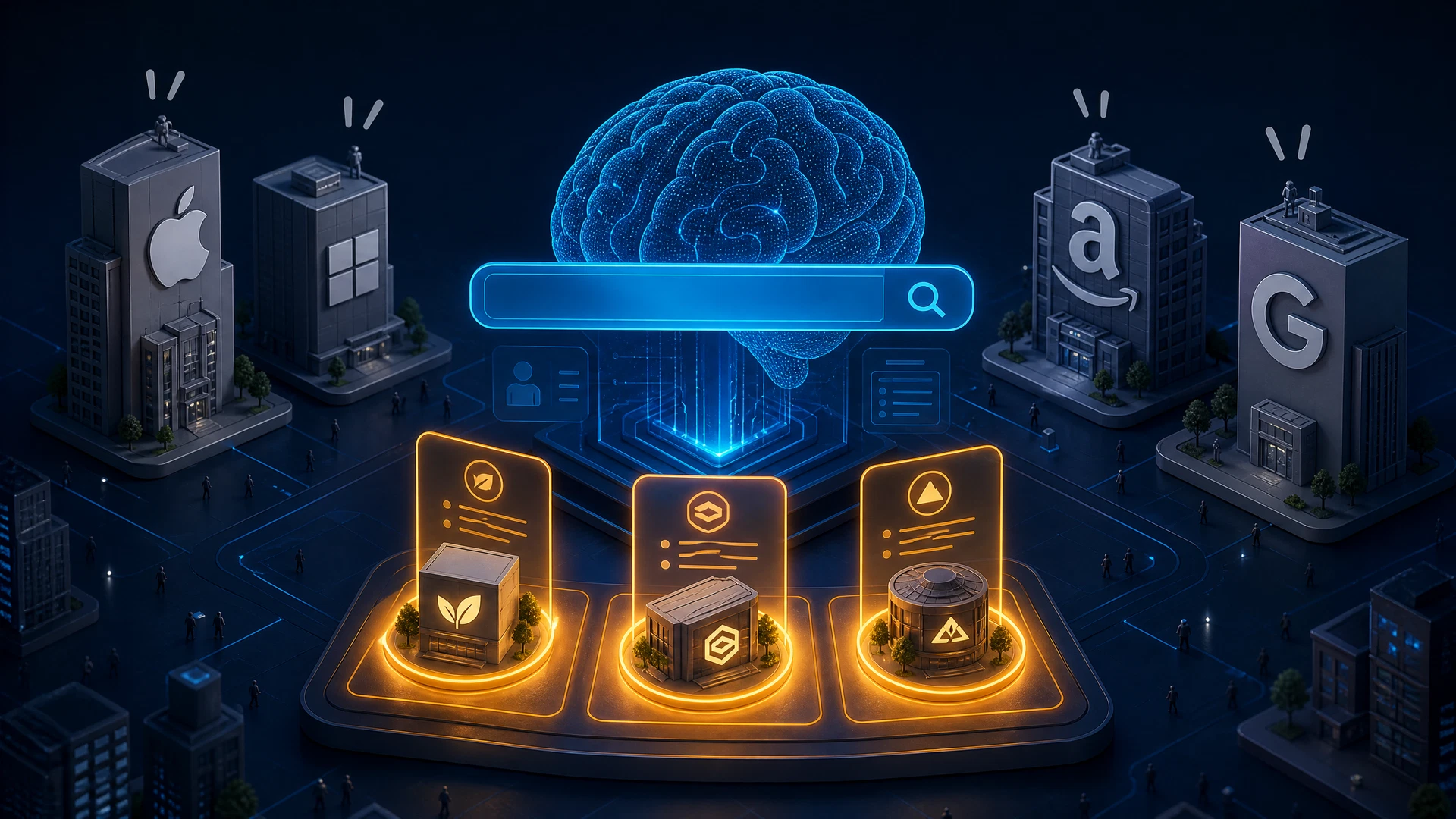
AI Pricing Is a Finance Story Disguised as a Software Story
We tend to discuss AI pricing as though it were simply: £X per million tokens.
In reality, those prices depend on a giant capital stack involving chips, land, electricity, data centres, debt guarantees, equity investment and cloud commitments.
Nvidia's reported consideration of another $3 billion investment in SB Energy — the SoftBank subsidiary developing a major Ohio data-centre campus for OpenAI — makes this infrastructure dependency impossible to ignore.
What Is Actually Happening
According to Reuters (citing The Information, 16 August 2026), Nvidia is discussing an investment of up to $3 billion in SB Energy, which is developing OpenAI's Ohio data-centre campus. The talks are part of a broader financing structure involving roughly $100 billion in credit support.
SB Energy is also reportedly targeting an IPO as early as next month.
Important caveat: Reuters could not independently verify the talks. Nvidia and SB Energy did not immediately comment. This remains source-based reporting rather than a confirmed transaction. Reuters also notes that Nvidia recently reduced the initial guarantee contemplated for the Ohio project, illustrating how the financing structure is still evolving.
The SaaS Assumption Is Breaking
The SaaS era taught marketers to think of software marginal cost as almost zero. One more user costs almost nothing. One more API call is negligible.
Agentic AI reverses that assumption.
Every additional:
- Reasoning step
- Retry
- Tool invocation
- Synthetic test
- Customer interaction
...consumes physical compute. And that compute requires:
| Layer | What It Costs | Who Pays |
|---|---|---|
| Chips | $30,000+ per GPU | Nvidia, AMD |
| Data centres | $1-5 billion per campus | SoftBank, Microsoft, Google |
| Electricity | 100+ MW per facility | Utility companies, PPAs |
| Cooling | 30-40% of facility cost | Data centre operators |
| Financing | $100bn+ credit facilities | Banks, sovereign funds |
| Land | Thousands of acres | Developers, governments |
The future price of your AI marketing agent [blocked] is partly determined in Ohio data-centre financing negotiations that CMOs will never see.
Why This Matters for Enterprise AI Budgets
If agentic workflows multiply model calls by orders of magnitude — and they do — then the cost and availability of intelligence increasingly depend on whether this infrastructure can be financed sustainably.
Consider a typical agentic marketing workflow:
- Research agent analyses 50 competitor pages (50 LLM calls)
- Strategy agent synthesises findings (5 reasoning chains)
- Content agent drafts 10 variations (10 generation calls)
- Evaluation agent scores each variation (10 judgement calls)
- Optimisation agent selects and refines (5 more calls)
That is 80+ model calls for one piece of content. Multiply by campaigns, channels, segments and frequencies — and you understand why token pricing is connected to physical infrastructure economics.
Cost Per Completed Workflow, Not Token Price
This is why we consistently advise clients to measure cost per completed commercial outcome rather than token price alone.
A cheaper model that requires 3x more retries may cost more per completed task than an expensive model that gets it right first time. The AI Token Calculator [blocked] helps you compare raw pricing, but the real economics depend on:
- Completion rate (how often does the agent succeed?)
- Retry frequency (how many attempts per task?)
- Reasoning depth (how many chain-of-thought steps?)
- Tool calls (how many external API invocations?)
- Quality threshold (what error rate is acceptable?)
What CMOs Should Take Away
- AI is not zero-marginal-cost software. Every agent action consumes physical compute.
- Token prices will fluctuate with infrastructure economics, not just competition.
- Measure outcomes, not consumption. Cost per qualified lead, cost per published asset, cost per campaign launched.
- Budget for scale. Agentic workflows multiply costs non-linearly as complexity increases.
- Diversify providers. Infrastructure concentration creates pricing risk.
The $100 billion financing structures being assembled today will determine the economics of AI marketing for the next decade. CMOs do not need to understand the financing — but they need to understand that AI pricing is no longer a simple software licensing conversation.
Compare token pricing across 30+ models with our free AI Token Calculator [blocked] — then calculate what your agentic workflows will actually cost per completed outcome.
Source: Reuters, citing The Information (16 August 2026). Transaction not independently confirmed.