
Generate More Qualified B2B Leads: 7 UK Strategies
How do I generate more qualified B2B leads? Define which accounts can become valuable customers, answer their buying questions across search and AI discovery, and connect relevant outreach to evidence of need. Agree with sales what “qualified” means, verify each contact and buying group, then optimise for accepted opportunities and revenue rather than form fills or meeting volume.
Quick Summary
- Define an ideal customer profile (ICP) from won deals, exclusions and sales capacity; do not treat company size or a lead score as qualification on its own.
- Map the buying group's commercial, technical and operational questions, then create useful comparison, implementation, pricing and proof content.
- Combine SEO, answer engine optimisation (AEO), paid search, LinkedIn and selective account-based marketing (ABM) around the same target accounts and buying stage.
- Use first-party behaviour and third-party intent as clues, then verify them with a human conversation. A signal is not consent or proof of purchase readiness.
- Measure sales-accepted leads, qualified opportunities, pipeline value, close rate and customer acquisition cost by source and account cohort.
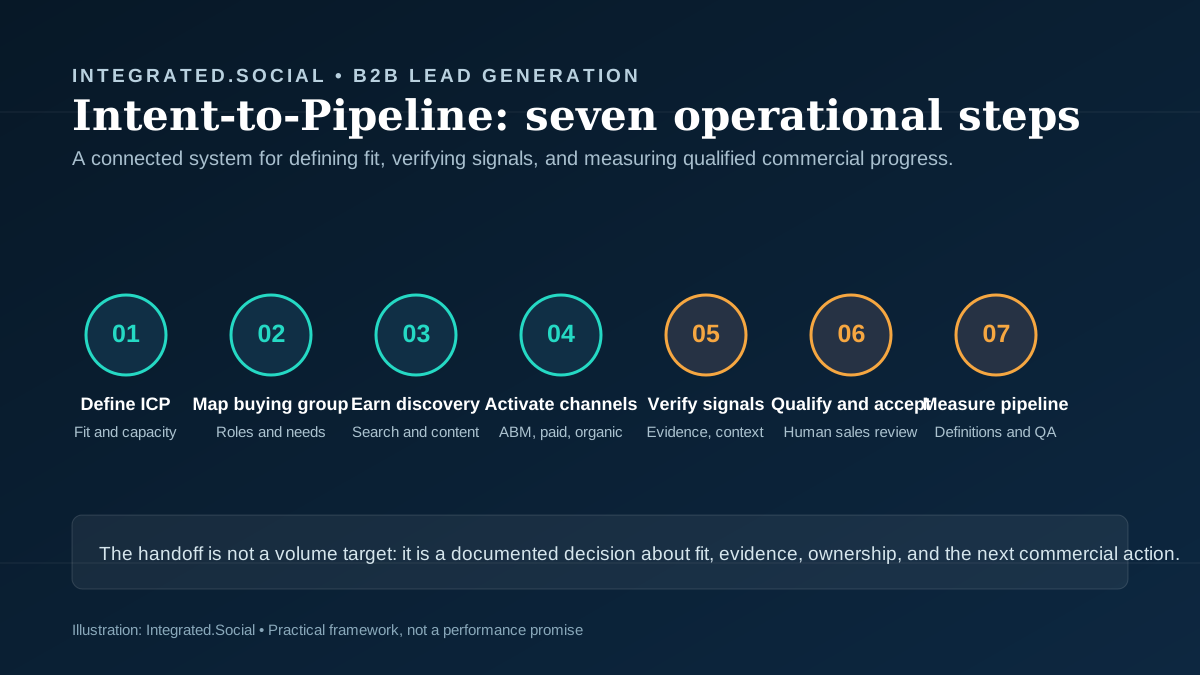
The Intent-to-Pipeline Framework - seven steps
- Build an ideal customer profile from real wins, exclusions and sales capacity.
- Map the buying group and the questions each role must answer.
- Capture informational and commercial search intent with useful, stage-fit pages.
- Combine paid, organic and account-based channels around the same accounts.
- Use intent signals without mistaking interest for readiness.
- Run relevant UK B2B outreach that respects GDPR, PECR and context.
- Make sales and marketing accountable to accepted opportunities and pipeline.
By Modi Elnadi, Founder of Integrated.Social. Updated 28 September 2026. Examples are illustrative unless linked to a published case study.
What counts as a qualified B2B lead?
A qualified B2B lead is a person or account that fits an agreed customer profile and has credible evidence of a relevant problem, capacity to act and a plausible path to a purchase decision. Qualification is a staged judgement, not a fixed number of downloads or an AI-generated score. Sales must confirm whether the opportunity is real.
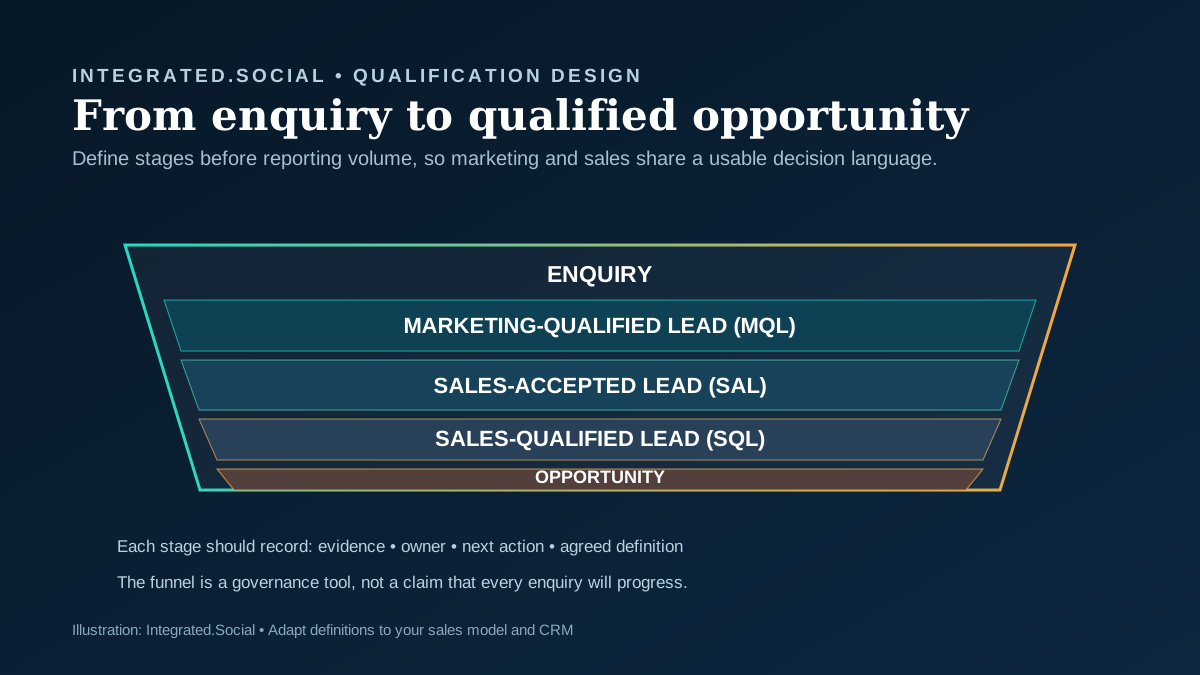
| Stage | Practical definition | Evidence to record | Next owner |
|---|---|---|---|
| Enquiry or contact | An identified person has engaged | Source, consent/privacy status, enquiry and company | Marketing or routing team |
| Marketing-qualified lead (MQL) | Fits agreed criteria and merits review | Role, account fit, problem or behaviour, exclusions | Sales development |
| Sales-accepted lead (SAL) | Sales accepts the record and follow-up | Named owner, acceptance time and reason | Sales |
| Sales-qualified lead (SQL) | A two-way conversation confirms a viable next step | Need, stakeholder, timing and agreed action | Account executive |
| Opportunity | A real buying process with value and stage | Buying group, estimated value and close criteria | Sales and revenue operations |
Definitions differ by business. A demo request from a poor-fit organisation may fail qualification, while an anonymous research session from a target account may warrant a useful ABM campaign without being called a lead.
How do MQLs, SQLs and opportunities differ?
An MQL is a marketing-defined candidate for sales review; an SQL has been qualified through sales interaction; an opportunity is a potential deal in a defined buying process. Add a sales-accepted stage to expose handoff failures. Record the disqualification reasons so marketing can improve its audience, message and conversion goals instead of merely increasing volume.
Should you score an individual or the whole buying group?
Score the person and account separately. A single senior buyer can be valuable, while several junior visits can be noise; neither proves consensus. Map who owns the budget, who will use the product, who assesses security or procurement and who can block a decision. Use known roles and confirmed interactions, not inferred identity as certainty.
Why are B2B leads low quality even when volume rises?
Lead volume rises without pipeline when targeting is broad, conversion actions reward easy form fills, content attracts students or vendors, or sales receives records without useful context. The failure may also sit after acquisition: slow routing, weak follow-up or inconsistent definitions. Diagnose the conversion and handoff chain before buying more traffic.
| Symptom | Check first | Likely action |
|---|---|---|
| Many downloads, few sales calls | Topic and form intent; job roles | Add decision-stage content and better qualification |
| Demo requests outside ICP | Audience, geography and page promise | Tighten offer and routing rules |
| Target accounts visit but do not enquire | Pricing, proof, security and implementation answers | Fill content gaps and offer relevant next steps |
| MQLs rejected by sales | Rejection reasons and MQL definition | Agree a sales-accepted stage and feedback loop |
| Meetings booked, little pipeline | Attendance, need, authority and opportunity creation | Measure held, qualified meetings and opportunity rate |
| Paid leads look cheap, sales sees weak fit | Bidding conversion and CRM feedback | Optimise to accepted or qualified outcomes |
Practitioner judgement: A higher lead-to-MQL rate can still be a worse result if a stricter threshold simply relabels records. Track progression to sales-accepted opportunity and won revenue by acquisition cohort.
Step 1. How do you build an ideal customer profile from real wins?
Build the ICP from closed-won and lost opportunities, profitable customers and the people your team can actually serve. Compare sector, use case, size, geography, tech requirements, deal economics and buying trigger. State exclusions explicitly. Start with a hypothesis if the sample is small, then refine it with sales interviews and observed pipeline.
Which ICP data matters most?
The most useful fields are those that change the likelihood of winning or serving the account well: problem severity, use case, budget range, existing systems, compliance needs and decision structure. Company headcount and revenue can be useful proxies, but should not become arbitrary gates. Document data source, freshness and missingness before automating exclusion.
Fit vs intent vs capacity
Fit is whether the account can become a valuable customer. Intent is evidence of an active need. Capacity is whether your team can serve the account well and whether the buyer can act. Prioritise accounts that score on all three; a high-intent poor-fit account usually wastes sales time, while a high-fit silent account belongs on a longer education track.
How should you prioritise accounts?
Prioritise accounts using fit, potential value, evidence of an active need and realistic access to a buying group. A high-fit account with no observed signal can enter a longer education track; a strong intent signal from a poor-fit account may not merit sales time. Review the ranking against actual opportunities, not vendor intent scores alone.
Step 2. How do you map the buying group and its questions?
Interview sales and recent customers to identify the economic buyer, champion, users and technical or legal reviewers involved in the purchase. Give each role the information needed to move forward. A CFO may ask about payback and contract risk; a technical lead may need architecture and security proof; the champion may need a shareable business case.
| Role | Likely question | Useful asset | Next action |
|---|---|---|---|
| Economic buyer | What return and risk can we defend? | ROI model and relevant case study | Commercial discussion |
| Champion or end user | Will this solve the daily problem? | Demonstration and workflow example | Product review |
| Technical evaluator | Will it integrate securely? | Architecture, data handling and implementation FAQ | Technical session |
| Procurement or legal | What are the terms and controls? | Pricing model, terms and policies | Due diligence |
The Integrated.Social B2B SaaS ABM case study describes an ICP rebuild, buying-committee mapping across 47 target accounts and persona-specific outreach. It is a publisher-reported engagement, useful as an example of execution rather than a guaranteed outcome for other firms.
Step 3. How do you capture informational and commercial search intent?
Build a topic map across problem discovery, solution evaluation and vendor selection. Informational content earns attention by explaining the problem; decision-stage pages should answer implementation, comparison, price, proof and risk questions. Make each page independently useful, link related resources and offer a next step appropriate to the reader's stage, without forcing every visitor into a demo.
| Intent | UK B2B example query | Best page type | Appropriate action |
|---|---|---|---|
| Problem education | “why are B2B leads low quality?” | Diagnostic guide | Save checklist or audit |
| Solution exploration | “ABM vs demand generation for SaaS” | Comparison and use-case guide | Explore method |
| Vendor evaluation | “B2B lead generation agency UK” | Service page with scope and evidence | Discuss fit |
| Commercial decision | “ABM agency pricing UK” | Pricing approach and proposal criteria | Request scoped review |
How should SEO, AEO and LLM discovery support lead generation?
Make the answer to a real buying question visible in crawlable text, back it with credible evidence and connect it to a relevant service or case study. Clear headings, comparison tables and genuine first-hand detail help readers and can make passages easier to retrieve. Schema and an llms.txt file do not substitute for indexability, useful content or commercial proof.
Crawlable answers vs schema alone
Publish the answer in visible HTML first. Structured data, speakable markup and an llms.txt entry help machines find and cite that answer; they do not create demand or replace a useful decision page. If the page is a soft-404 shell or the answer lives only in an image, neither Google nor an LLM can rely on it.
Integrated.Social's SEO, AEO and GEO service addresses technical visibility, entity-led content and AI-answer discovery. For measurement caveats around research that does not appear as a referral, see our dark AI buyer-journey analysis.
Which content should you publish before more top-of-funnel blogs?
Publish the missing decision assets first when the site already attracts relevant visitors: clear service scope, comparisons, implementation process, pricing approach, compliance or security answers and credible case studies. Add educational pillars where search demand supports them, then link each to a useful next step. Audit existing pages before producing another general “benefits of ABM” article.
Step 4. How should you combine paid, organic and account-based channels?
Choose channels by buying stage and deal economics. Search ads can capture active demand; organic guides answer earlier questions; LinkedIn can reach named roles; ABM coordinates tailored messages across a smaller target-account set. Share definitions and landing-page evidence across channels, but assess incremental contribution instead of adding each platform's attributed conversions together.
When does ABM make more sense than broad lead generation?
ABM suits higher-value, considered purchases where a manageable account list and several stakeholders justify tailored research, content and sales effort. Broad demand generation may work better when the market is large, transaction value lower and buyers can self-serve. Many firms need both: category demand creation plus focused follow-through for the best-fit accounts.
Integrated.Social's account-based marketing service describes buying-committee targeting and coordinated content. The B2B SaaS case study illustrates the approach; assess its reported outcome in the context of the full engagement rather than treating one channel as the sole cause.
How can paid search improve B2B lead quality?
Group campaigns by commercial intent, exclude genuinely irrelevant searches and send each click to a page addressing that buyer's need. Import sales-accepted or qualified outcomes into measurement where feasible, then compare cost per qualified opportunity rather than cost per form fill alone. Our PPC and Performance Max service explains the tracking and testing approach.
Shared definitions across channels
Agree one ICP, one “qualified” definition and one sales-accepted stage before you compare LinkedIn, Search, SEO and ABM. Otherwise each channel reports success on a different conversion event and the dashboard becomes unusable. Shared landing-page proof and CRM outcomes matter more than blended lead volume.
Step 5. How do you use intent signals without mistaking interest for readiness?
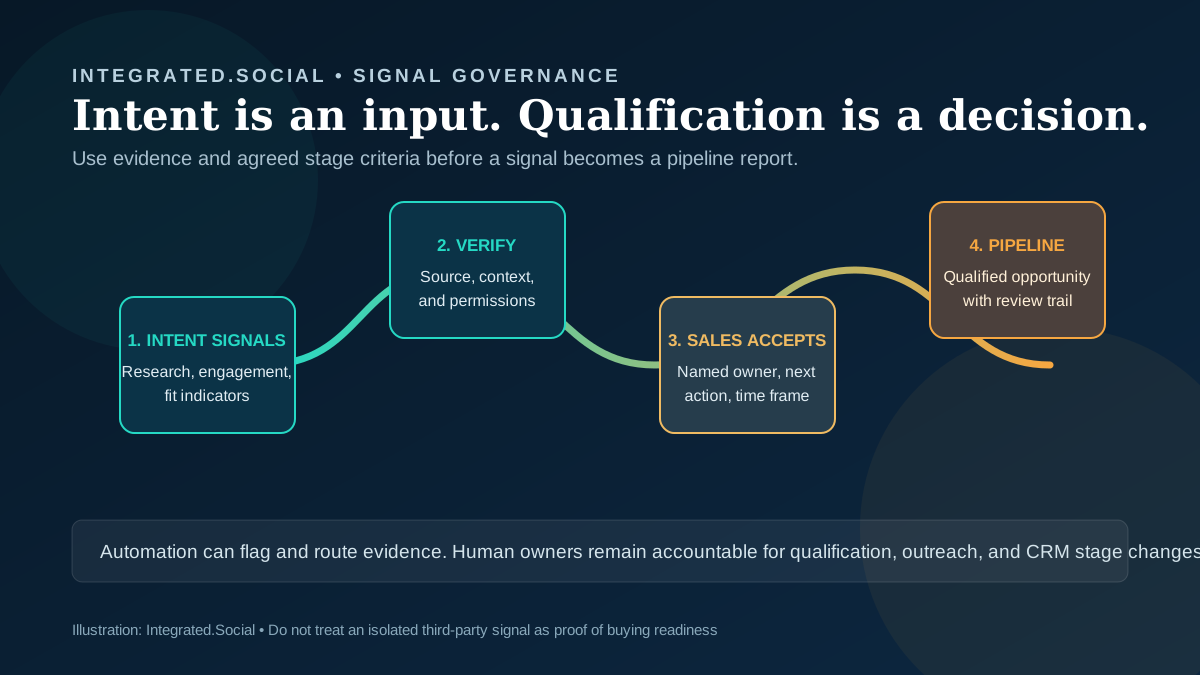
Use signals to decide what to investigate or serve next, not to declare a buyer ready. First-party actions such as a demo request are usually easier to interpret than anonymous account-level research; third-party topic surges need validation. Record source, date, match confidence and the action taken. A human conversation ultimately establishes need and timing.
What is a practical way to rank signals?
Rank a signal by specificity, recency, reliability and fit. A named person requesting an implementation discussion may warrant prompt sales follow-up; repeated reading of a comparison page can trigger relevant nurture; a topic surge alone is a weak basis for aggressive outreach. Test whether each signal predicts accepted opportunities, and retire those that create noise.
Can an AI agent qualify leads automatically?
AI can enrich records, summarise account research, flag missing fields and draft role-specific messages. Preserve sources and confidence, respect access controls and require human review for consequential decisions. Treat an “agent-qualified lead” as a proposed classification until sales accepts it. See our AQL versus MQL analysis and agentic AI service.
Step 6. How do you run relevant UK B2B outreach?
Contact a prospect because you have a plausible, specific reason their organisation could benefit, then offer evidence suited to their role. Choose timing and channel from context, and stop when the person objects. Test message quality, reply relevance and qualified conversations; there is no universal five-to-eight-touch sequence or meeting-rate benchmark that fits every sector.
What do UK GDPR and PECR require for B2B email?
UK rules depend on the subscriber and personal data involved. The ICO says PECR does not require prior consent for marketing email to corporate subscribers, but requires sender identification and a valid opt-out address. Sole traders and some partnerships have different rules. Processing named people's data also requires a UK GDPR lawful basis. Read the ICO's B2B guidance.
Corporate subscribers vs sole traders
Corporate-subscriber email under PECR is treated differently from sole traders and some partnerships, who may need prior consent in the same way as consumers. Always check the legal form of the recipient organisation and whether you are processing a named person's personal data. A vendor intent score is not permission to email anyone.
What should an outreach record contain?
Record the contact source, why the organisation fits, message relevance, lawful basis assessment where personal data is used, suppression status and next action. This gives sales context and lets the team investigate complaints or poor targeting. Review third-party data contracts; a vendor's intent signal does not grant permission to contact someone.
Step 7. How do you make sales and marketing accountable to pipeline?
Write one shared qualification and handoff agreement: who owns each stage, how quickly records are reviewed, which reasons justify rejection and what evidence is required to create an opportunity. Feed outcomes back to campaign and content teams. Compare cohorts over the length of the actual sales cycle, with revenue quality and capacity alongside volume.
Which B2B lead generation metrics matter?
Report lead-to-acceptance rate, accepted-to-SQL rate, SQL-to-opportunity rate, qualified pipeline, win rate, deal size and customer acquisition cost by source and account cohort. Include response and routing time as operational checks. Use attribution as one view of contribution, then test incrementality where possible; a dashboard cannot prove a channel caused every recorded deal.
| Metric | Calculation | Why it matters |
|---|---|---|
| Sales acceptance rate | Accepted leads ÷ leads sent to sales | Exposes audience and handoff quality |
| SQL-to-opportunity rate | Opportunities ÷ SQLs | Tests whether conversations become deals |
| Cost per qualified opportunity | Acquisition spend ÷ qualified opportunities | Connects spend to real pipeline |
| Pipeline yield | Qualified pipeline value ÷ acquisition spend | Shows scale, subject to attribution and stage quality |
| Win rate and payback | Won deals ÷ opportunities; CAC ÷ contribution margin per period | Tests commercial sustainability |
Attribution vs incrementality
Attribution assigns recorded pipeline to a channel or touch; incrementality asks what would have happened without that spend. Use both: attribution for operational diagnosis, and holdouts or careful cohort tests when stakeholders disagree about whether a channel creates new demand. Do not add every platform's attributed conversions together and call the sum incremental.
What should you do in the first 30 days?
In week one, agree the ICP, qualification stages and baseline. In week two, test forms, routing and CRM rejection reasons. In week three, repair a decision-stage page and one acquisition campaign. In week four, review accepted leads and opportunities, then decide what to scale. Thirty days establishes an operating loop, not proof of closed-won ROI for a long sales cycle.
When should you hire a B2B lead generation agency?
Consider an external partner when your team lacks the capacity to connect buyer research, content, media, outreach and CRM measurement, and the likely commercial upside justifies the cost. Ask for the definition of a qualified opportunity, named owners, data and account access, a test plan, case-study scope and reporting beyond leads or booked meetings.
Integrated.Social combines ABM, agentic AI lead generation, SEO/AEO/GEO and paid performance around an agreed commercial goal. Explore the published case studies or request a free AI growth audit to identify the most important gap in your current funnel.
Frequently asked questions about qualified B2B leads
Qualified lead generation depends on fit, credible intent, sales acceptance and commercial outcomes, so universal contact counts and conversion benchmarks are unreliable. These answers address the common UK buyer questions that remain after the seven-step Intent-to-Pipeline framework. Use them to establish definitions and a test plan, then compare your own cohorts over their full sales cycle.
How do I generate more qualified B2B leads?
Define which accounts can become valuable customers, answer their buying questions across search and AI discovery, and connect relevant outreach to evidence of need. Agree with sales what “qualified” means, verify each contact and buying group, then optimise for accepted opportunities and revenue rather than form fills or meeting volume.
How do I generate more qualified B2B leads without increasing spend?
Audit where current leads fail: irrelevant search terms, weak decision-stage pages, high-friction forms, delayed routing or sales rejection. Repair the largest leak and feed accepted-opportunity outcomes into campaign optimisation. Better qualification may reduce raw lead volume while increasing useful conversations. Compare pipeline and closed-won results before claiming an efficiency gain.
What counts as a qualified B2B lead?
A qualified B2B lead is a person or account that fits an agreed customer profile and has credible evidence of a relevant problem, capacity to act and a plausible path to a purchase decision. Qualification is a staged judgement, not a fixed number of downloads or an AI-generated score. Sales must confirm whether the opportunity is real.
What is the difference between a B2B lead and a qualified opportunity?
A lead is an identified contact or enquiry. A qualified opportunity is a potential deal with a credible need, fit, buying process, value and next step accepted by sales. A download or intent score does not automatically establish an opportunity. The distinction matters because a campaign can produce many leads while adding little saleable pipeline.
How do MQLs, SQLs and opportunities differ?
An MQL is a marketing-defined candidate for sales review; an SQL has been qualified through sales interaction; an opportunity is a potential deal in a defined buying process. Add a sales-accepted stage to expose handoff failures. Record the disqualification reasons so marketing can improve its audience, message and conversion goals instead of merely increasing volume.
Should you score an individual or the whole buying group?
Score the person and account separately. A single senior buyer can be valuable, while several junior visits can be noise; neither proves consensus. Map who owns the budget, who will use the product, who assesses security or procurement and who can block a decision. Use known roles and confirmed interactions, not inferred identity as certainty.
Why are B2B leads low quality even when volume rises?
Lead volume rises without pipeline when targeting is broad, conversion actions reward easy form fills, content attracts students or vendors, or sales receives records without useful context. The failure may also sit after acquisition: slow routing, weak follow-up or inconsistent definitions. Diagnose the conversion and handoff chain before buying more traffic.
Should I focus on inbound leads or outbound ABM?
Use inbound to capture active demand and answer questions buyers research independently. Use outbound ABM to reach a defined set of high-value accounts with relevant, role-specific evidence. The right balance depends on deal size, sales capacity, category demand and the buying cycle. Test cost per accepted opportunity and win rate for each cohort.
When does ABM make more sense than broad lead generation?
ABM suits higher-value, considered purchases where a manageable account list and several stakeholders justify tailored research, content and sales effort. Broad demand generation may work better when the market is large, transaction value lower and buyers can self-serve. Many firms need both: category demand creation plus focused follow-through for the best-fit accounts.
How can SEO and AI search generate B2B leads?
Create crawlable pages that answer real problem, comparison and vendor-selection questions with evidence, then give readers a relevant next step. AI search visibility may contribute before any measurable referral. Track discoverability, engaged visits, self-reported influence and later pipeline, while avoiding unsupported claims that every citation directly caused a lead.
Is third-party intent data enough to qualify a prospect?
No. A topic surge can suggest account-level research, but identity, relevance and timing may be uncertain. Combine it with ICP fit, first-party evidence and a human conversation when appropriate. Track whether the signal predicts sales-accepted opportunities, rather than treating a vendor's score as a verified purchase decision or permission for outreach.
Can an AI agent qualify leads automatically?
AI can enrich records, summarise account research, flag missing fields and draft role-specific messages. Preserve sources and confidence, respect access controls and require human review for consequential decisions. Treat an “agent-qualified lead” as a proposed classification until sales accepts it.
Can AI replace human B2B lead qualification?
AI can organise data, draft messages, suggest fit and flag anomalies, but it cannot reliably confirm a buyer's budget, internal consensus or readiness from digital traces alone. Keep source evidence, confidence and human review in the workflow. Judge automation by sales acceptance and downstream pipeline, not by the number of records it scores.
What do UK GDPR and PECR require for B2B email?
UK rules depend on the subscriber and personal data involved. The ICO says PECR does not require prior consent for marketing email to corporate subscribers, but requires sender identification and a valid opt-out address. Sole traders and some partnerships have different rules. Processing named people's data also requires a UK GDPR lawful basis. Read the ICO's B2B guidance before you scale outreach.
What is a good MQL-to-SQL conversion rate?
There is no useful universal target without consistent stage definitions and a comparable sales cycle. Establish a baseline by channel, account tier and lead source. A higher ratio can reflect better targeting or simply a stricter MQL threshold. Monitor acceptance, opportunity creation, win rate and revenue to determine whether lead quality actually improved.
How many touches does it take to book a B2B meeting?
No fixed number applies across sectors, roles and buying stages. A relevant inbound demo request may need one prompt response; a complex target account may require several useful interactions over months. Optimise message relevance, consent and objection handling, then measure held, qualified meetings and opportunities instead of maximising touch count.
Which B2B lead generation metrics matter?
Report lead-to-acceptance rate, accepted-to-SQL rate, SQL-to-opportunity rate, qualified pipeline, win rate, deal size and customer acquisition cost by source and account cohort. Include response and routing time as operational checks. Use attribution as one view of contribution, then test incrementality where possible; a dashboard cannot prove a channel caused every recorded deal.
What should you do in the first 30 days?
In week one, agree the ICP, qualification stages and baseline. In week two, test forms, routing and CRM rejection reasons. In week three, repair a decision-stage page and one acquisition campaign. In week four, review accepted leads and opportunities, then decide what to scale. Thirty days establishes an operating loop, not proof of closed-won ROI for a long sales cycle.
How much does outsourced B2B lead generation cost in the UK?
Cost depends on research, content, paid media, outreach, technology and CRM integration scope. Agencies may charge a retainer, project fee or hybrid fee, with media and data costs separate. Request a scoped proposal stating ownership, deliverables, qualification rules, reporting and exit terms. Compare cost per qualified opportunity and likely payback, not fee alone.
When should you hire a B2B lead generation agency?
Consider an external partner when your team lacks the capacity to connect buyer research, content, media, outreach and CRM measurement, and the likely commercial upside justifies the cost. Ask for the definition of a qualified opportunity, named owners, data and account access, a test plan, case-study scope and reporting beyond leads or booked meetings.
How do I know whether an agency-generated lead is genuinely qualified?
Require an agreed ICP, documented source, verified contact and account, a stated need or meaningful engagement, sales acceptance and a clear next action. Review rejected leads and opportunities together each month. A booked meeting is not automatically a qualified opportunity, and a claimed reply rate cannot substitute for pipeline or revenue evidence.
Related tools and services
Sources and related reading
The ICO's B2B guidance supports the legal summary. Google's AI features guidance explains that search eligibility and useful visible content matter without special AI schema. The B2B SaaS ABM case study illustrates execution. Our AQL versus MQL and dark AI buyer-journey analysis explore qualification and measurement limitations.
B2B pipeline evidence worksheet
Use the worksheet to document buyer qualification, proof, hand-off checks and the next pipeline decision.
We record only the requested asset, your email and your affirmative delivery request. This is not a marketing subscription.