Every week brings a new headline declaring that ChatGPT, Perplexity, or some other AI challenger is about to dethrone Google. The reality is considerably more nuanced — and considerably more important for marketing leaders to understand correctly, because the wrong conclusion leads to the wrong budget allocation.
The question is not whether AI is changing search. It clearly is. The question is whether that change is happening at Google's expense or through Google's own infrastructure. The answer, based on current data, is largely the latter — and that distinction matters enormously for how brands should invest in 2026 and beyond.
What the Search Market Share Data Actually Shows
Google's global search market share has remained remarkably stable despite the rapid growth of AI-native search tools. According to Statcounter data for Q1 2026, Google holds approximately 89% of global search market share. Bing, which powers Microsoft Copilot's search capabilities, holds approximately 4%. All other search engines, including AI-native tools, account for the remainder.
This does not mean AI search is irrelevant. It means that the primary battleground for AI search is not Google's market share — it is the nature of what happens within Google's own search experience.
The more important number: Google reports that AI Overviews now appear in a significant proportion of US search queries. When AI Overviews appear, the search experience changes fundamentally — users receive synthesised answers rather than a list of links. This is AI search happening at Google scale, not at ChatGPT scale.
Google's AI Search Infrastructure
Google has deployed AI search capabilities across its core product in ways that no challenger can match at equivalent scale:
AI Overviews
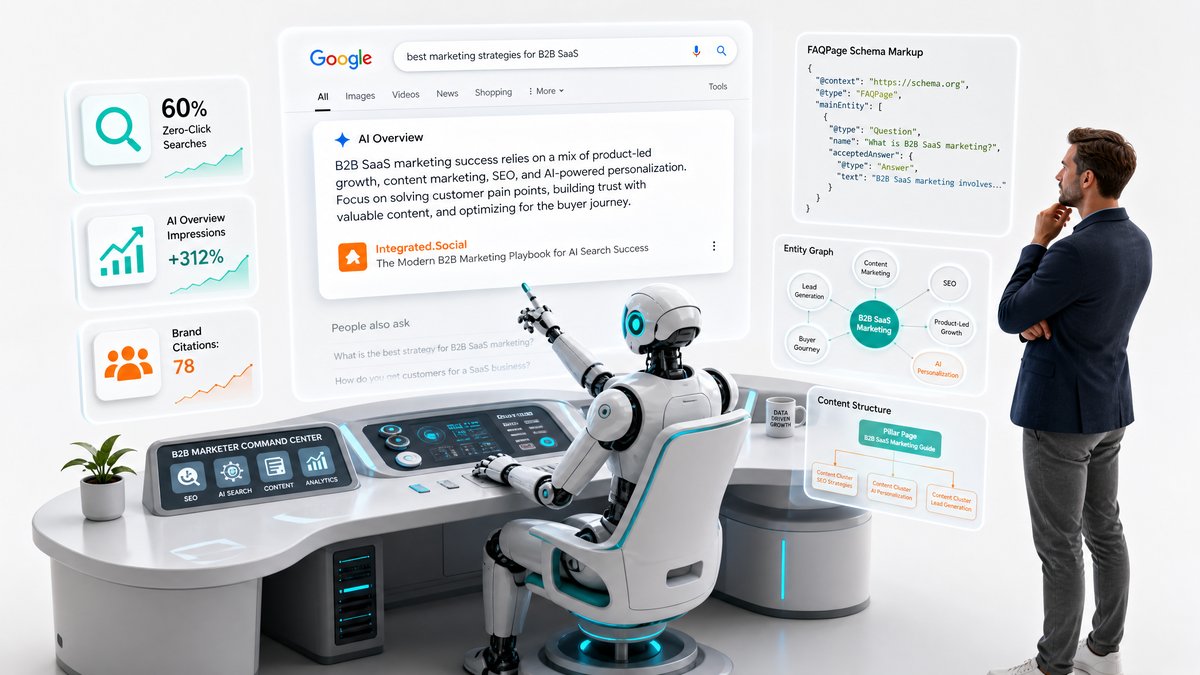
AI Overviews appear at the top of search results for a growing proportion of queries, providing synthesised answers with citations. For marketing teams, this means that appearing in AI Overviews is now a primary organic visibility objective — not a secondary consideration.
AI Mode
Google AI Mode, available in Google Search Labs, provides a fully conversational search experience powered by Gemini. Users can ask multi-step questions, receive synthesised answers, and follow up conversationally. This is Google's direct response to the ChatGPT and Perplexity experience — built on Google's existing search infrastructure and index.
Gemini Business Agent for Leads
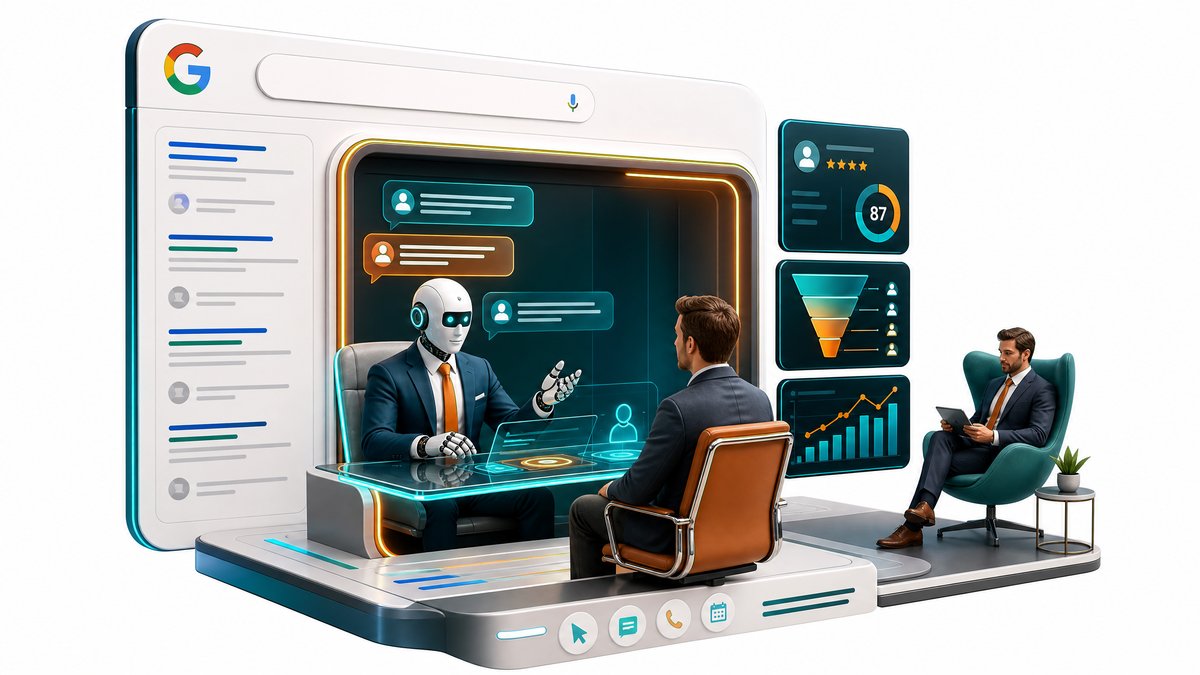
Google has begun testing a Gemini Business Agent capability that allows AI to complete lead generation tasks on behalf of users — filling forms, requesting quotes, and initiating business conversations. If this capability scales, it represents a fundamental change to how B2B lead generation works through search. We covered this development in detail here.
Where AI-Native Search Tools Are Actually Growing
While Google's overall market share has remained stable, AI-native search tools are growing in specific use cases and user segments:
Research and synthesis tasks
For tasks that require synthesising information from multiple sources — competitive research, market analysis, technical documentation review — ChatGPT, Perplexity, and Claude are capturing a growing share of professional usage. These are high-value tasks where the quality of synthesis matters more than the breadth of the index.
Early-stage B2B research
B2B buyers are increasingly using AI assistants for early-stage vendor research and category education. Gartner research suggests that by 2026, more than 30% of B2B research interactions will involve an AI intermediary at some stage of the buying process. This does not mean Google is absent from these journeys — but it does mean that AI-native tools are capturing a growing share of the first-touch research moment.
Consumer product recommendations
As we covered in our analysis of AI citation share for consumer brands, AI assistants are increasingly influencing product discovery and recommendation in consumer categories. This is a use case where Perplexity and ChatGPT are genuinely competing with Google Shopping.
Voice and ambient computing
Apple Intelligence, Google Assistant, and Amazon Alexa are all integrating large language model capabilities into voice interfaces. This is a search surface where Google does not have a dominant position, and where AI-native capabilities are genuinely displacing traditional search behaviour.
The Zero-Click Acceleration
One of the most significant commercial implications of AI search is the acceleration of zero-click search behaviour. When AI Overviews, AI Mode, or AI assistant responses provide complete answers, users have less reason to click through to source websites. We have covered the zero-click challenge in detail, but the key point for this analysis is that AI search is changing the commercial value of organic search rankings even when it is not changing Google's market share.
A brand that ranks number one for a high-intent query may receive fewer clicks than it did two years ago, because AI Overviews now answer the query directly. The brand is still "winning" in the traditional sense — it is cited in the AI Overview — but the commercial return on that ranking has changed.
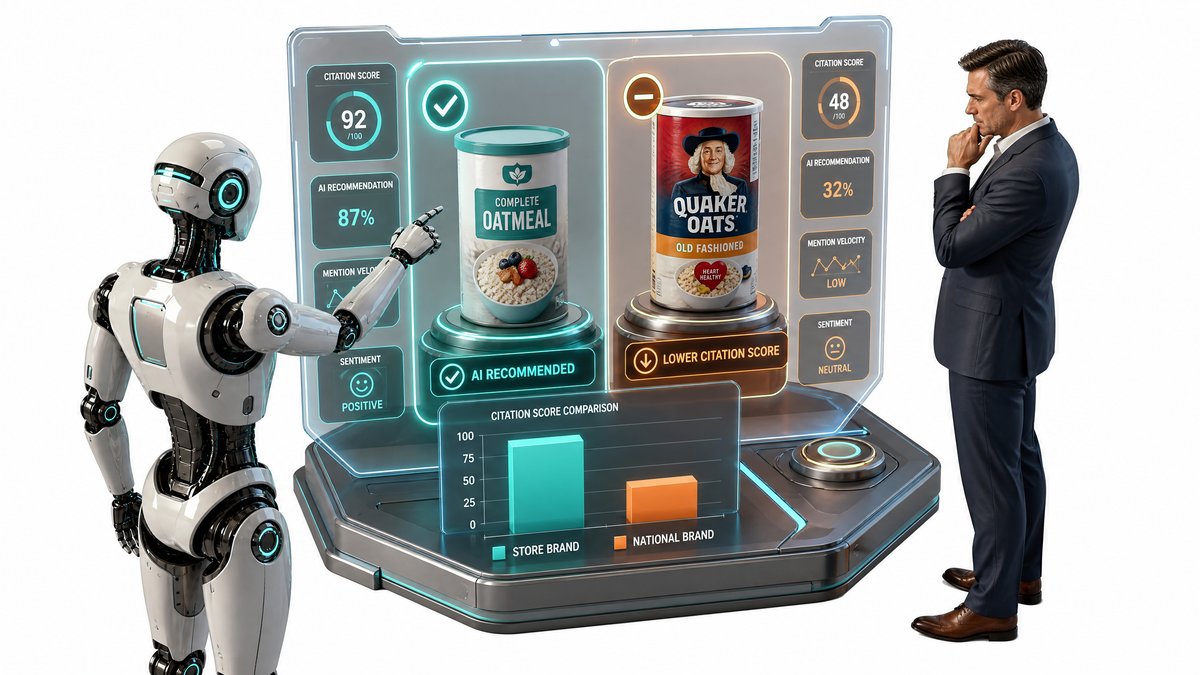
The implication for marketing budgets: Organic search investment should increasingly be evaluated on citation share and brand mention frequency in AI responses, not just on click-through rates and organic traffic volume. These are different metrics that require different measurement approaches.
What This Means for B2B Marketing Strategy in 2026
The correct strategic response to the AI search landscape is not to abandon Google or to pivot entirely to AI-native channels. It is to understand that the search landscape now has multiple distinct surfaces, each requiring different optimisation approaches:
Google AI Overviews and AI Mode
These surfaces require AEO (Answer Engine Optimisation) — structured content, FAQ schema, Speakable markup, and entity authority that makes your content easy for Google's AI to synthesise and cite. Our AEO and AI Search service is specifically designed to improve citation rates across these surfaces.
ChatGPT and Perplexity
These platforms have their own citation logic, which weights independent editorial coverage, structured data, and content that directly answers specific questions. The overlap with Google AEO is significant, but there are platform-specific optimisations that matter.
Google Paid Search and Performance Max
Google's advertising products remain the most efficient way to reach high-intent commercial queries at scale. The introduction of AI-powered ad formats and the Gemini Business Agent capability means that paid search strategy needs to evolve — but the channel remains essential for most B2B marketing programmes.
AI-assisted content discovery
For B2B brands, the growing use of AI assistants in the research phase means that content strategy needs to account for how AI systems evaluate and cite sources. This is a new capability that most marketing teams are still developing.
The Honest Answer to the Question
Is AI search replacing Google? Not in any meaningful market share sense. Google is deploying AI search capabilities faster than any challenger and at a scale that no competitor can match. The company that owns the world's largest search index, the most comprehensive advertising infrastructure, and the most widely used mobile operating system is not being disrupted by AI — it is deploying AI as its primary competitive weapon.
Is AI search changing how Google works? Absolutely. The nature of the search experience is changing rapidly, and the commercial implications for brands are significant. Zero-click acceleration, AI citation share, and the emergence of AI-mediated B2B research are all real phenomena that require strategic responses.
The marketing leaders who will navigate this landscape most effectively are those who understand both dimensions: Google remains dominant and must remain central to search strategy, while the nature of that strategy needs to evolve to account for AI-mediated discovery across multiple surfaces.
If you want to understand your current AI citation share across Google AI Mode, ChatGPT, Perplexity, and Gemini — and identify the specific content and structural changes that would improve it — our AEO and AI Search team can run a comprehensive audit. The results typically reveal significant gaps between where brands currently appear in AI responses and where they need to be.
Every week brings a new headline declaring that ChatGPT, Perplexity, or some other AI challenger is about to dethrone Google. The reality is considerably more nuanced — and considerably more important for marketing leaders to understand correctly, because the wrong conclusion leads to the wrong budget allocation.
The question is not whether AI is changing search. It clearly is. The question is whether that change is happening at Google's expense or through Google's own infrastructure. The answer, based on current data, is largely the latter — and that distinction matters enormously for how brands should invest in 2026 and beyond.
What the Search Market Share Data Actually Shows
Google's global search market share has remained remarkably stable despite the rapid growth of AI-native search tools. According to Statcounter data for Q1 2026, Google holds approximately 89% of global search market share. Bing, which powers Microsoft Copilot's search capabilities, holds approximately 4%. All other search engines, including AI-native tools, account for the remainder.
This does not mean AI search is irrelevant. It means that the primary battleground for AI search is not Google's market share — it is the nature of what happens within Google's own search experience.
The more important number: Google reports that AI Overviews now appear in a significant proportion of US search queries. When AI Overviews appear, the search experience changes fundamentally — users receive synthesised answers rather than a list of links. This is AI search happening at Google scale, not at ChatGPT scale.
Google's AI Search Infrastructure
Google has deployed AI search capabilities across its core product in ways that no challenger can match at equivalent scale:
AI Overviews
AI Overviews appear at the top of search results for a growing proportion of queries, providing synthesised answers with citations. For marketing teams, this means that appearing in AI Overviews is now a primary organic visibility objective — not a secondary consideration.
AI Mode
Google AI Mode, available in Google Search Labs, provides a fully conversational search experience powered by Gemini. Users can ask multi-step questions, receive synthesised answers, and follow up conversationally. This is Google's direct response to the ChatGPT and Perplexity experience — built on Google's existing search infrastructure and index.
Gemini Business Agent for Leads
Google has begun testing a Gemini Business Agent capability that allows AI to complete lead generation tasks on behalf of users — filling forms, requesting quotes, and initiating business conversations. If this capability scales, it represents a fundamental change to how B2B lead generation works through search. We covered this development in detail here.
Where AI-Native Search Tools Are Actually Growing
While Google's overall market share has remained stable, AI-native search tools are growing in specific use cases and user segments:
Research and synthesis tasks
For tasks that require synthesising information from multiple sources — competitive research, market analysis, technical documentation review — ChatGPT, Perplexity, and Claude are capturing a growing share of professional usage. These are high-value tasks where the quality of synthesis matters more than the breadth of the index.
Early-stage B2B research
B2B buyers are increasingly using AI assistants for early-stage vendor research and category education. Gartner research suggests that by 2026, more than 30% of B2B research interactions will involve an AI intermediary at some stage of the buying process. This does not mean Google is absent from these journeys — but it does mean that AI-native tools are capturing a growing share of the first-touch research moment.
Consumer product recommendations
As we covered in our analysis of AI citation share for consumer brands, AI assistants are increasingly influencing product discovery and recommendation in consumer categories. This is a use case where Perplexity and ChatGPT are genuinely competing with Google Shopping.
Voice and ambient computing
Apple Intelligence, Google Assistant, and Amazon Alexa are all integrating large language model capabilities into voice interfaces. This is a search surface where Google does not have a dominant position, and where AI-native capabilities are genuinely displacing traditional search behaviour.
The Zero-Click Acceleration
One of the most significant commercial implications of AI search is the acceleration of zero-click search behaviour. When AI Overviews, AI Mode, or AI assistant responses provide complete answers, users have less reason to click through to source websites. We have covered the zero-click challenge in detail, but the key point for this analysis is that AI search is changing the commercial value of organic search rankings even when it is not changing Google's market share.
A brand that ranks number one for a high-intent query may receive fewer clicks than it did two years ago, because AI Overviews now answer the query directly. The brand is still "winning" in the traditional sense — it is cited in the AI Overview — but the commercial return on that ranking has changed.
The implication for marketing budgets: Organic search investment should increasingly be evaluated on citation share and brand mention frequency in AI responses, not just on click-through rates and organic traffic volume. These are different metrics that require different measurement approaches.
What This Means for B2B Marketing Strategy in 2026
The correct strategic response to the AI search landscape is not to abandon Google or to pivot entirely to AI-native channels. It is to understand that the search landscape now has multiple distinct surfaces, each requiring different optimisation approaches:
Google AI Overviews and AI Mode
These surfaces require AEO (Answer Engine Optimisation) — structured content, FAQ schema, Speakable markup, and entity authority that makes your content easy for Google's AI to synthesise and cite. Our AEO and AI Search service is specifically designed to improve citation rates across these surfaces.
ChatGPT and Perplexity
These platforms have their own citation logic, which weights independent editorial coverage, structured data, and content that directly answers specific questions. The overlap with Google AEO is significant, but there are platform-specific optimisations that matter.
Google Paid Search and Performance Max
Google's advertising products remain the most efficient way to reach high-intent commercial queries at scale. The introduction of AI-powered ad formats and the Gemini Business Agent capability means that paid search strategy needs to evolve — but the channel remains essential for most B2B marketing programmes.
AI-assisted content discovery
For B2B brands, the growing use of AI assistants in the research phase means that content strategy needs to account for how AI systems evaluate and cite sources. This is a new capability that most marketing teams are still developing.
The Honest Answer to the Question
Is AI search replacing Google? Not in any meaningful market share sense. Google is deploying AI search capabilities faster than any challenger and at a scale that no competitor can match. The company that owns the world's largest search index, the most comprehensive advertising infrastructure, and the most widely used mobile operating system is not being disrupted by AI — it is deploying AI as its primary competitive weapon.
Is AI search changing how Google works? Absolutely. The nature of the search experience is changing rapidly, and the commercial implications for brands are significant. Zero-click acceleration, AI citation share, and the emergence of AI-mediated B2B research are all real phenomena that require strategic responses.
The marketing leaders who will navigate this landscape most effectively are those who understand both dimensions: Google remains dominant and must remain central to search strategy, while the nature of that strategy needs to evolve to account for AI-mediated discovery across multiple surfaces.
If you want to understand your current AI citation share across Google AI Mode, ChatGPT, Perplexity, and Gemini — and identify the specific content and structural changes that would improve it — our AEO and AI Search team can run a comprehensive audit. The results typically reveal significant gaps between where brands currently appear in AI responses and where they need to be.