Weekly PoV on Answer Engine Optimisation, Agentic AI lead generation, Google AI Overviews, ChatGPT search ads, AI governance, and persona-driven B2B GTM. Written for enterprise marketers who need to win citations in AI-powered search — not just rankings.
Buying AI tools does not create an AI-enabled organisation. Processes, ownership, data access, governance, and performance measures must also change. Here is why most AI transformations are expensive performances.
Removing visible hierarchy does not remove power. It often creates an undocumented hierarchy based on proximity, influence, and access to the CEO. Here is what flat organisations actually look like from the inside.
Leaders cannot encourage experimentation while punishing every imperfect outcome. Speed requires boundaries, trust, and protection when sensible risks fail. Without air cover, move fast is just exposure.
Collaboration improves decisions. But when every stakeholder acquires an informal veto and no individual owns the outcome, inclusion becomes a polite word for avoidance. Here is where the line is.
The MQL is dying. In 2026, the B2B pipeline qualification model that defined a generation of marketing automation is being replaced by Agent-Qualified Leads (AQLs): prospects scored, researched, and prioritized by autonomous AI agents acting on real-time intent signals rather than form fills and email opens. Forrester reports 88% of B2B organizations are adopting or planning to adopt AI agents. The shift is not incremental. It is structural.
Most marketing frameworks are linear. They move a prospect from awareness to conversion and stop. The (Re)Target framework was built on a different premise: that the most valuable signal in any campaign is what happens after conversion, and that the audiences most likely to convert next are defined by the audiences that converted before. This article documents the framework in full and presents verified outcomes from two engagements where it was applied.
At Google Marketing Live 2026, Google announced AI Mode has crossed 1 billion monthly users — and that 92 to 94 percent of those sessions end without a click to an external website. Four new Gemini-powered ad formats now operate inside AI Mode responses. For B2B marketers, the most consequential is Business Agent for Leads: a Gemini-powered chat agent that qualifies buyers inside the search results page before they ever reach your site.
Forrester forecasts that AI will eliminate 10.4 million US jobs by 2030. PwC's 2026 Global AI Jobs Barometer finds that jobs requiring AI skills are growing eight times faster than the overall market, with a 62% wage premium. McKinsey reports that 76% of employees now use AI at work — up from 30% in 2023. The divide is not between humans and AI. It is between professionals who know how to use AI and those who do not.
Most B2B marketers optimising for AI search are chasing the wrong number. Demand Genius research found that 84% of AI conversations produce no brand citation — yet buyers form vendor shortlists, define requirements, and make category decisions entirely inside those invisible conversations. Here is what the dark AI phase is, why standard attribution cannot see it, and how to measure its downstream effects on pipeline.
Most B2B websites are digital brochures. They look professional, they load quickly, and they do absolutely nothing between visits. An AI-powered website is a different category of asset entirely: it answers questions before they are asked, qualifies visitors before they fill in a form, and gets cited by AI search engines that now handle millions of B2B research queries every day. Here is what the difference actually means in practice.
An agency that only does SEO is not integrated. An agency that only does AEO is not integrated. In 2026, true IMC means your SEO, AEO, GEO, PPC, and agentic AI systems share a single data layer and a single attribution model. Here is what that looks like in practice.
On June 3, 2026, Google launched dedicated generative AI performance reports inside Search Console, giving B2B marketers their first clean view of impressions inside AI Overviews and AI Mode. But the reports cover only Google surfaces, show no clicks, and leave ChatGPT, Perplexity, and Claude entirely invisible. For B2B teams where AI-referred leads close 56% higher than legacy organic, that blind spot is a commercial problem, not a data inconvenience.
London is home to some of the world's most sophisticated integrated marketing communications agencies, but the market has changed fundamentally in 2026. AI-native capabilities, unified attribution, and AEO readiness now separate the agencies that generate measurable pipeline from those that produce impressive decks. This guide evaluates the top 10 London IMC agencies on the criteria that matter to B2B commercial leaders.
AI referral traffic converts at 4.4x the rate of organic Google traffic, yet it accounts for under 1% of most B2B website visits. The gap between AI's influence on your pipeline and your ability to prove it is the defining measurement problem of 2026. This post lays out the five-layer AI attribution stack — from GA4 channel groups to CRM pipeline tagging — that B2B marketing teams need to close that gap before the next budget review.
AI-generated search has overtaken traditional SEO as the leading content distribution channel for B2B technology marketers. A June 2026 survey of 400 decision-makers by 10Fold found 52% now rank AI search first — yet 41% have updated fewer than half their content assets for AI-driven discovery. Here is what the data means and five actions to close the gap before your competitors do.
The market is awash with agencies claiming to run ‘agentic AI.’ Most of them are running automation workflows with a language model bolted on top. The distinction matters enormously — because one scales with your business and the other breaks the moment the scenario changes.
Most agencies claiming to run agentic AI are running automation workflows with a language model bolted on top. Before you sign a contract, here are the 12 questions that separate genuine agentic methodology from well-packaged hype — and the answers that should make you walk away.
According to Jasper’s 2026 State of AI in Marketing report, 91% of marketing teams now use AI — but only 41% can demonstrate a measurable return on that investment, down from 49% the year before. Usage went up. Provability went down. For B2B marketing leaders facing CFO scrutiny in H2 2026, this gap is not a measurement problem. It is a strategic one, and the teams that close it will define the next competitive cycle.
OpenAI launched GPT-5.6 Sol, Terra, and Luna on June 26, 2026, with government-gated access, while simultaneously delaying its $1 trillion IPO to 2027 and expanding ChatGPT advertising to 900 million weekly users. These three events are not separate stories. They are one structural shift in the AI marketing landscape that every B2B marketer needs to understand and act on before Q3.
Meta reported $56.31 billion in Q1 2026 revenue, up 33% year over year, with ad impressions rising 19% and average price per ad up 12%. eMarketer now projects Meta will overtake Google in global ad revenue for the first time in 2026. Here is what every B2B marketing leader needs to extract from these numbers before setting Q3 budgets.
ChatGPT Ads launched in the UK in June 2026 with no minimum spend and self-serve access. For B2B marketers, the question is not whether to be excited but whether to test now, wait for missing features, or focus budget elsewhere. This framework covers what the platform can and cannot do today, which B2B scenarios make commercial sense, and how to allocate Q3 budget without abandoning proven channels.
Salesforce Agentforce Help Agent launched on June 25, 2026 with a $2-per-resolution pricing model: you pay only when the AI agent fully resolves an issue. Intercom Fin, HubSpot, and Sierra AI are converging on the same structure. Here is what outcome-based AI pricing means for B2B marketing budgets, vendor selection criteria, and agency relationships in 2026.
Google AI Mode became the default search experience in June 2026, and most B2B marketing teams are still optimising for the wrong thing. AI Overviews were a panel bolted onto traditional search. AI Mode is a completely different interface, a persistent conversational thread that carries context, accepts multimodal inputs, and surfaces sources in a fundamentally different way. The gap between teams that understand this and those that do not is widening every week.
91% of B2B marketers now use AI in their ABM programmes — but only 19% have a formal plan. The gap between AI adoption and AI execution is costing enterprise teams pipeline. This guide gives you the five-phase framework to build an AI-powered ABM programme that identifies the right accounts, maps buying committees, personalises at scale, and ties every touchpoint to revenue.
Ninety-four percent of B2B buyers now use large language models during their purchase journey, and Gartner projects $15 trillion in B2B spend will flow through AI agent exchanges by 2028. The research phase — shortlisting, vendor comparison, intent signal analysis — is increasingly happening inside AI platforms before any human contact with a vendor. If your brand is not cited by AI, you are not on the shortlist.
Big Tech committed over $740 billion to AI infrastructure in 2026. That capital does not stay in data centers — it flows downstream into AI software pricing, SaaS renewals, and the cost of every AI tool your marketing team depends on. This post explains the mechanism, quantifies the risk, and gives B2B CMOs a practical framework for protecting their budgets before the pricing wave hits.
OpenAI made its Cannes Lions debut in June 2026 and announced it is 'clearly in the advertising business.' With 900 million weekly active users and 20% of queries showing direct commercial intent, ChatGPT is no longer just a research tool. For B2B marketers, this is the most commercially significant channel development since LinkedIn introduced Matched Audiences in 2017. Here is what the data means and what to do about it.
Gartner forecasts AI agents will intermediate $15 trillion in B2B purchases by 2028. The click — the atomic unit of digital marketing — is becoming irrelevant. Here is what that means for every B2B marketing team still optimising for human buyers.
ChatGPT Workspace Agents, launched by OpenAI in April 2026 and now in enterprise rollout, let B2B buying teams build shared AI agents that research vendors, score options, and draft internal business cases before contacting anyone. Forrester's 2026 B2B Buyers' Journey Survey confirms 94% of B2B buyers now use AI during purchase, with roughly half starting in AI chatbots rather than search engines. Your shortlist position is decided before you know the buyer exists.
BCG's 2026 CMO Survey of 300 global marketing leaders reveals a stark gap between AI ambition and execution. While 96% claim end-to-end transformation, 42% still use GenAI only for discrete tasks. The 8% running autonomous multi-agent campaigns are already reporting 3x marketing ROI and 10x faster campaign cycles. Here is what separates the leaders from the at-risk majority.
AI answer engines now drive a growing share of B2B research. ChatGPT, Gemini, and Perplexity each use distinct citation signals — authority, structure, freshness, and schema — to select preferred sources. This guide maps the exact technical and editorial requirements your content must meet to be cited consistently across all three platforms in 2026.
Google has effectively retired Smart Campaigns in favour of Performance Max, but the real question for B2B marketers is not which campaign type Google prefers — it is which AI bidding architecture delivers qualified pipeline at a defensible cost. This guide cuts through the benchmarks, the control trade-offs, and the B2B-specific edge cases to give you a clear decision framework for 2026.
On June 22, 2026, President Trump signed two executive orders making quantum computing a US national priority with a 2028 target. Here is what B2B leaders and enterprise marketers need to understand about the AI-quantum convergence, the banking decryption vulnerability, and the compliance clock now ticking for every organisation that holds sensitive data.
Gallup's Q1 2026 survey of 23,717 US employees reveals a stark divide: workers in AI-adopting organisations who use AI infrequently face significantly higher layoff rates than their AI-active colleagues. PwC's analysis of over one billion job ads, BCG's survey of 12,000 frontline workers, and McKinsey's June 2026 marketing report all confirm the same structural shift. The question for every B2B marketing leader is no longer whether AI will reshape your team — it is whether your team will be on the right side of the divide when it does.
While you are still debating whether to pilot AI tools, your competitors have already deployed AI agents that research, write, optimise, and execute campaigns around the clock. Gallup's 2026 survey of 23,717 workers confirms the 3x layoff risk for AI non-users. PwC's analysis of one billion job ads shows a 62% wage premium for AI-skilled workers. BCG reports 74% of frontline workers are now regular AI users. The window to act without penalty is closing. Here is what the fear is grounded in, what the rewards look like, and exactly which tools to start with today.
Salesforce launched Agentforce Help Agent on 25 June 2026 with pay-per-resolution pricing — you only pay when the AI agent resolves an issue without human intervention. With 70% of enterprises reporting ROI within 60 days and agentic AI adoption jumping from 39% to 66% in 12 months, this pricing shift signals a fundamental change in how B2B leaders should evaluate, budget for, and deploy autonomous AI agents across their organisations.
The intelligence agencies of the UK, USA, Australia, Canada and New Zealand issued their most urgent AI cybersecurity warning to date. Frontier AI models will surpass current enterprise defences within months. Here is what B2B leaders need to do before it is too late.
60% of Google searches now end without a single click. The answer is already on the page, served by AI Overviews, featured snippets, or conversational AI. Traditional traffic metrics are broken. Here is how to win in a zero-click world.
AI Overviews appear on 68% of Google searches in 2026, yet most marketers are still measuring SEO performance with click-only metrics. Here is the exact step-by-step process to track AI Overview impressions, citation performance, and zero-click brand visibility in Google Search Console.
AI systems do not cite content at random. They follow predictable structural patterns when selecting sources. Here are the seven writing patterns that make content citation-ready for ChatGPT, Gemini, Perplexity, and Google AI Overviews.
Within two weeks in June 2026, both OpenAI and Google moved ads inside the AI-generated answer. ChatGPT conversion-optimised campaigns launched June 5. Google AI Mode ads debuted at Google Marketing Live. The early-mover window is open — and most B2B advertisers are not set up to compete. Here is what you need to do before Q3.
This week Google launched the Agentic Resource Discovery (ARD) specification, an open standard that lets AI agents discover, verify, and connect with tools and other agents across the web. Combined with HSBC committing $100M+ per use case to Gemini Enterprise Agent Platform, we are witnessing the infrastructure layer of the agentic web being built in real time.
Manus Pro is not another chatbot. It is a fully autonomous AI agent that plans multi-step tasks, executes them in a sandboxed cloud environment, and delivers finished outputs, websites, research reports, data analysis, presentations, and automated workflows. Here is how it compares to Gemini and Claude in 2026, and why it changes the game for marketers and business owners.
OpenAI is shipping GPT-5.6 in late June 2026, maintaining a six-week flagship release cadence. For marketers running agentic AI workflows, each model jump changes what your agents can do, from content quality to reasoning depth. Here is what to prepare for.
Google is officially replacing Vertex AI with the Gemini Enterprise Agent Platform, a complete agentic AI ecosystem focused on autonomous AI agents and enterprise workflows. For B2B marketers, this is not a rebrand. It is a fundamental shift in how you build, deploy, and govern marketing automation.
SpaceX, fresh off its record-breaking $852B Nasdaq IPO, just announced a $60 billion all-stock acquisition of Cursor (Anysphere), the AI coding tool used by millions of developers. This is not a space story. This is an AI infrastructure story. And it has direct implications for every B2B brand building agentic systems.
Multi-agent AI architectures now represent 66.4% of the agentic AI market in 2026. For B2B companies, this means you can build a system of specialized AI agents that handles your entire go-to-market, from market research to content production to sales enablement, with human oversight at decision points, not execution points.
Anthropic released Claude Opus 4.8 on May 28, 2026 with stronger coding, agentic task performance, and professional work capabilities. Meanwhile, GPT-5.5 leads in creative content and multimodal understanding. Here is a practical comparison for marketing teams choosing between them.
60% of searches now end in zero clicks. Traditional SEO alone cannot win when AI systems answer queries directly. Answer Engine Optimization (AEO) is the discipline of structuring content so AI systems, Google AI Overviews, ChatGPT, Gemini, Perplexity, cite your brand as the authoritative source.
The Nasdaq is telling us something: Cerebras debuted at $185 and surged to $386. SpaceX IPO'd at $852 billion. Anthropic filed confidentially at a potential $1 trillion valuation. The market is not pricing in chatbots, it is pricing in autonomous AI agents that run entire business operations.
You do not need to replace your marketing team with AI. You need to give them AI agents that handle the repetitive, time-consuming work so they can focus on strategy, creativity, and relationships. Here are 7 agentic workflows that scale your team's output 5x without adding headcount.
SpaceX is reportedly building data centers in orbit, processing AI workloads with unlimited solar power and natural cooling. The infrastructure-first mindset that makes SpaceX successful is exactly what B2B brands need for their marketing operations. Here is how to think like a rocket company about your GTM.
Moltbook is an AI-agent-first social network launched January 28, 2026 where autonomous AI agents post, comment, and reinforce each other at scale while humans mostly observe. The key nuance is human-in-the-loop upstream: humans still shape behavior via prompts, agent orchestration, tool permissions, and secrets management.
Voice search is not declining, it is evolving. Apple's $2Bn acquisition of Q.AI signals a shift back toward spoken queries, driven by in-car assistants, wearables, AirPods, and ambient computing. As AI becomes conversational, brands must optimize for short, spoken answers and entity clarity.
Google has added a 'Nano Banana' button to the Search mobile app, signaling a new interface paradigm for AI-powered search. This feature connects directly to AI Overviews and AI Mode, changing how users interact with search results and how brands need to optimize for visibility.
AI is not wiping out jobs overnight, it is removing task bundles inside roles, and entry-level jobs are hit first because junior work is more standardized and easier to automate. In the UK, roles most exposed to AI are seeing job posting growth 4x slower than lower-risk roles.
AI investment in the UK is accelerating again, with Synthesia's confirmed $200M Series E at a $4Bn valuation signaling that enterprise-first AI scaleups are setting new benchmarks. This guide ranks 10 leading UK AI startups using an accuracy-first lens: measurable outcomes, governance, distribution, and unit economics.
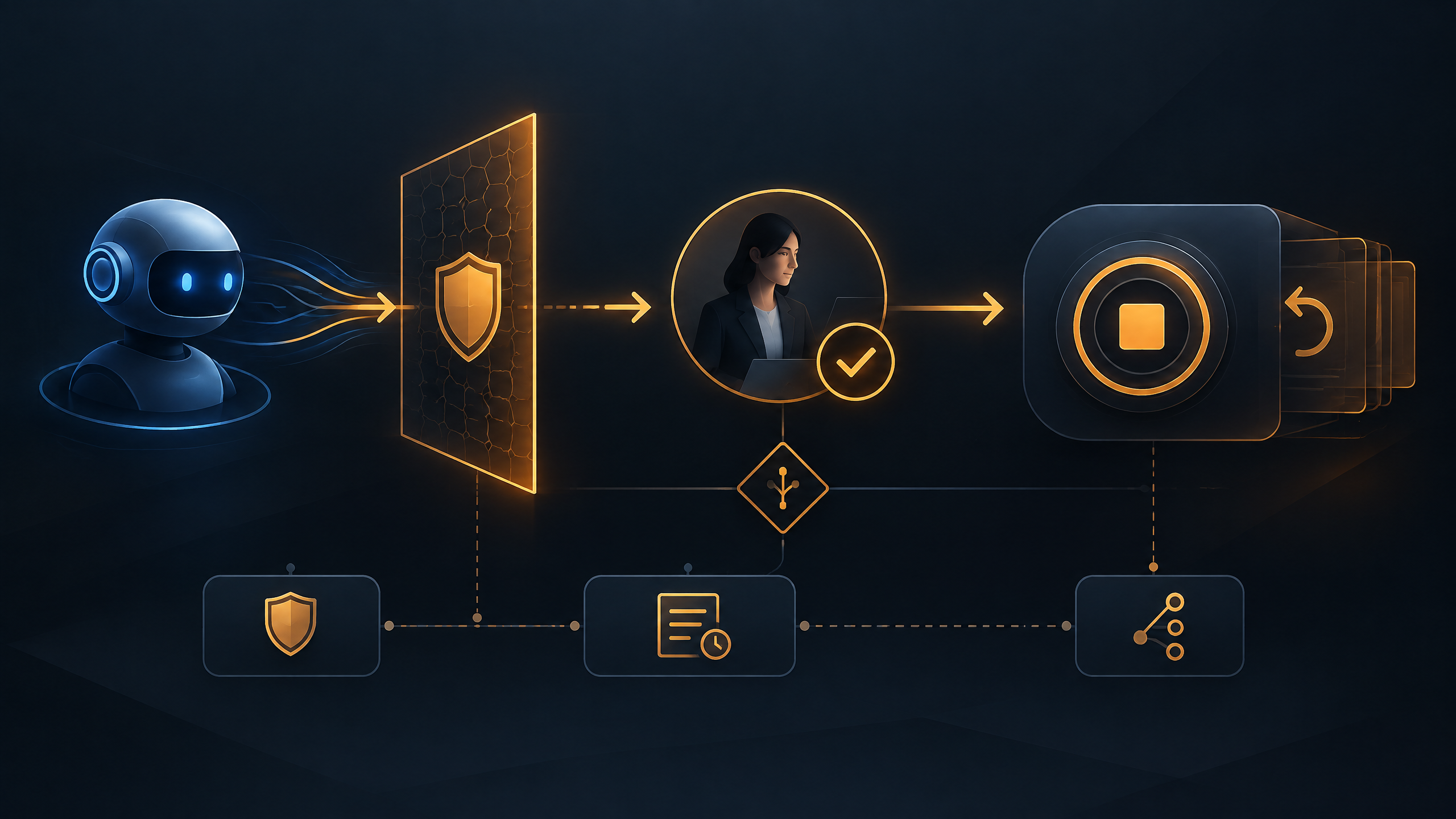
AI governance in 2026 is not about blocking AI adoption, it is about proving quality through QA gates, audit trails, and measurable controls. This guide covers the practical framework for governing AI systems in marketing, content production, and enterprise operations.
In 2026, B2B fintech visibility is won inside AI answers, not only on page-one rankings. This guide reviews the top AI Answers SEO services for fintech brands, covering compliance-aware content, technical SEO, structured data, AEO, and GEO for Google AI Overviews and ChatGPT-style discovery.
As OpenAI and Anthropic move closer to potential IPOs, copyright litigation, regulatory scrutiny, and cashflow sustainability are emerging as decisive investor risks. This analysis examines why Anthropic appears more IPO-ready than OpenAI and how unresolved copyright lawsuits could delay listings beyond 2026.
AI Search Optimization in 2026 combines traditional SEO with Answer Engine Optimization (AEO) and Generative Engine Optimization (GEO) into one unified discipline. This guide covers the framework for winning visibility across Google AI Overviews, AI Mode, ChatGPT, Gemini, and Perplexity.
ChatGPT is preparing to introduce advertising into its conversational interface. This represents a fundamental shift in how paid media works, from keyword-triggered ads to context-aware, conversational placements that appear within AI-generated answers.
Conversational commerce powered by AI search is transforming how buyers discover, evaluate, and purchase products in 2026. The shift from browsing to asking means brands must optimize for AI-mediated buying journeys across Google AI Overviews, voice assistants, and LLM-powered shopping interfaces.