
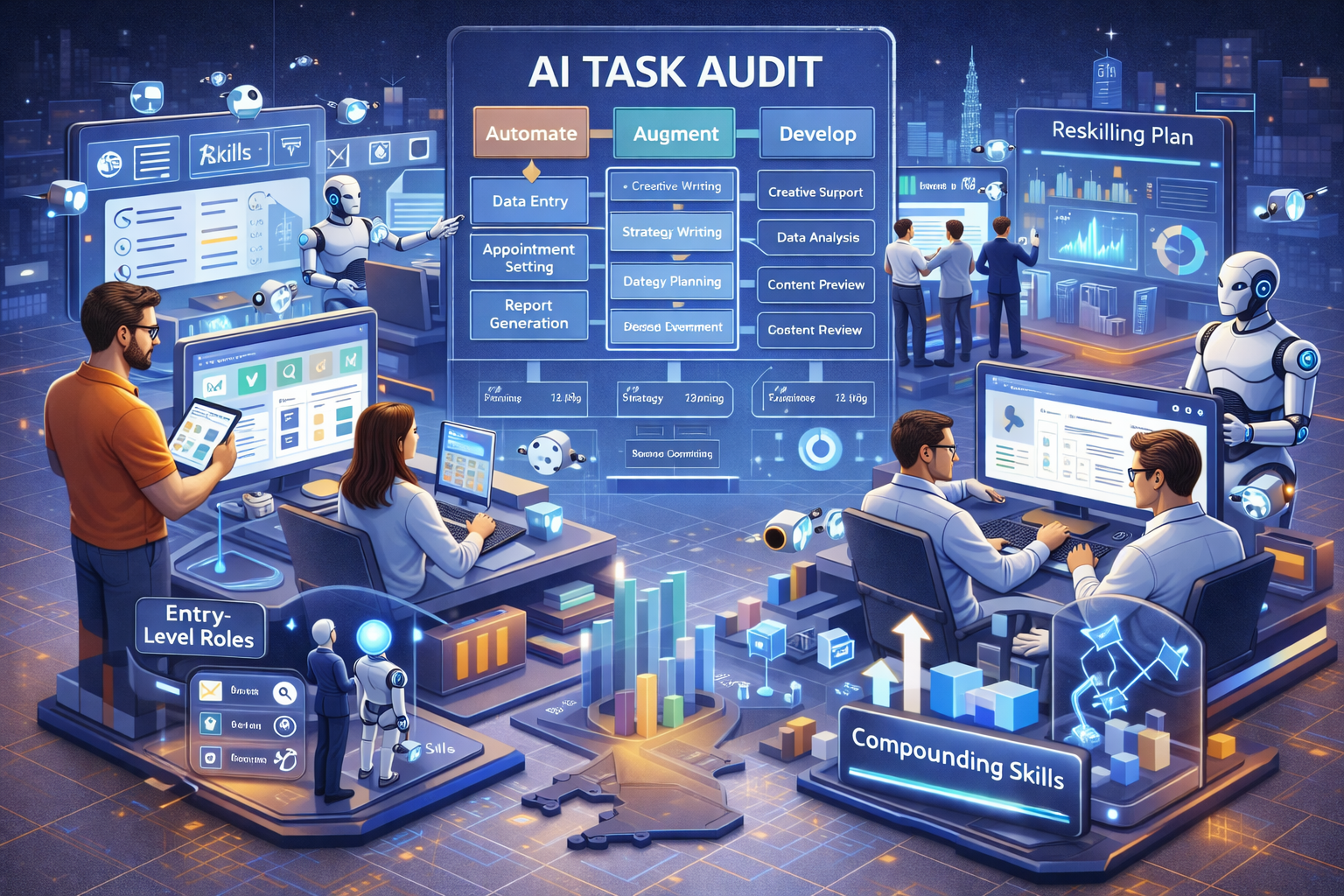
AI Replacing Jobs: What You Need to Know Today
AI is not “wiping out jobs overnight”, it is removing task bundles inside roles, and entry-level jobs are hit first because junior work is more standardised and easier to automate. In the UK, roles most exposed to AI are seeing job posting growth 4x slower than lower-risk roles, a quiet hiring shift rather than a sudden collapse. The early impact is already measurable: freelance writing and coding demand fell 21% within months of ChatGPT’s release. The net effect is likely reallocation, not just loss, with projections showing 92M jobs displaced and 170M new jobs created by 2030, while 17% of employers expect headcount reductions due to AI in 2026 and 14% of workers may need to change careers by 2030.
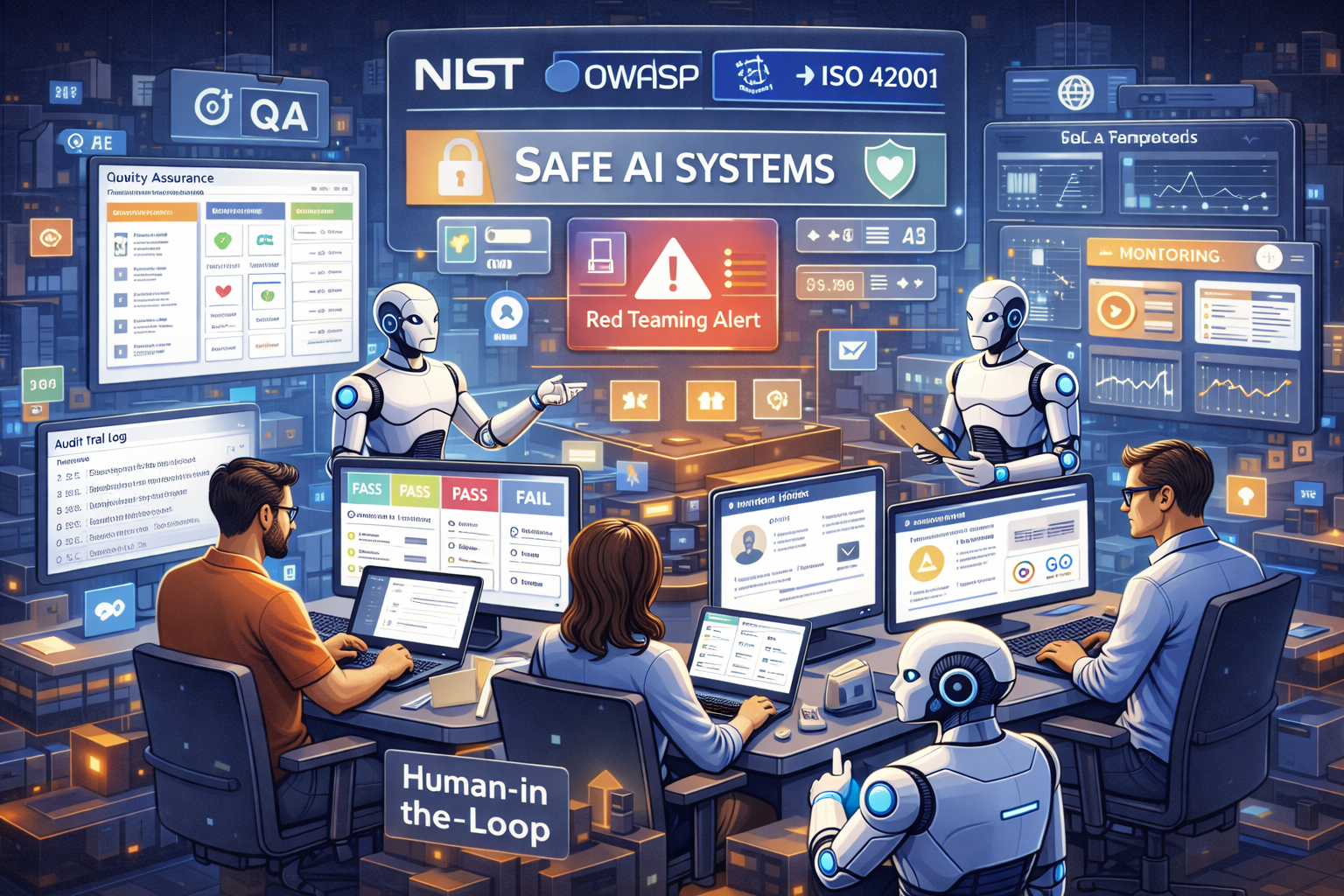
Understanding AI Governance: Quality Control in 2026
AI adoption is no longer a race for speed, it is a competition for provable quality. In 2026, “work with AI” only works if you can demonstrate governed outputs at scale: QA gates, red teaming, audit trails, monitoring, and human-in-the-loop controls where risk is real. This guide explains the frameworks (NIST, OWASP, EU AI Act, ISO 42001) and gives a practical step-by-step system to ship AI safely, credibly, and profitably.
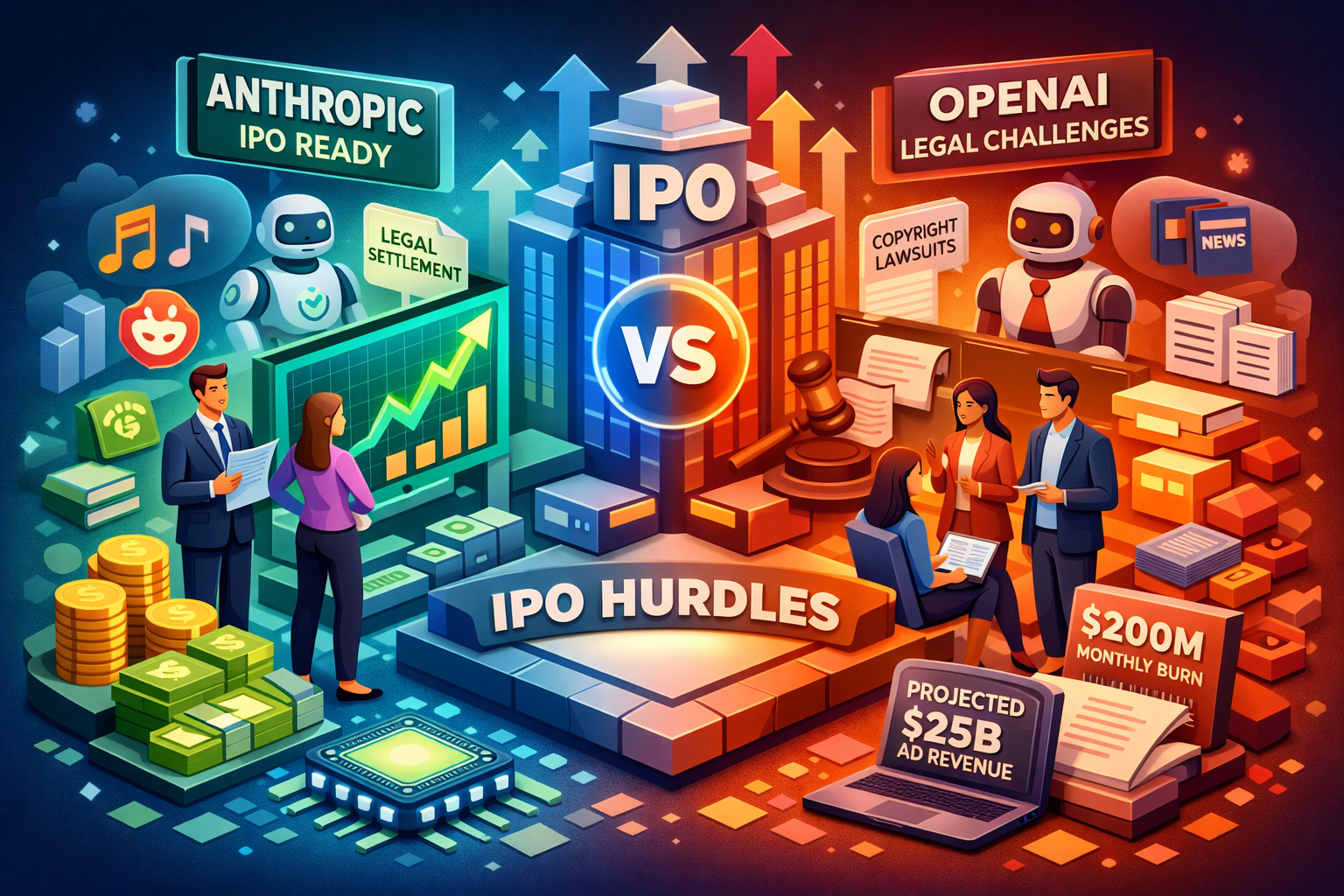
OpenAI IPO Hurdles vs Anthropic
As OpenAI and Anthropic move closer to potential IPOs, copyright litigation, regulatory scrutiny, and cashflow sustainability are emerging as decisive investor risks. This in-depth analysis examines why Anthropic appears more IPO-ready than OpenAI, how unresolved copyright lawsuits could delay listings beyond 2026, and how OpenAI’s projected $25bn advertising revenue by 2030 reshapes its financial outlook.

AI Search Optimisation: What to Expect in 2026 for SEO/GEO
Discover how AI search will transform the digital landscape by 2026. Explore the future of search optimization in our latest blog post! AI search is no longer just about rankings and clicks. In 2026, visibility is increasingly won inside generative answers, across Google AI Overviews and AI Mode, Bing Copilot, Perplexity-style results, and ChatGPT-style summaries. This guide cuts through the acronym noise around AEO, GEO, and LLMO and delivers one practical strategy: publish answer-first, cite-worthy content with clear entities, strong sourcing, and structured formats that models can reliably extract. Includes pitfalls, measurement tips, and a step-by-step playbook.
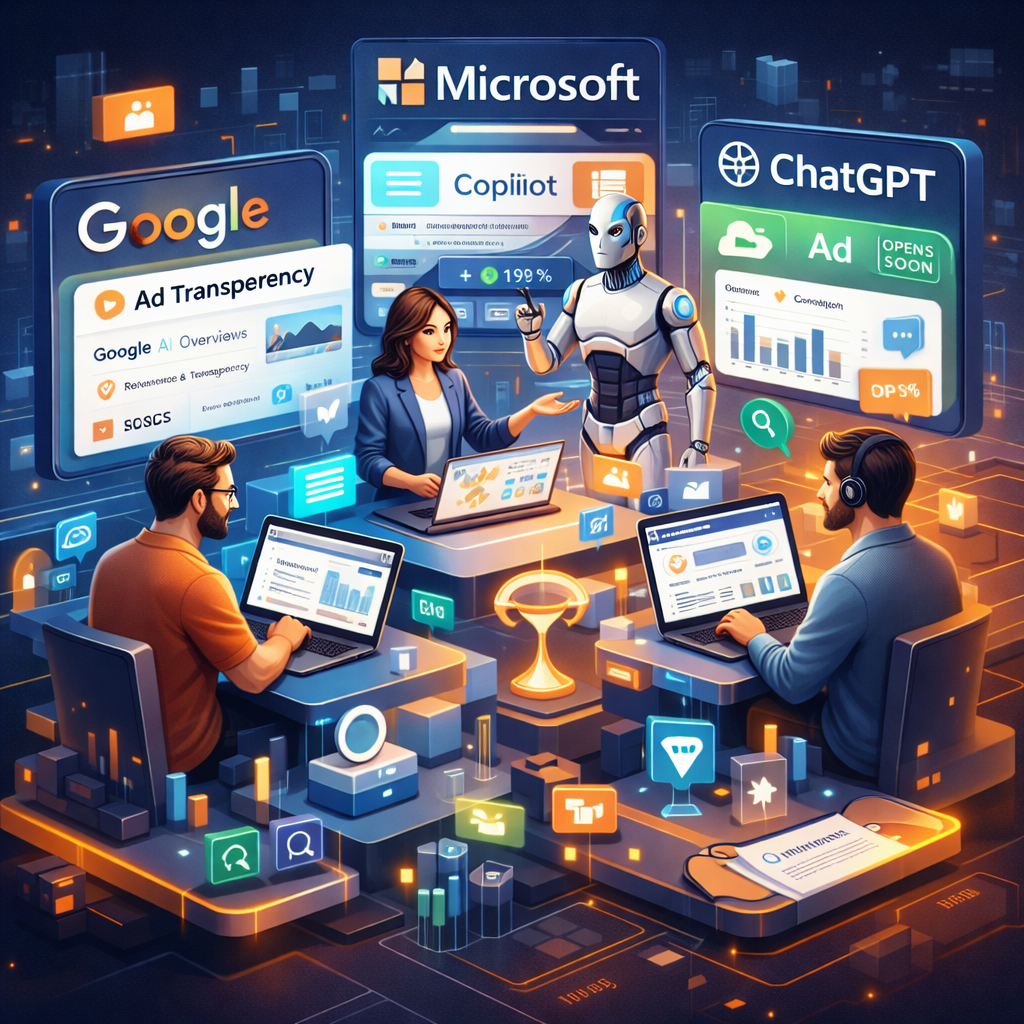
ChatGPT AI Ads Are Coming
ChatGPT Ads are coming, and the most important detail is not the media buying. It’s the design constraints. OpenAI says ads are not live externally yet, but testing is planned in the US “in the coming weeks” for logged-in adults on ChatGPT Free and ChatGPT Go, with placements clearly labelled and shown at the bottom of answers, separate from the organic response.
If OpenAI sticks to its stated “ad principles”, mission alignment, answer independence, conversation privacy, user choice and control, and long-term value, then this is not a typical attention auction. The winning ads will behave like a helpful next step, not interruption marketing. That changes the playbook: relevance is contextual and multi-turn, trust signals matter more than persuasion tricks, and attribution will get messier as AI answers pre-sell users before they ever click.
For marketers and agencies, the early advantage will come from three assets: (1) answer-first AEO/GEO content that makes you citable across AI surfaces, (2) offer governance that protects margin, and (3) incrementality measurement that proves lift instead of paying for demand you would have won anyway.

Is the AI Bubble About to Pop? Insights on the AI Bubble Prediction for 2026
Is there really an AI bubble, or are we witnessing one of the largest economic transformations since the internet? In 2025, fears of an AI bubble are growing as investment in artificial intelligence, data centres, and advanced chips accelerates at record speed. Yet the data tells a different story. With ChatGPT reaching around 800 million weekly users, OpenAI generating over $10 billion in annual recurring revenue, and businesses steadily increasing AI adoption, artificial intelligence is no longer experimental—it is operational. This article examines the real pressure points behind the “AI bubble” narrative, including market concentration, infrastructure costs, energy demand, and enterprise ROI concerns. More importantly, it explains why AI is best understood as a long-term automation engine that shifts revenue, boosts productivity, and expands economic capacity. Rather than a speculative bubble, AI represents a foundational re-platforming of work, search, marketing, and decision-making across the global economy.
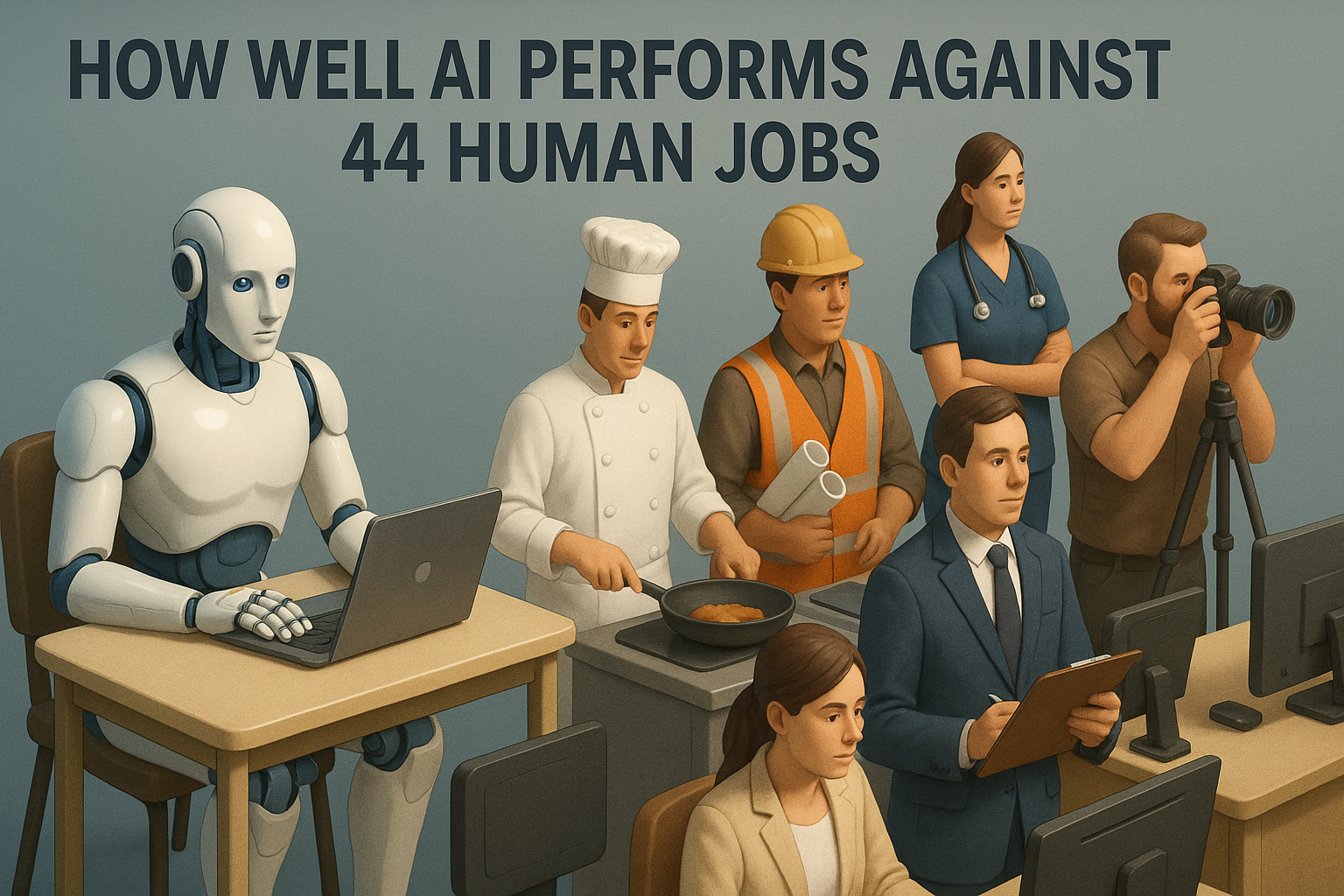
44 Jobs OpenAI Uses to Measure AI Capability
GDPval is OpenAI’s “real-work” evaluation: instead of exam questions, it measures whether AI can produce economically valuable deliverables professionals would actually ship. It spans 44 knowledge-work occupations across nine U.S. GDP-leading sectors, selected using BLS wage data and O*NET task analysis with a 60% digital-work threshold. The benchmark includes 1,320 expert-designed tasks (plus a 220-task open gold subset) requiring artifacts like legal briefs, nursing care plans, financial spreadsheets, sales decks, and multimedia. Outputs are graded with blind, head-to-head expert preference judgments, complemented by an experimental automated grader. OpenAI notes models can be faster and cheaper on inference, but human oversight and integration matter. In this guide, you’ll get the full list of jobs, the methodology, what the early results imply for AI productivity and AI search, and what comes next: more roles, more multimodal context, and more iterative, ambiguity-heavy workflows. (integrated.social)
Apple iOS 26.2 Fixes 20+ Security Issues
Apple's iOS 26.2 update includes crucial security patches for critical vulnerabilities (some of which were actively exploited) and new user-facing features designed to enhance privacy and safety. Apple recommends all users update their devices to iOS 26.2 as soon as possible to ensure these critical protections are in place. For more details on Apple's security protocols, you can review their official Apple Platform Security documentation.