The short answer: space may be useful for selected AI workloads, but it is not a free cooling system
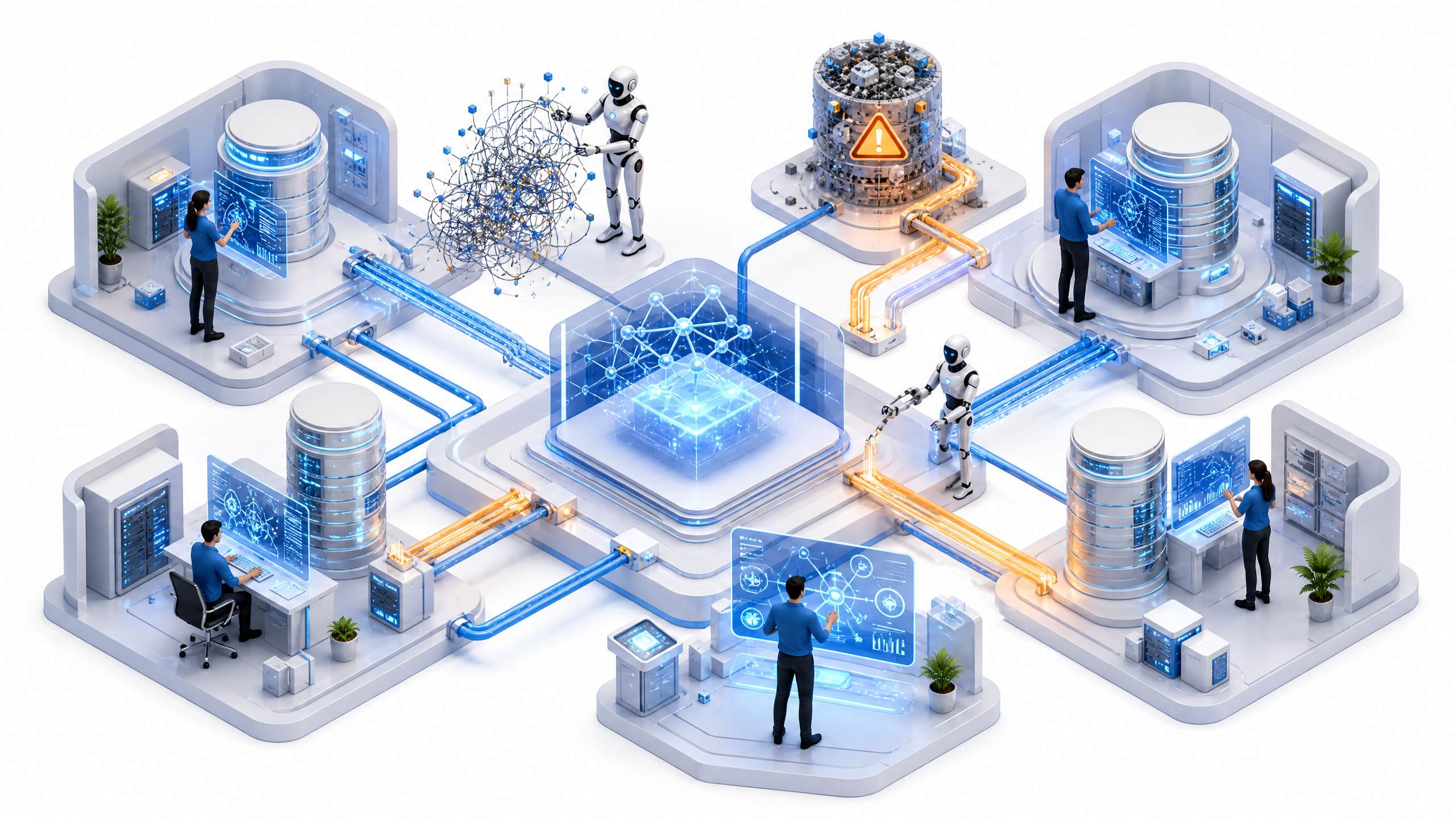
The appeal of AI data centres in space is easy to understand. Terrestrial AI infrastructure is consuming more electricity, competing for suitable grid capacity and, in some configurations, using water for cooling. A solar-powered orbital platform that processes data close to satellites and radiates heat into space can sound like a clean escape route.
It is not that simple. Space is cold, but a vacuum does not cool a server by convection. On Earth, air or liquid carries heat away. In orbit, a computing system must use radiators to emit thermal energy as infrared radiation. Those radiators, the power system, launch mass, radiation protection, communications link, maintenance plan and end-of-life disposal strategy are part of the product—not footnotes.
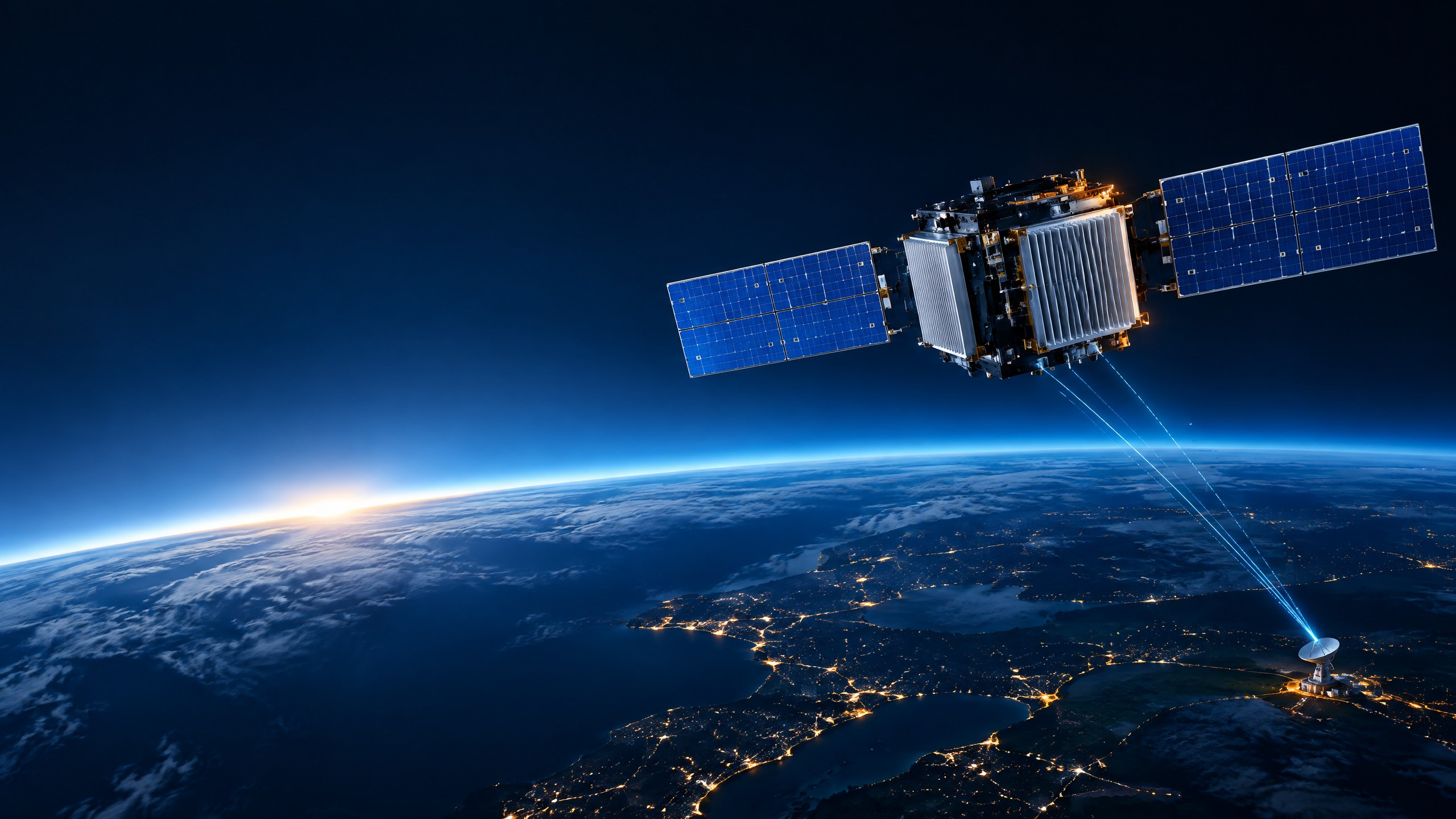
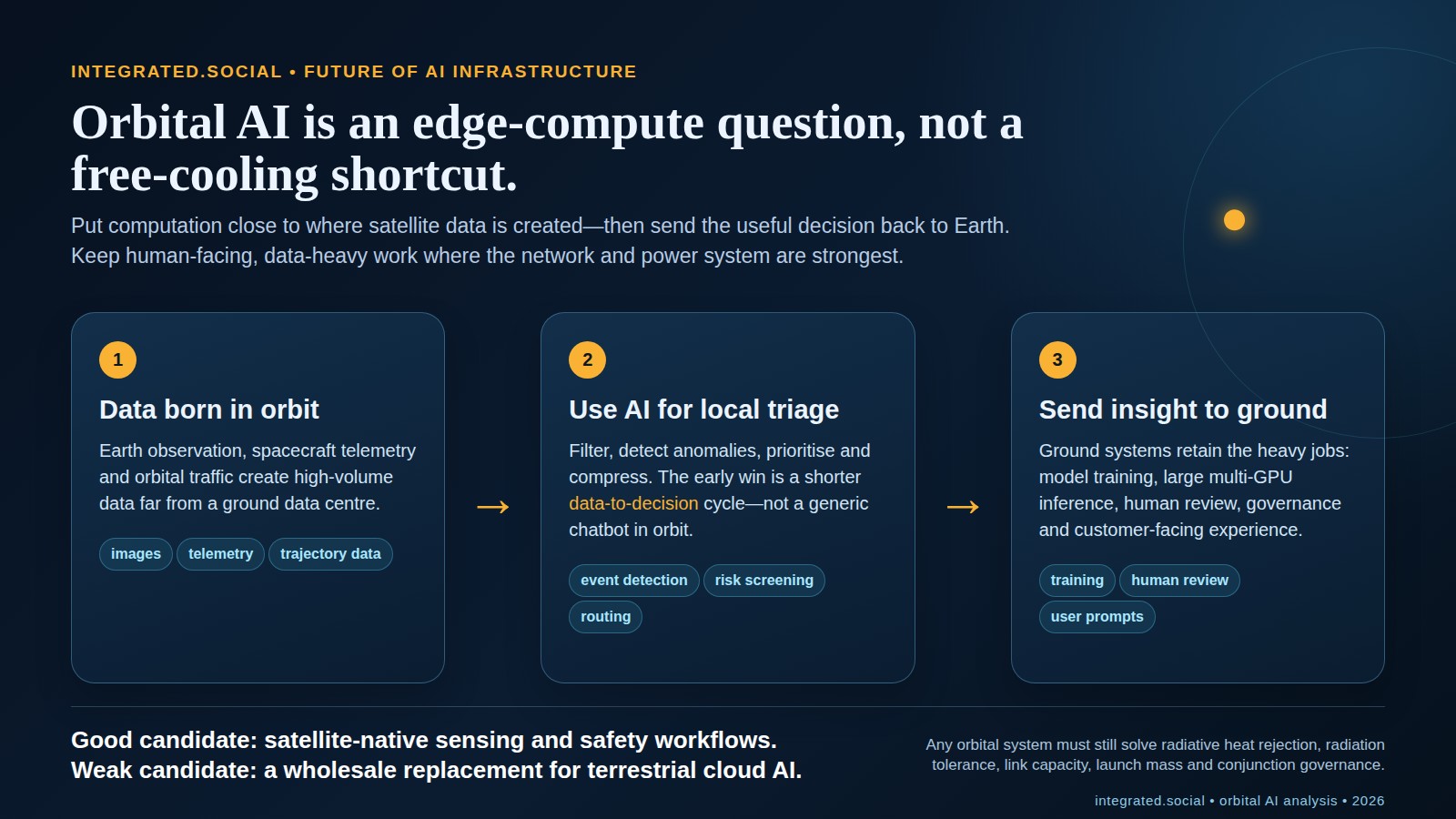
The credible near-term thesis is narrower: orbital processing may help with delay-tolerant, data-heavy workloads such as Earth observation filtering, satellite image triage and selective model inference close to where data is collected. It is not evidence that customer-facing AI, high-consequence decisions or general-purpose data centres should move off planet.
Why orbital AI infrastructure is being discussed now
The International Energy Agency’s Energy and AI work describes data centres as an important and growing electricity-demand category. Separately, water-risk discussions around terrestrial data centres have made local cooling design a commercial, community and policy concern. ESA has also explored the possibility of space-based data centres as a long-horizon research topic.
That creates a legitimate design question: if a workload already originates in orbit, is it more efficient to process part of it before downlinking? The answer depends on the workload, the link, the energy architecture, data-reduction ratio and operational risk. It cannot be inferred from the fact that orbit is cold or solar energy is available.
The key distinction: space-based processing is not automatically a space-based hyperscale cloud
A satellite that filters imagery before transmitting it may avoid sending data that no one needs. That is a credible edge-computing use case. A large, continuously operated AI training estate is different: it requires substantial power, thermal rejection, networking, fault management, launch capacity, replacement hardware and a credible method for safe disposal.
ESA’s published discussion of space-based data centres is exploratory. It is useful as a signal that the idea is technically worth studying, not as evidence that a mature commercial category exists today.
The cooling reality: vacuum changes the heat problem; it does not remove it
A terrestrial data centre can use air handling, liquid loops, chillers, evaporative systems or other cooling approaches. Each has a different water, energy and local-environment footprint. In space, the absence of atmospheric convection means the system must transfer heat to radiators and emit it as thermal radiation.
Why a cold background does not make a hot server cold
The temperature of surrounding space is not the operational temperature of an illuminated spacecraft. Sunlight adds heat. Electronics generate heat. Radiators need sufficient area and a clear thermal view to reject it. Their design must account for orientation, orbital conditions, material ageing and the system’s power profile.
NASA’s small-satellite thermal-control guidance makes the basic point: spacecraft thermal management balances internal dissipation, solar inputs, radiation and conductive paths. For AI infrastructure, that balance becomes a first-order cost, reliability and mass constraint.
Could orbital compute save water?
Potentially, but only in a narrowly stated way. If a workload is processed in orbit rather than at a terrestrial facility using water-intensive cooling, the direct local water demand associated with that specific terrestrial processing could be avoided. That is not the same as saying orbital data centres are water-free, environmentally superior or the right answer for every region.
A full comparison needs lifecycle evidence: manufacturing, launch emissions, power generation, ground stations, replacement hardware, end-of-life management and the counterfactual terrestrial cooling design. The right question is not “does space save water?” It is “for this workload and lifecycle, what resource pressure is genuinely reduced, and what risk is transferred elsewhere?”
Latency: the key is the end-to-end path, not a headline distance
“Space latency” is often discussed as if it were one number. It is a chain: sensor or user → uplink or satellite → onboard processing → downlink → ground network → application and response. A low-Earth-orbit system can have far lower signal delay than a geostationary one, but a round trip still depends on routing, relay design, congestion, inference time and the location of the user or data source.
Workloads that may fit an orbital AI architecture
| Workload | Why orbit could help | Constraint to prove |
|---|---|---|
| Earth-observation filtering | Data originates in orbit; only high-value outputs may need downlinking | Model accuracy, update process and downlink savings |
| Satellite constellation operations | Local anomaly triage may reduce response burden | Safety guardrails, failsafe mode and operator authority |
| Batch analysis of remote sensing data | Some jobs tolerate delay and can run near the capture point | Power, thermal design and reliable task scheduling |
| Real-time customer assistants | Usually need low-latency terrestrial applications and private systems | End-to-end response time, data protection and user experience |
| High-consequence control decisions | May benefit from local sensing but cannot rely on opaque autonomous authority | Human override, audit trail and safety certification |
For marketers and product leaders, that distinction matters because the future infrastructure story can become oversold. A brand does not need an orbital AI strategy because it uses a model. It needs an evidence-led architecture that puts each workload where it can be accurate, timely, secure and accountable.
The overlooked constraint: orbital safety and infrastructure governance
The supplied report of close calls involving satellite operators points to the broader system question. More hardware in orbit increases the need for tracking, coordination, collision-avoidance practice and responsible end-of-life disposal. A data-centre concept adds large structures, radiators, power systems and potentially frequent replacement launches to an already complex environment.
SpaceX is an important actor in launch and satellite connectivity, but this article does not claim that SpaceX has announced an orbital AI data-centre product, that it will build one, or that a particular satellite-safety figure proves a specific risk level for every constellation. Publicly reported numbers should be read in the methodology and operating context published by their source.
A governance test before an orbital AI pilot
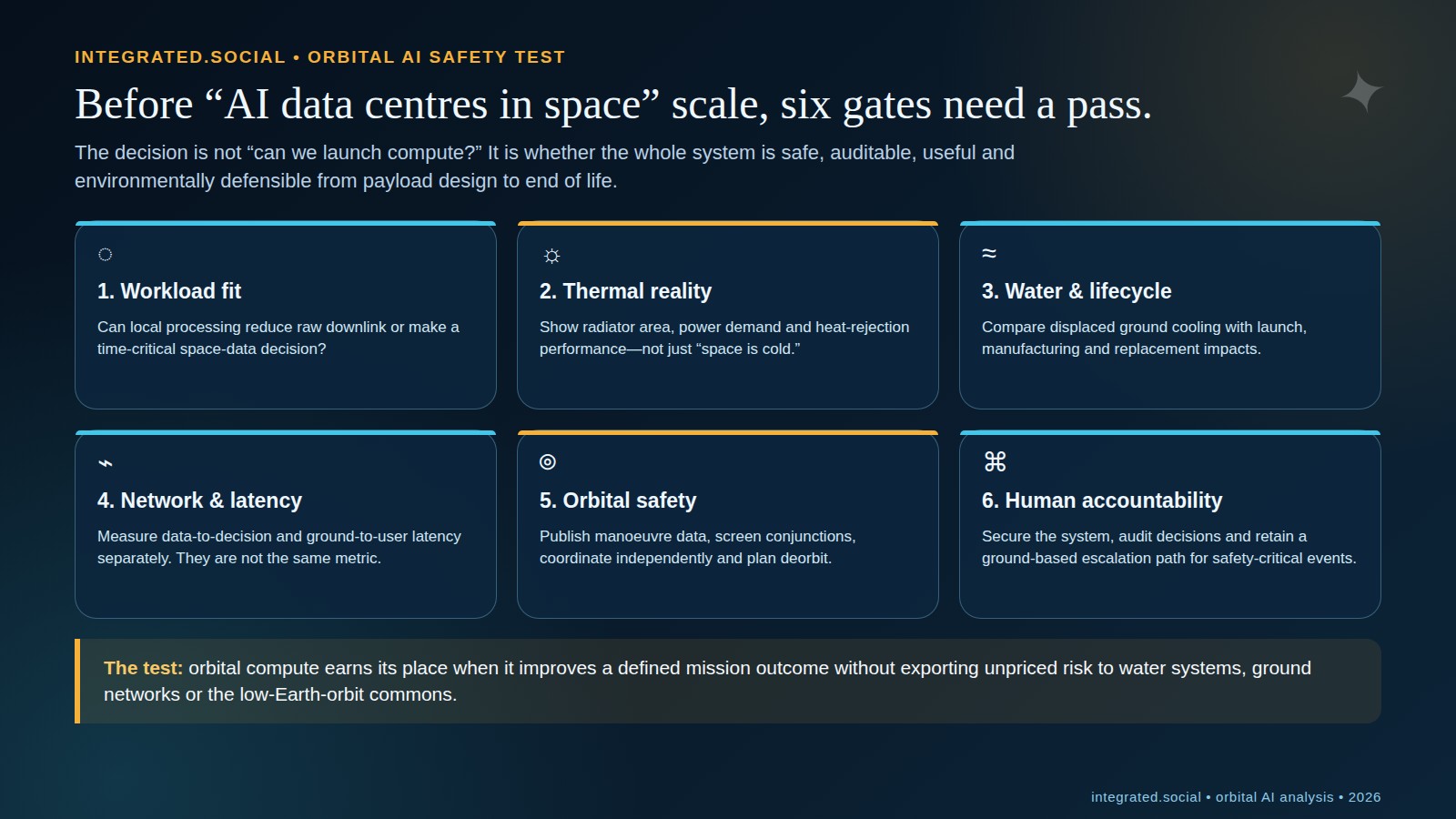
Any serious pilot should answer these questions before a business case is approved:
- Workload fit: Is the data born in orbit or remote enough that local processing has a clear reason?
- Thermal proof: How will waste heat be rejected under realistic orbital and power conditions?
- Latency budget: What is the measured end-to-end delay, including ground hand-off and application response?
- Safety and disposal: Who owns conjunction response, de-orbiting, replacement hardware and debris liability?
- Cybersecurity: How are command channels, software updates, model weights and ground links authenticated and monitored?
- Decision authority: Which actions can run automatically, and which require a human operator or accountable business owner?
- Lifecycle evidence: What comparison supports the claimed energy, water or carbon benefit against an appropriate terrestrial alternative?
These are not barriers to innovation. They are the minimum evidence record that prevents an infrastructure concept becoming a slide-deck claim without a physical or operational basis.
The SpaceX stock and IPO context: keep the investment story separate from the technology thesis
Readers may encounter SpaceX in discussions of launch economics, Starlink connectivity and orbital infrastructure. The company’s public investor-relations materials and SEC filings are the appropriate places to verify current stock and listing information. A company’s listing status, share price or reported capital-raising activity does not validate a future orbital AI data-centre business case.
For that reason, treat any SpaceX and AI infrastructure market context as background, not investment advice. The question for an operator is not whether a stock narrative is compelling. It is whether a defined workload, on a measured network and under an accountable safety model performs better than the terrestrial alternative.
A more useful POV: orbit may become an AI edge, not an AI escape hatch
My view is that orbital compute will become strategically relevant first where three conditions overlap: the data originates in space or in disconnected environments; the workload can tolerate delay; and processing close to capture reduces a real communications or operational burden.
That could make orbit a specialised AI edge. It may improve remote-sensing workflows, support resilient communications architectures and reduce some local resource pressure where the counterfactual is specific and measured. It will not remove the need for terrestrial data centres, grid planning, water stewardship, good network design or human accountability.
The bigger lesson for AI leaders is architectural discipline. The same organisation may need efficient terrestrial compute for interactive work, controlled edge processing for local systems and, eventually, orbital processing for particular sensing or communications workloads. The value comes from choosing the right boundary—not from relocating complexity where it is harder to inspect.
For teams building governed agentic systems, the same principle applies in enterprise AI readiness and AI agent governance: define the evidence, authority, escalation path and verification method before a capability is granted more autonomy.
A practical 90-day exploration plan
Days 1–30: identify one candidate workload
Map data origin, payload size, current latency, current power and water context, classification requirements and decision consequences. Eliminate workloads that require immediate human interaction or cannot tolerate a disrupted link.
Days 31–60: define the physical and operational evidence
Ask an engineering partner for a thermal model, power budget, communication-path budget, mission lifecycle and safety plan. Do not accept a temperature claim without an explanation of heat rejection. Do not accept a resource-saving claim without a terrestrial counterfactual.
Days 61–90: run a bounded ground-to-orbit simulation or proof of concept
Test a non-consequential, delay-tolerant use case. Measure accuracy, timing, data reduction, operational exceptions, security events and the human work required to keep the system safe. Publish the limitations alongside the positive result.
About the Author
Modi Elnadi is the founder of Integrated.Social, a London AI growth marketing agency. He writes about AI infrastructure, agentic systems, AI search and commercial governance through an evidence-led lens: distinguish a published capability from an operating result, and define the human owner before a system gets more authority.