1Part 1
What Does an AEO Agency in the UK Actually Do?
66% of UK senior decision-makers now use AI in procurement. Here is exactly what a UK AEO agency does, what to look for, and what questions to ask before you appoint one.
Jul 12Read
Weekly PoV on Answer Engine Optimisation, Agentic AI lead generation, Google AI Overviews, ChatGPT search ads, AI governance, and persona-driven B2B GTM. Written for enterprise marketers who need to win citations in AI-powered search, not just rankings.

Browse by topic
Showing all articles.
Four decision-stage guides for B2B marketers evaluating AI search investment. Each post answers a distinct question buyers ask before signing an AEO contract.
Browse by topic

The practical answer: lower listed token prices and better reuse of stable prompt context can make repeatable agent workflows cheaper to test and govern.

The short answer is not one vendor, dashboard, or policy document. It is an operating model that identifies every agent, limits what each may do, observes behavior while work happens, and intervenes when risk crosses a defined threshold. The Blueprint Alliance is a useful attempt to describe that model across vendors. It is not yet a formal standard, a certified interoperability program, or proof that multi-vendor controls work together in production.

A practical scorecard for B2B and B2C growth teams who need to know what a good AI visibility number actually is — before they spend a quarter guessing.

An agentic AI content engine should begin with governed customer evidence, a documented product truth, and explicit human decisions, not a clever prompt. This Part 1 framework shows global brands how to connect research, evidence, persona, strategy, writing, SEO evaluation, localization, publishing, and measurement while keeping the limits of automation visible.

Global brands do not need to choose between unchecked AI output and a slow approval maze. This proposed operating framework uses risk tiers, named decision rights, test sets, human sampling, provenance, constrained permissions, and escalation to make AI-assisted content work reviewable. It also separates operational controls from jurisdiction-specific legal, privacy, advertising, and copyright judgments.

Global brands do not need an AI-only technical stack for Google AI Mode or AI Overviews. They need a disciplined Search foundation: crawlable and indexable pages, rendered HTML, stable canonicals, reciprocal hreflang, useful internal links, accurate sitemaps, sound page experience, and structured data that describes what visitors can actually see. Search Console then provides bounded exposure reporting and inclusion controls.
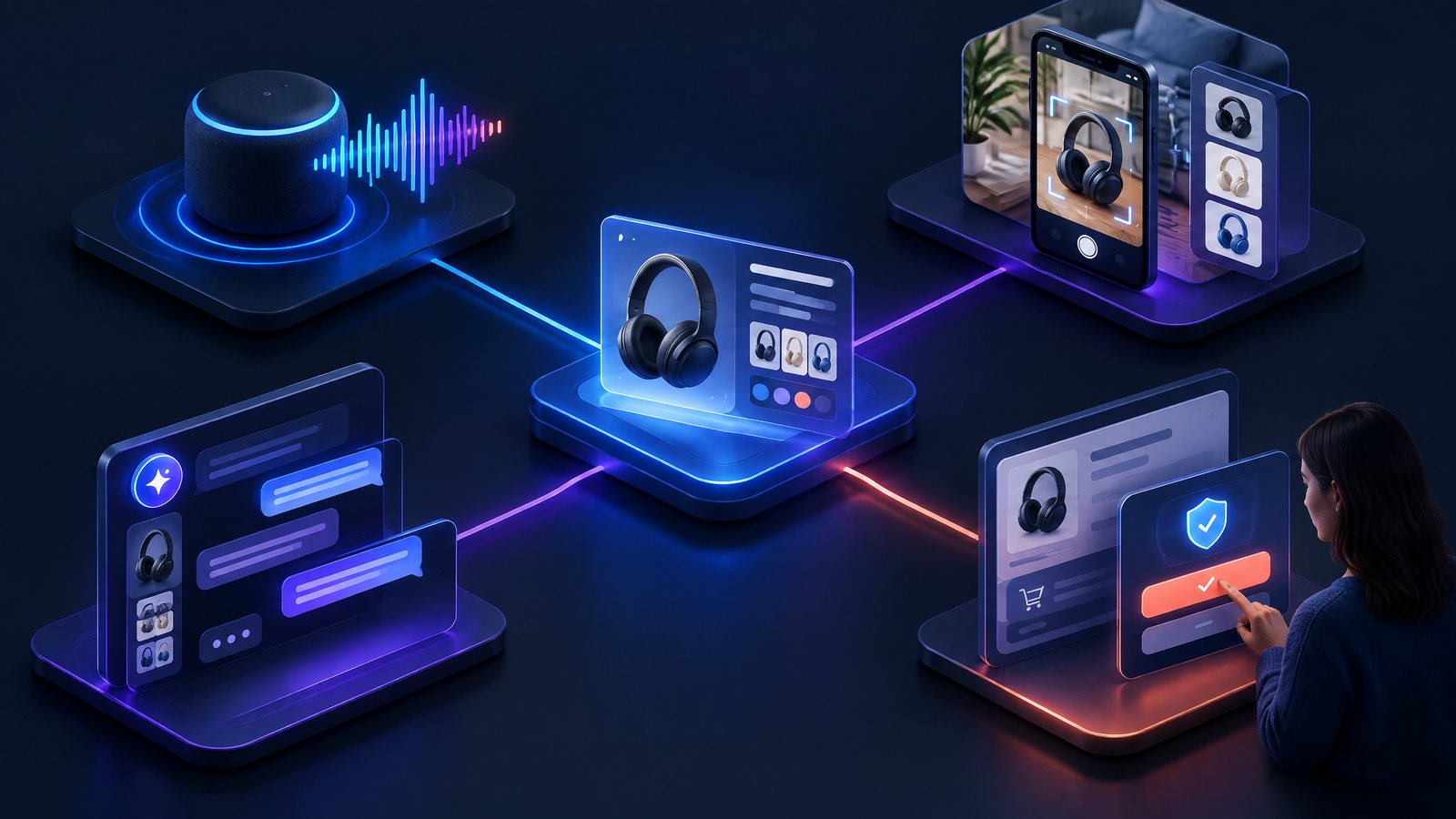
Global brands should make product facts, images, accessible copy and transaction controls easy to verify across text, voice, visual and agent-led interfaces. That work can support platform understanding and eligibility, but it cannot guarantee a ranking, recommendation, display or checkout. This guide separates documented platform capabilities from a proposed operating framework for accountable, consumer-controlled discovery.

Organic search, paid media, and agentic AI should share an evidence trail rather than compete for credit. This proposed AI Content Revenue Loop connects search observation, campaign data, consent-aware event collection, CRM outcomes, and finance-approved cohorts so CMOs can test where investment is contributing rather than treating platform attribution as a final answer.

OpenAI is testing Sponsored Agents with select US advertisers, letting users choose a clearly labeled, business-sponsored conversation after clicking a ChatGPT ad. The announced format is separate from independent ChatGPT answers and the original chat. For marketers, HubSpot and Shopify integrations create new operating paths, not proof of conversion improvement. Here is a 30-day framework for accountable post-click experimentation, measurement and governance within the stated US test and eligibility limits.

Google Merchant Center AI performance insights now show organic AI visibility for English-language shopping queries in five eligible markets. This guide explains what platform-defined share of voice, competitor averages, frequency and products showing can reveal across AI Mode and AI Overviews, what remains outside the dataset, and how retailers can use a disciplined 30-day operating framework without mistaking visibility for market share, conversion evidence, or paid-media attribution on its own.

Google is inviting eligible US retailers to test Business Agent in YouTube ads, where viewers can ask product questions without leaving YouTube. The separate UCP update adds cart transfer and checkout-flow testing for participating merchants, with analytics still to come. Neither announcement proves advertising performance or makes checkout available inside a YouTube ad. Retail teams should treat both as bounded, instrumented operating experiments during an early-stage 2026 product rollout only.

OpenAI’s new reporting framework offers enterprises a useful early governance signal, not a safety certificate. Six disclosed cases show why teams need documented escalation, scoped permissions, evidence logs, and human review before agents act across business systems. This guide translates the voluntary process into a practical 30-day operating test, while keeping its limits clear: individual company disclosures cannot establish incident frequency, compliance, or safety in a live enterprise agent deployment.